Continuous Integration Pipelines: What Actually Works
Automated processes that build, test and check code every time changes are pushed.
 MediaScaleUp Editorial Team

Where most projects go wrong
The usual mistakes:
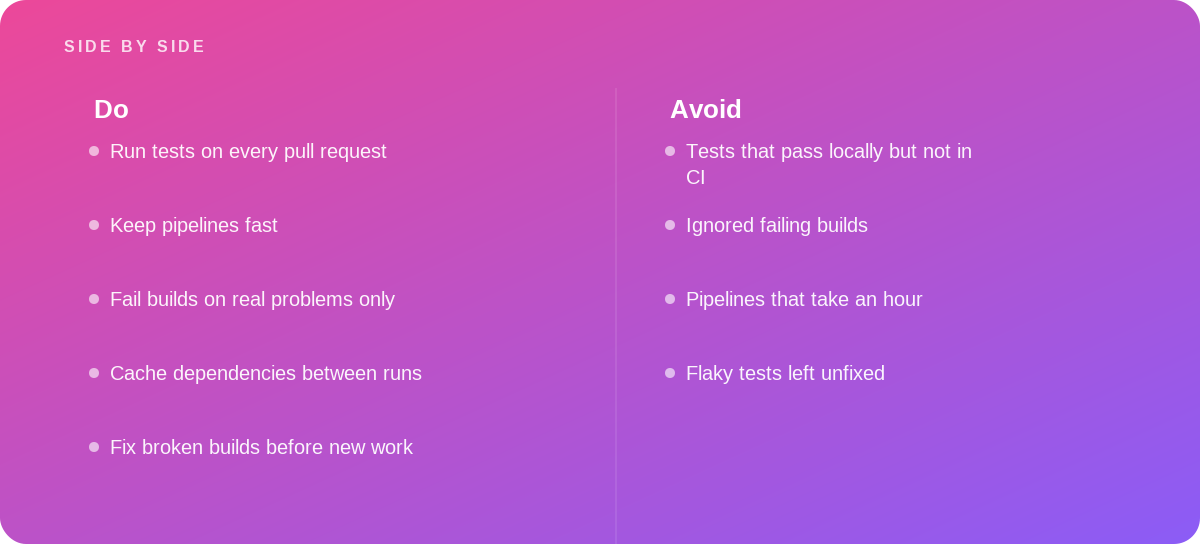
- Tests that pass locally but not in CI
- Ignored failing builds
- Pipelines that take an hour
- Flaky tests left unfixed
What good looks like instead
- Run tests on every pull request
- Keep pipelines fast
- Fail builds on real problems only
- Cache dependencies between runs
- Fix broken builds before new work
Why it matters
Continuous integration catches breakage early, when it is cheap, instead of during release.
The specs that matter
| Measure | Figure |
|---|---|
| Triggers | pipelines run on pushes and pull requests |
| Stages | build, test, lint and security checks |
| Speed | slow pipelines discourage frequent commits |
| Signals | failing builds must be treated as urgent |
Knowing when to hand it over
Tip: Bring in help when releases depend on manual checks.
Where this comes from
- Microsoft Learn — Continuous integration
- Laravel Documentation — Testing
The figures and practices above come from the sources listed.
Working on something like this?
We take on Web Design & Development work for teams who want it done once, properly. Tell us what you are building and we will tell you honestly whether we are the right studio for it. Start a project.
Where to go next
Spotted something wrong? Report an error on this page. We correct on the page and say what changed.