Monorepo Tooling: What Actually Works
Keeping several related projects in one repository, with tooling to build and test only what changed.
 MediaScaleUp Editorial Team

What is at stake
Monorepos simplify sharing code across projects, but they need tooling to stay fast as they grow.
The playbook
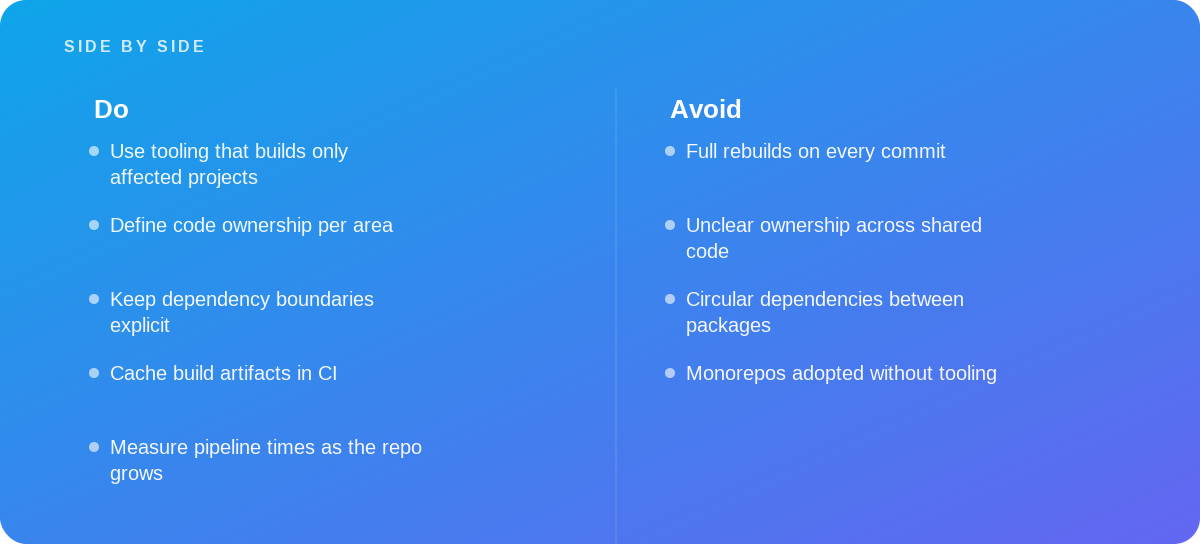
- Use tooling that builds only affected projects
- Define code ownership per area
- Keep dependency boundaries explicit
- Cache build artifacts in CI
- Measure pipeline times as the repo grows
Where it goes wrong
Avoid:
- Full rebuilds on every commit
- Unclear ownership across shared code
- Circular dependencies between packages
- Monorepos adopted without tooling
The numbers behind it
| Measure | Figure |
|---|---|
| Shared code | libraries can be used across projects without publishing |
| Task orchestration | tools build only affected projects |
| CI cost | naive setups rebuild everything on every change |
| Ownership | code ownership rules keep reviews focused |
Getting outside help
When to hand it over: Bring in help when several projects share code.
Where this comes from
- Microsoft Learn — Continuous integration
- Node.js — Dependency management
The figures and practices above come from the sources listed.
Working on something like this?
We take on Web Design & Development work for teams who want it done once, properly. Tell us what you are building and we will tell you honestly whether we are the right studio for it. Start a project.
Where to go next
Spotted something wrong? Report an error on this page. We correct on the page and say what changed.





