A Practical Guide to Code Review
The practice of having another developer read changes before they merge, for correctness, clarity and security.
 MediaScaleUp Editorial Team

Why does it matter?
Review catches bugs, spreads knowledge and keeps code consistent, but bad review culture slows teams down.
What are the numbers?
- Small changes are reviewed better than large ones
- Checklists help cover security and accessibility
- Automation linting and tests should run before human review
- Turnaround slow reviews block delivery
What should I do?
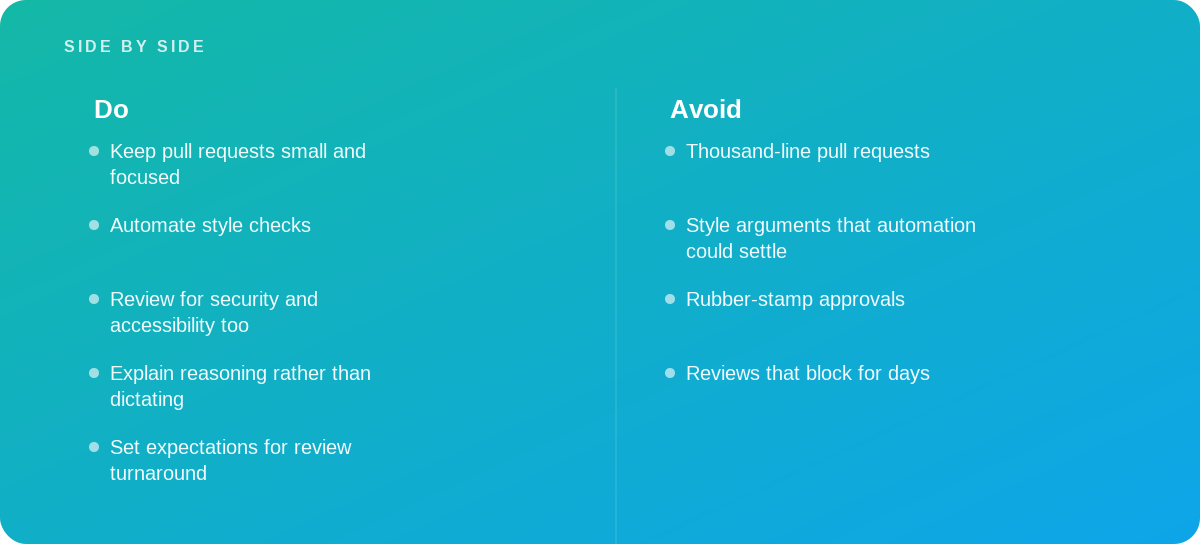
- Keep pull requests small and focused
- Automate style checks
- Review for security and accessibility too
- Explain reasoning rather than dictating
- Set expectations for review turnaround
What should I avoid?
Avoid:
- Thousand-line pull requests
- Style arguments that automation could settle
- Rubber-stamp approvals
- Reviews that block for days
When should I get help?
Short answer Bring in help when review is a bottleneck or a formality.
Where this comes from
- Microsoft Learn — Code review
- OWASP — Code Review Guide
The figures and practices above come from the sources listed.
Working on something like this?
We take on Web Design & Development work for teams who want it done once, properly. Tell us what you are building and we will tell you honestly whether we are the right studio for it. Start a project.
Where to go next
Spotted something wrong? Report an error on this page. We correct on the page and say what changed.





