A Practical Guide to Building a Two-Sided Marketplace
Platforms where third-party sellers or providers list to buyers, with payments, trust and dispute handling in between.
 MediaScaleUp Editorial Team

At a glance
- Seller verification federal law requires online marketplaces to verify high-volume third-party sellers
- Payments marketplaces need split payment and payout handling
- Trust reviews and dispute processes underpin confidence
- Liability responsibility for listings and goods must be defined
Why it matters
Why it matters: Marketplaces carry obligations about seller verification and consumer protection that simple stores do not.
Best practice
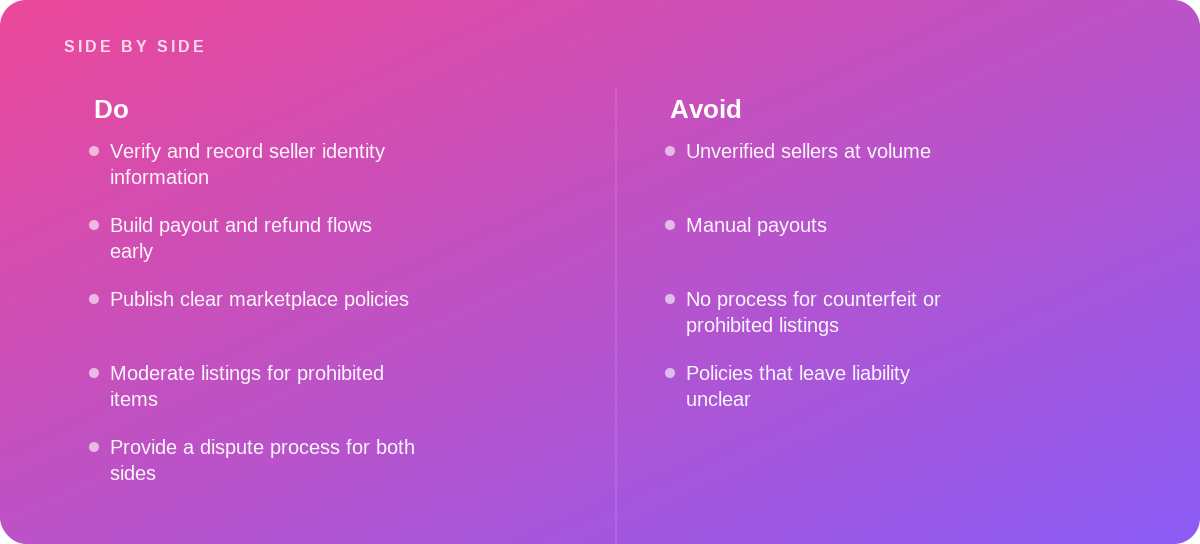
- Verify and record seller identity information
- Build payout and refund flows early
- Publish clear marketplace policies
- Moderate listings for prohibited items
- Provide a dispute process for both sides
Common pitfalls
Watch out for:
- Unverified sellers at volume
- Manual payouts
- No process for counterfeit or prohibited listings
- Policies that leave liability unclear
When to call in a specialist
Bottom line Bring in help before launching a marketplace platform.
Where this comes from
The figures and practices above come from the sources listed.
Working on something like this?
We take on Web Design & Development work for teams who want it done once, properly. Tell us what you are building and we will tell you honestly whether we are the right studio for it. Start a project.
Where to go next
Spotted something wrong? Report an error on this page. We correct on the page and say what changed.





