3D Scene Optimization: The Decisions That Matter
Reducing the cost of a scene — draw calls, memory, geometry and texture — so it runs at frame rate on the target hardware.
 Imogen Clarke

Where most projects go wrong
The usual mistakes:
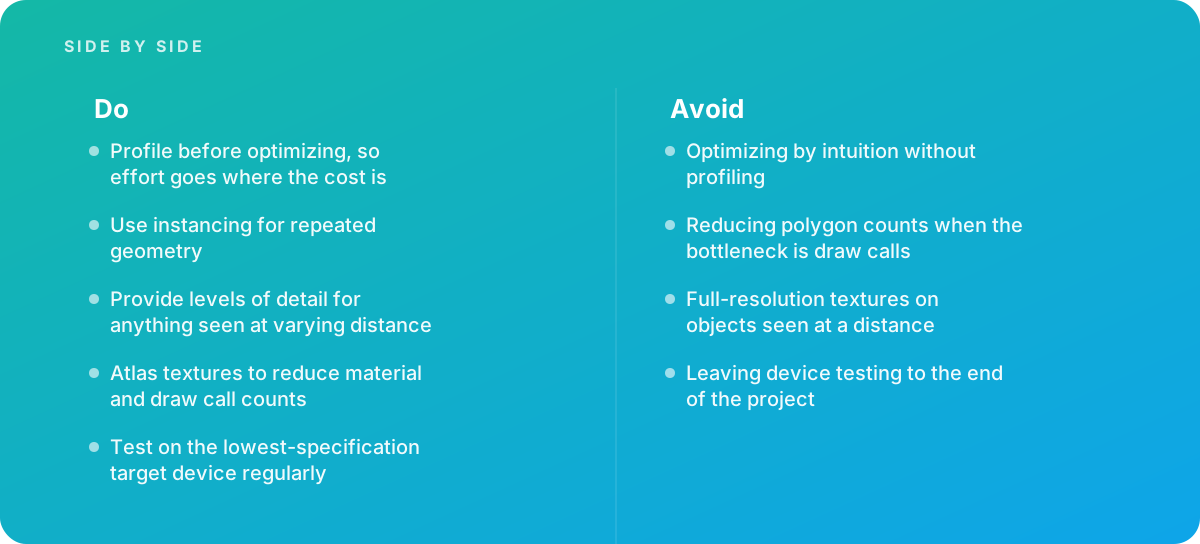
- Optimizing by intuition without profiling
- Reducing polygon counts when the bottleneck is draw calls
- Full-resolution textures on objects seen at a distance
- Leaving device testing to the end of the project
What good looks like instead
- Profile before optimizing, so effort goes where the cost is
- Use instancing for repeated geometry
- Provide levels of detail for anything seen at varying distance
- Atlas textures to reduce material and draw call counts
- Test on the lowest-specification target device regularly
Why it matters
A scene that runs on a workstation and not on a phone has not been optimized, and almost every optimization is a structural decision rather than a setting.
The specs that matter
| Measure | Figure |
|---|---|
| Draw calls | often the bottleneck; reduced by batching and atlasing |
| Level of detail | lower-resolution meshes substituted at distance |
| Texture atlasing | combining textures to reduce material switches |
| Instancing | repeated geometry drawn once with many transforms |
| Culling | not drawing what is not visible |
| Memory | often the binding constraint on mobile |
Knowing when to hand it over
Tip: Bring in help when frame rate targets are being missed, when scenes exceed memory on target devices, or when optimization has begun to cost visible quality.
Where this comes from
- Unity Documentation — Optimization guides
- NVIDIA Developer — Real-time rendering performance
- Khronos Group — glTF optimization
The figures and practices above come from the sources listed.
Working on something like this?
We take on 3D Design & Development work for teams who want it done once, properly. Tell us what you are building and we will tell you honestly whether we are the right studio for it. Start a project.
Where to go next
Spotted something wrong? Report an error on this page. We correct on the page and say what changed.