Tree Testing: What Actually Works
A research method that tests a site's navigation structure by asking participants to find items in a text-only version of the menu hierarchy.
 MediaScaleUp Editorial Team

Why does it matter?
It isolates the structure and labels from visual design, showing where people expect to find things and where they get lost.
What are the numbers?
- Format a text-only hierarchy without visual design
- Measures success rate, directness and time
- Tasks realistic finding tasks
- Relationship to card sorting card sorting generates structures; tree testing evaluates them
What should I do?
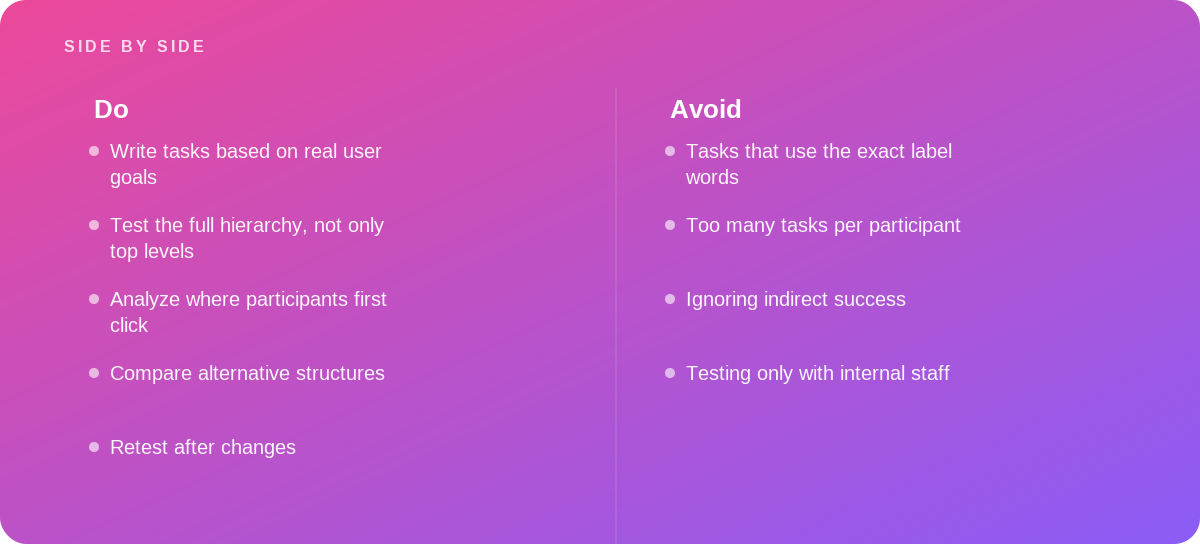
- Write tasks based on real user goals
- Test the full hierarchy, not only top levels
- Analyze where participants first click
- Compare alternative structures
- Retest after changes
What should I avoid?
Avoid:
- Tasks that use the exact label words
- Too many tasks per participant
- Ignoring indirect success
- Testing only with internal staff
When should I get help?
Short answer Bring in help when validating a new navigation structure or diagnosing why users cannot find content.
Where this comes from
- Nielsen Norman Group — Tree testing: fast, iterative evaluation of menu labels and categories
- Interaction Design Foundation — Tree testing
The figures and practices above come from the sources listed.
Working on something like this?
We take on UI & UX Design work for teams who want it done once, properly. Tell us what you are building and we will tell you honestly whether we are the right studio for it. Start a project.
Where to go next
Spotted something wrong? Report an error on this page. We correct on the page and say what changed.