Remote Unmoderated Testing: What Actually Works
Usability tests where participants complete tasks on their own, recorded by a testing tool, without a researcher present.
 Priya Raghunathan

Where most projects go wrong
The usual mistakes:
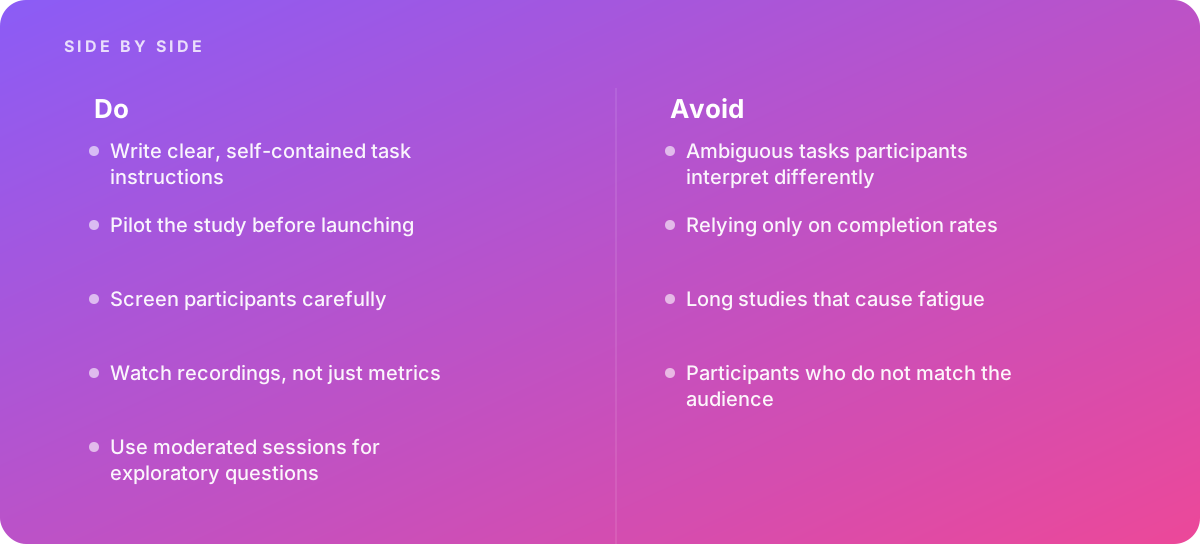
- Ambiguous tasks participants interpret differently
- Relying only on completion rates
- Long studies that cause fatigue
- Participants who do not match the audience
What good looks like instead
- Write clear, self-contained task instructions
- Pilot the study before launching
- Screen participants carefully
- Watch recordings, not just metrics
- Use moderated sessions for exploratory questions
Why it matters
Unmoderated tests are fast and scale to many participants, but they lose the ability to ask follow-up questions.
The specs that matter
| Measure | Figure |
|---|---|
| Format | participants follow written tasks and think aloud while recorded |
| Strength | speed and larger samples |
| Limitation | no follow-up questions during the session |
| Best for | clear, well-defined tasks |
Knowing when to hand it over
Tip: Bring in help when you need quick usability feedback at scale, or when designing a remote research program.
Where this comes from
- Nielsen Norman Group — Remote usability tests: moderated and unmoderated
- Interaction Design Foundation — Remote usability testing
The figures and practices above come from the sources listed.
Working on something like this?
We take on UI & UX Design work for teams who want it done once, properly. Tell us what you are building and we will tell you honestly whether we are the right studio for it. Start a project.
Where to go next
Spotted something wrong? Report an error on this page. We correct on the page and say what changed.