Recruiting Research Participants: What Actually Works
Finding and screening the right people to take part in user research, including writing screeners, offering incentives and managing consent.
 MediaScaleUp Editorial Team

Why does it matter?
Research with the wrong participants produces misleading results, and recruitment is often the slowest part of a research project.
What are the numbers?
- Screeners questions that confirm participants match the target audience
- Incentives payment or gifts compensate participants for their time
- Consent participants should know how recordings and data will be used
- No-shows over-recruiting slightly protects the schedule
What should I do?
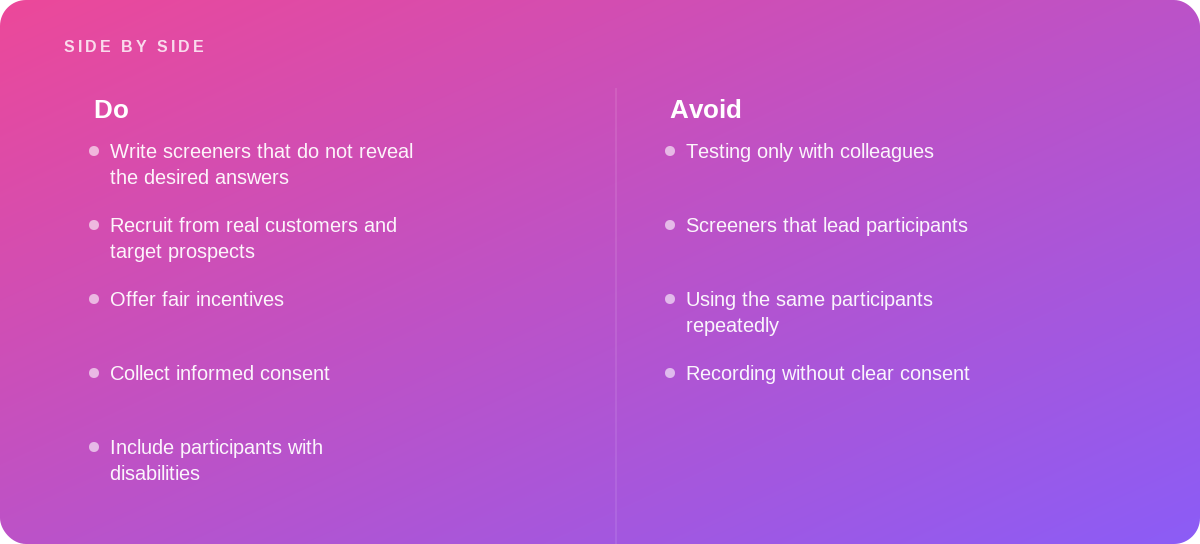
- Write screeners that do not reveal the desired answers
- Recruit from real customers and target prospects
- Offer fair incentives
- Collect informed consent
- Include participants with disabilities
What should I avoid?
Avoid:
- Testing only with colleagues
- Screeners that lead participants
- Using the same participants repeatedly
- Recording without clear consent
When should I get help?
Short answer Bring in help when you need specialized participants, such as clinicians or executives, or when setting up an ongoing research panel.
Where this comes from
- Nielsen Norman Group — Recruiting test participants for usability studies
- GOV.UK Service Manual — Finding participants for user research
The figures and practices above come from the sources listed.
Working on something like this?
We take on UI & UX Design work for teams who want it done once, properly. Tell us what you are building and we will tell you honestly whether we are the right studio for it. Start a project.
Where to go next
Spotted something wrong? Report an error on this page. We correct on the page and say what changed.