Running Quick Research Sessions: What Actually Works
Short, low-cost research sessions that answer specific questions quickly.
 MediaScaleUp Editorial Team

Where most projects go wrong
The usual mistakes:
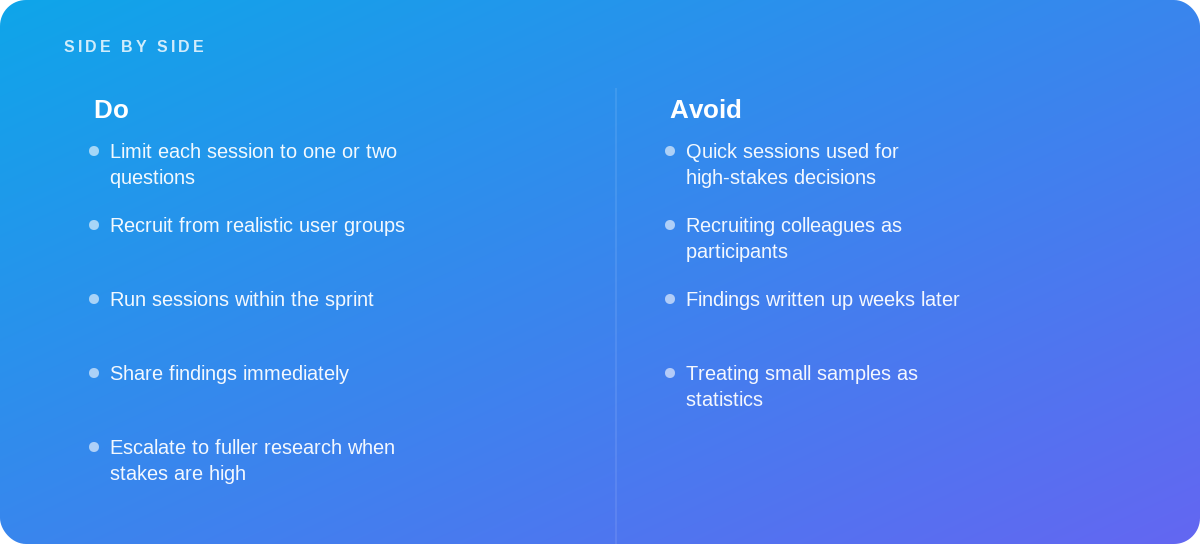
- Quick sessions used for high-stakes decisions
- Recruiting colleagues as participants
- Findings written up weeks later
- Treating small samples as statistics
What good looks like instead
- Limit each session to one or two questions
- Recruit from realistic user groups
- Run sessions within the sprint
- Share findings immediately
- Escalate to fuller research when stakes are high
Why it matters
Teams skip research when it feels heavy, and quick sessions answer many questions well enough to act.
The specs that matter
| Measure | Figure |
|---|---|
| Sample size | small samples find most major usability problems |
| Speed | quick sessions fit inside a sprint |
| Scope | narrow questions suit quick methods |
| Limits | quick research does not replace statistical work |
Knowing when to hand it over
Tip: Bring in help when teams have stopped doing research at all.
Where this comes from
- Nielsen Norman Group — Usability testing
- GOV.UK Service Manual — User research
The figures and practices above come from the sources listed.
Working on something like this?
We take on UI & UX Design work for teams who want it done once, properly. Tell us what you are building and we will tell you honestly whether we are the right studio for it. Start a project.
Where to go next
Spotted something wrong? Report an error on this page. We correct on the page and say what changed.