Card Sorting, Done Properly
A research method where participants group topics or content items into categories, revealing how they expect information to be organized.
 MediaScaleUp Editorial Team

Where most projects go wrong
The usual mistakes:
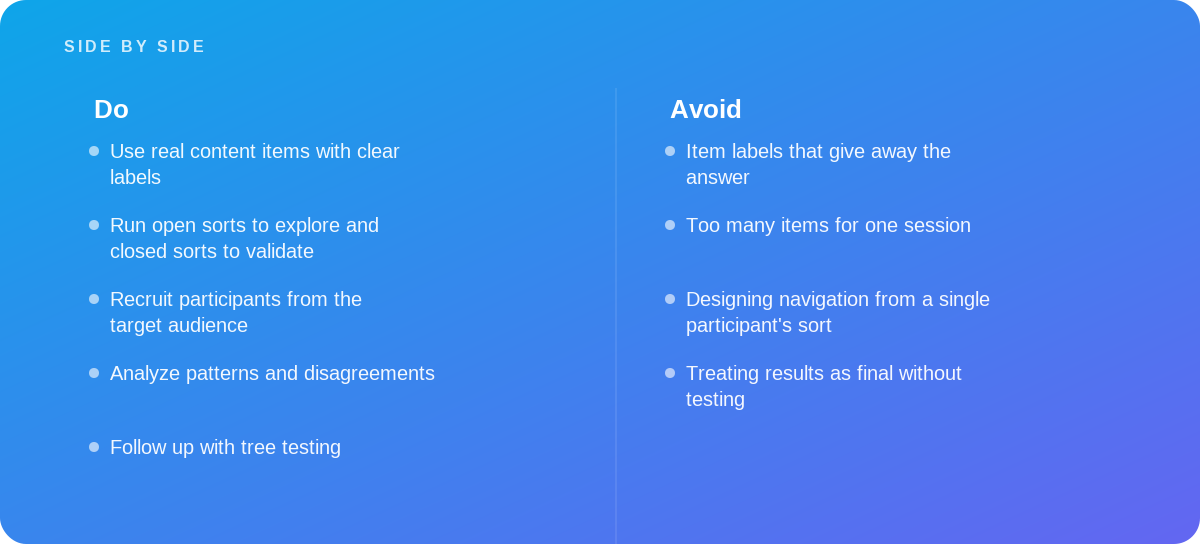
- Item labels that give away the answer
- Too many items for one session
- Designing navigation from a single participant's sort
- Treating results as final without testing
What good looks like instead
- Use real content items with clear labels
- Run open sorts to explore and closed sorts to validate
- Recruit participants from the target audience
- Analyze patterns and disagreements
- Follow up with tree testing
Why it matters
It shows how users think about your content before navigation is built, which prevents structures based on internal org charts.
The specs that matter
| Measure | Figure |
|---|---|
| Open sort | participants create and name their own groups |
| Closed sort | participants sort items into predefined groups |
| Hybrid sort | combines predefined groups with the option to add new ones |
| Participants | Nielsen Norman Group suggests around 15 participants for open card sorts |
Knowing when to hand it over
Tip: Bring in help when restructuring navigation for a large site or product.
Where this comes from
- Nielsen Norman Group — Card sorting: uncover users' mental models
- Interaction Design Foundation — Card sorting
The figures and practices above come from the sources listed.
Working on something like this?
We take on UI & UX Design work for teams who want it done once, properly. Tell us what you are building and we will tell you honestly whether we are the right studio for it. Start a project.
Where to go next
Spotted something wrong? Report an error on this page. We correct on the page and say what changed.