How to Get Design Debt Right
The accumulated inconsistencies and shortcuts in an interface that make future changes slower.
 MediaScaleUp Editorial Team

Why does it matter?
Design debt grows quietly until every change requires touching many one-off components.
What are the numbers?
- Sources deadline shortcuts, acquisitions and parallel teams
- Symptoms many variants of the same component
- Cost debt slows delivery and confuses users
- Repayment debt is paid down incrementally
What should I do?
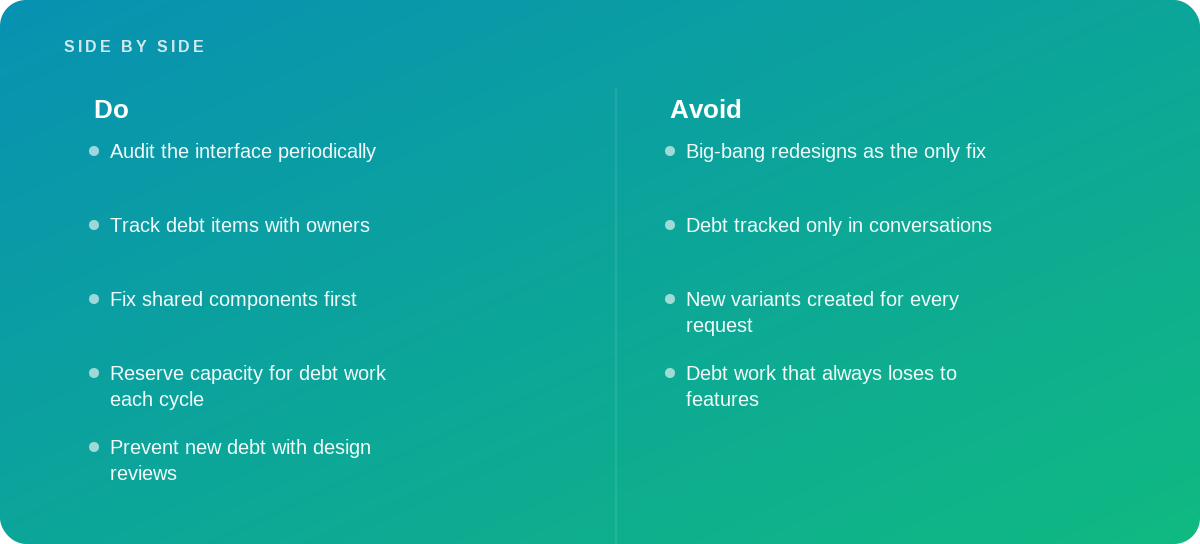
- Audit the interface periodically
- Track debt items with owners
- Fix shared components first
- Reserve capacity for debt work each cycle
- Prevent new debt with design reviews
What should I avoid?
Avoid:
- Big-bang redesigns as the only fix
- Debt tracked only in conversations
- New variants created for every request
- Debt work that always loses to features
When should I get help?
Short answer Bring in help when small changes take surprisingly long.
Where this comes from
- Nielsen Norman Group — Design systems
- Material Design — Components
The figures and practices above come from the sources listed.
Working on something like this?
We take on UI & UX Design work for teams who want it done once, properly. Tell us what you are building and we will tell you honestly whether we are the right studio for it. Start a project.
Where to go next
Spotted something wrong? Report an error on this page. We correct on the page and say what changed.