Cookie Banner Design: The Decisions That Matter
The consent interface that asks visitors about cookies and tracking, and how its design affects choices.
 MediaScaleUp Editorial Team

Why does it matter?
Regulators treat manipulative consent interfaces as deceptive design, and banners also affect usability and measurement.
What are the numbers?
- Equal prominence accept and reject options are expected to be equally easy
- Dark patterns California privacy regulations address manipulative consent design
- Scope banners should reflect what actually runs on the site
- Signals browsers can send opt-out preference signals
What should I do?
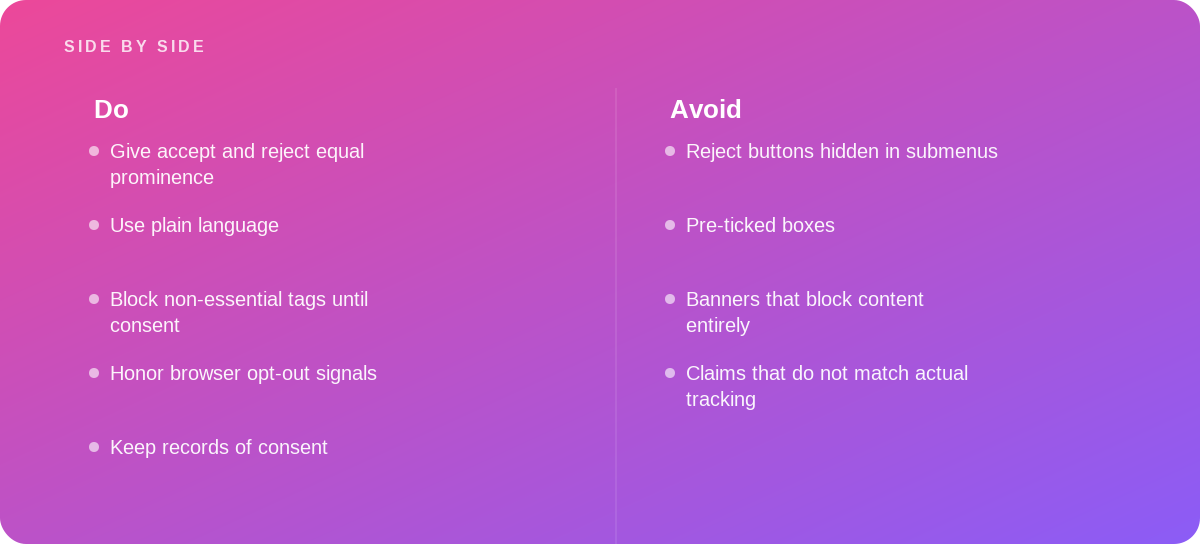
- Give accept and reject equal prominence
- Use plain language
- Block non-essential tags until consent
- Honor browser opt-out signals
- Keep records of consent
What should I avoid?
Avoid:
- Reject buttons hidden in submenus
- Pre-ticked boxes
- Banners that block content entirely
- Claims that do not match actual tracking
When should I get help?
Short answer Bring in help when consent design affects both compliance and measurement.
Where this comes from
- California Privacy Protection Agency — CCPA regulations
- Information Commissioner's Office — Cookies and similar technologies
The figures and practices above come from the sources listed.
Working on something like this?
We take on UI & UX Design work for teams who want it done once, properly. Tell us what you are building and we will tell you honestly whether we are the right studio for it. Start a project.
Where to go next
Spotted something wrong? Report an error on this page. We correct on the page and say what changed.