How to Get Brand Messaging Frameworks Right
A structured set of core messages, supporting points and proof that tells everyone in an organization how to describe the brand consistently.
 MediaScaleUp Editorial Team

Where most projects go wrong
The usual mistakes:
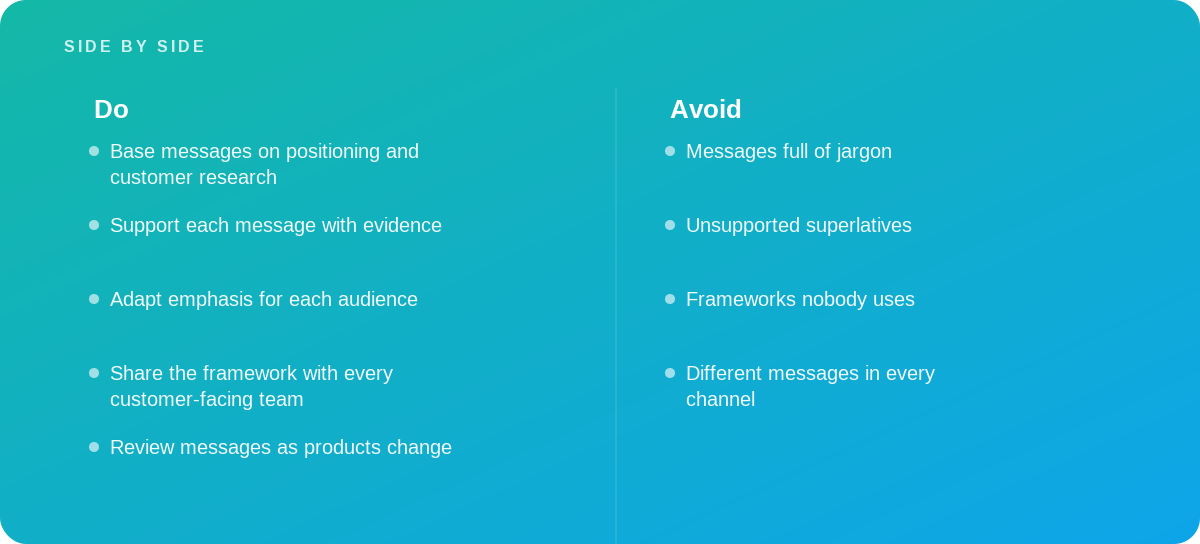
- Messages full of jargon
- Unsupported superlatives
- Frameworks nobody uses
- Different messages in every channel
What good looks like instead
- Base messages on positioning and customer research
- Support each message with evidence
- Adapt emphasis for each audience
- Share the framework with every customer-facing team
- Review messages as products change
Why it matters
Without a shared framework, sales, marketing and support describe the business differently, which confuses customers.
The specs that matter
| Measure | Figure |
|---|---|
| Components | positioning statement, key messages, proof points and audience variations |
| Proof points | evidence that supports each message |
| Audiences | messages adapted for different customer groups |
| Claims | objective claims need substantiation |
Knowing when to hand it over
Tip: Bring in help when teams describe the business inconsistently, or after a repositioning.
Where this comes from
- Federal Trade Commission — Advertising FAQs: A guide for small business
- Nielsen Norman Group — Content strategy
The figures and practices above come from the sources listed.
Working on something like this?
We take on Brand & Identity Design work for teams who want it done once, properly. Tell us what you are building and we will tell you honestly whether we are the right studio for it. Start a project.
Where to go next
Spotted something wrong? Report an error on this page. We correct on the page and say what changed.