How Much Does 3D Packaging Rendering Cost?
What 3D packaging renders cost: market ranges vs our starting rates, pricing models, cost drivers, an illustrative budget, quote steps and red flags to spot.
 MediaScaleUp Editorial Team
Packaging rendering cost in the US market typically falls in the product-still range of $150 – $900 per image, covering one model, one lighting setup, a handful of angles and a composited delivery. With us, the same work is priced in parts: modeling starts from $49 per model and photoreal stills start from $39 per render, so the total depends on how many distinct packs and images you need.
That answer is accurate but incomplete, because "a packaging render" can mean anything from a single front-facing shot of a carton for a web shop to a set of fifteen colorways for a retailer sell-in deck, a billboard-resolution hero with separate passes for the print team, or an interactive configurator that lets buyers spin the pack in a browser. Each of those is a different job with a different price, and a quote that does not tell you which one it is pricing is not really a quote.
This guide is for brand managers, packaging designers, e-commerce teams and agencies commissioning 3D packaging visuals. It explains the pricing models suppliers use, sets the US market ranges beside our published starting rates, walks through what actually drives the number, builds an illustrative budget from those figures, and shows how to get a quote you can rely on, spot a quote that is too cheap to be true, and plan spend across a product range over time.
What packaging rendering costs: the short answer
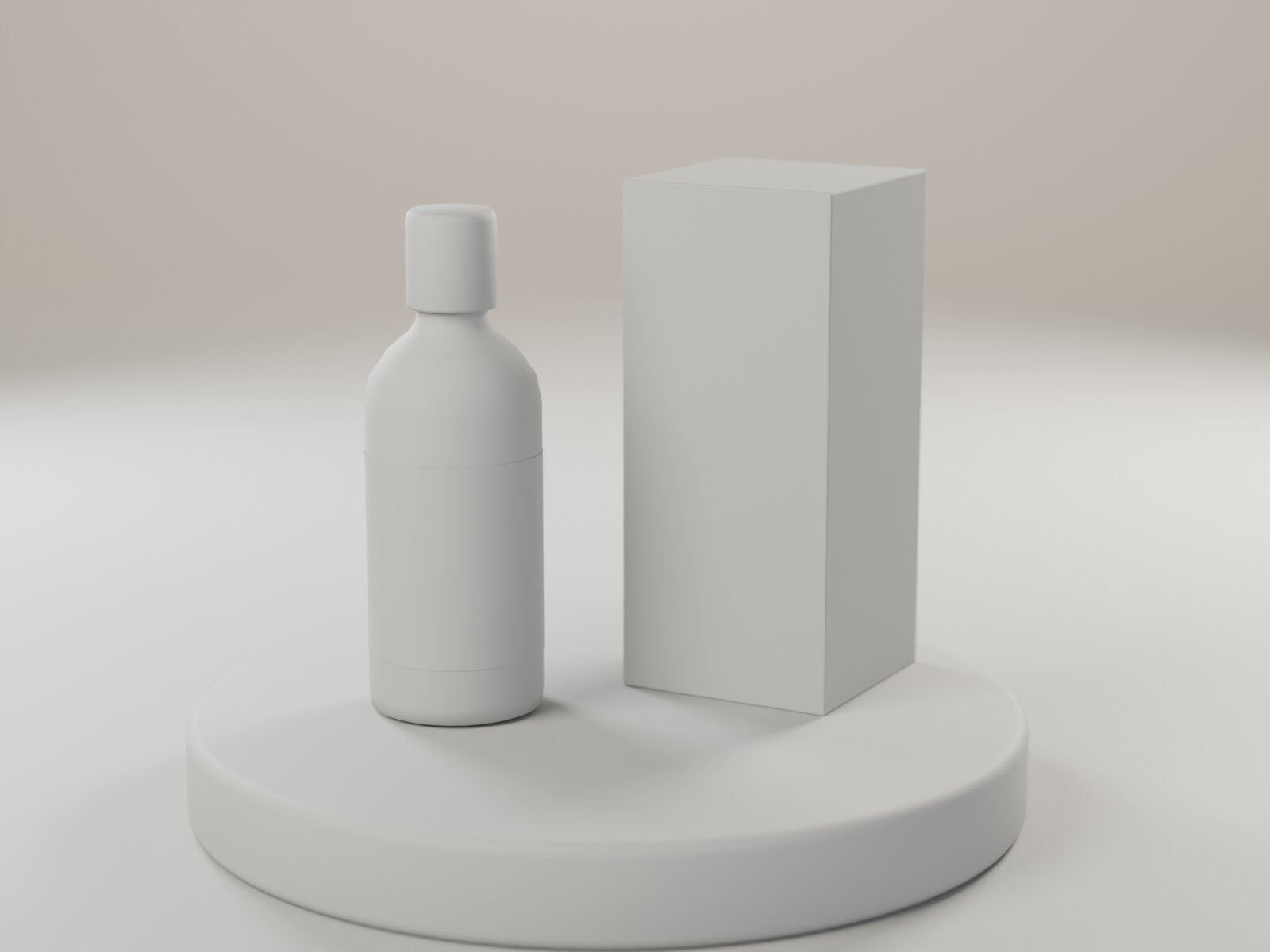
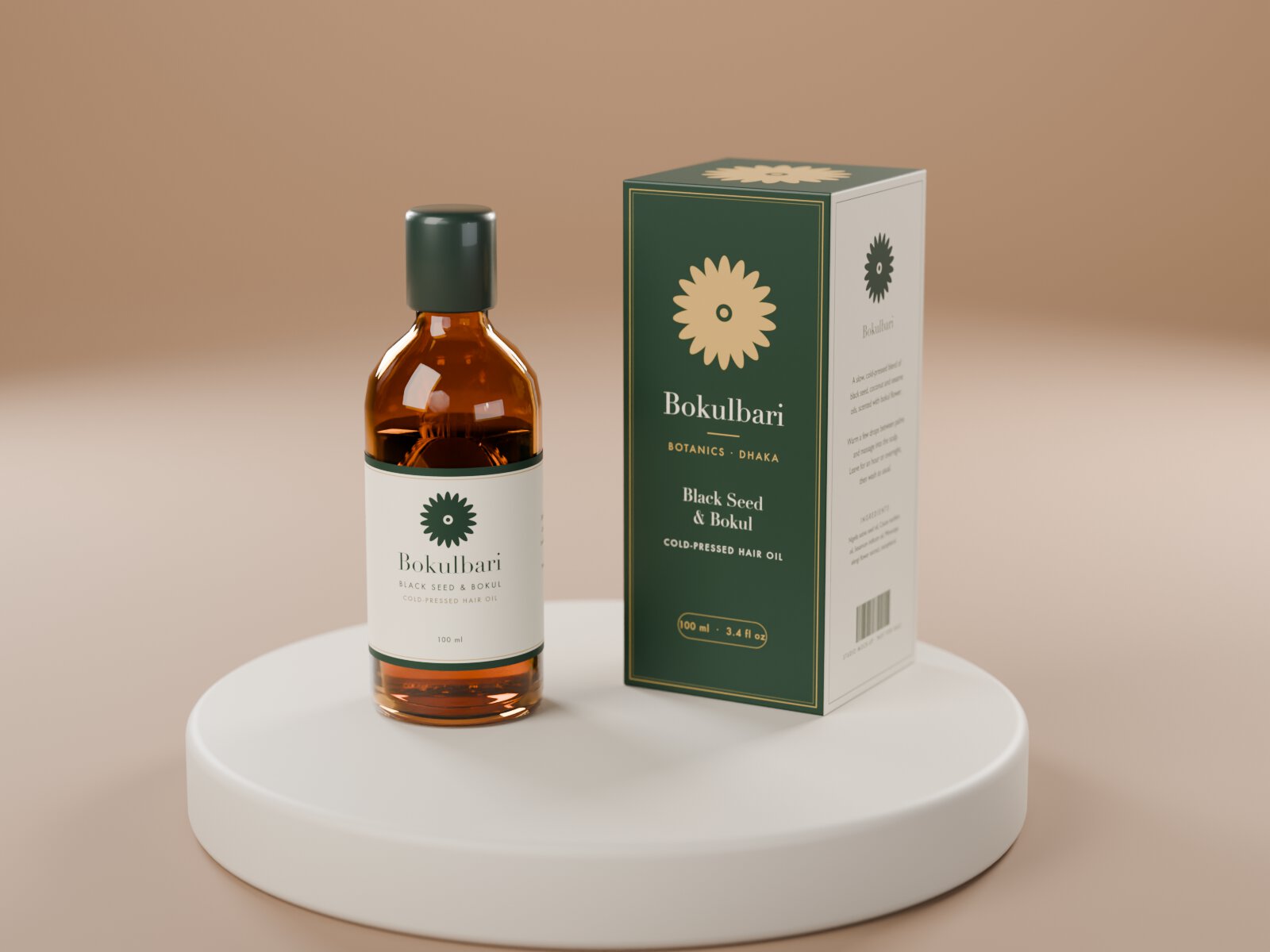
For most brands, the useful unit is the finished image. The reviewed US market range for a product still is $150 – $900 per image. That range assumes one model, one lighting setup, a handful of angles and a composited final. Packaging fits that description well: a bottle, jar, pouch, can, tube or carton is usually a single object with a label or printed surface, lit to look like a studio shot.
Where packaging moves outside that range is when the job stops being a product still. If the pack sits inside a full scene, such as a kitchen counter, a bathroom shelf or a retail aisle built from scratch, the work starts to resemble an interior or architectural visual, which the market prices at $800 – $4,000 per image because it involves a full scene build, lighting, materials, entourage and post. If the pack has to spin, open or change color live on a website, it becomes a real-time asset or configurator, which runs $2,500 – $30,000+ because it needs optimized models, material variants and the web integration to drive them.
Our own rates break the work into its parts rather than quoting per finished image. Per model from $49 per model buys clean topology, correct scale and a model built for where it is going. Per render from $39 per render buys photoreal stills in a managed color pipeline, delivered with passes. A dedicated artist from $11 per hour gives you a modeler or visualizer embedded in your pipeline. These are starting prices; the quote for your job sets the actual figure.
Pricing models and what each includes
Suppliers price packaging rendering in four or five ways. None is inherently better; each suits a different kind of buyer, and knowing which one a quote uses is the first step to comparing quotes fairly.
- Per model One charge to build the pack in 3D, reusable for every future render. Ours from $49 per model.
- Per render One charge per finished still, with lighting, materials and compositing. Ours from $39 per render.
- Per image (bundled) Model and render in one price per image; the market product-still range is $150 – $900 per image.
- Dedicated artist Hourly capacity inside your pipeline. Ours from $11 per hour, starting within 48 hours.
- Per project A fixed fee for a defined set of deliverables, common for scenes and configurators.
Per model
Per-model pricing charges once to build the 3D asset: the geometry of the container, closure and any secondary packaging, the unwrapped surfaces that carry the artwork, and the materials. For packaging, per-model pricing is attractive because the model is the reusable part. Once a 250 ml bottle exists in clean topology at correct scale, it can carry a new label, a new colorway or a new seasonal wrap without being rebuilt. Our per-model turnaround is 3–10 working days, depending on complexity. When comparing per-model quotes, ask what "model" includes: is the closure a separate part, are the label surfaces unwrapped to your dieline, and is the model built for offline rendering, real time, or both?
Per render
Per-render pricing charges for each finished still: camera, lighting, materials tuned to the look you approved, the render itself and the composite. Ours includes a managed color pipeline and delivery with passes, which matters for packaging because brand colors have to survive from the artwork file to the final image, and because retouchers and print teams often need separate passes to adjust reflections or shadows without re-rendering. Per-render turnaround with us is 2–7 working days. The key question for any per-render quote is what counts as one render. Is a second angle of the same setup a new render? Is a colorway? The answer changes a budget by multiples.
Per image (bundled)
Many studios quote a single per-image price that folds modeling, look development, rendering and post into one figure. This is the model behind the $150 – $900 per image market range. It is simple to compare and easy to approve, but it hides the fact that most of the cost of the first image is the model, and that the tenth image from the same model should cost much less than the first. If you plan to produce many images from a few packs, ask a bundled supplier how their price changes for the second and subsequent images.
Dedicated artist
A dedicated artist is capacity rather than a deliverable: a modeler or visualizer who works inside your pipeline, on your file conventions, taking direction from your team. Ours starts from $11 per hour, and we can start within 48 hours. This model suits brands and agencies with a steady flow of packaging work, such as frequent SKU launches, seasonal refreshes or ongoing e-commerce updates, where briefing a new project every time costs more in coordination than it saves.
Per project
Fixed project fees are common for work that is hard to break into units: a full retail-shelf scene, an animated pack reveal, or a web configurator. They give certainty on the total, but only if the scope is written tightly. A project fee that does not list the number of packs, variants, angles, revision rounds and output formats is a range in disguise.
Market ranges against our published starting rates
The table below puts the reviewed US market ranges next to our published starting rates. The two columns do not measure exactly the same thing: market ranges are mostly quoted per finished image or per project, while our rates price the model and the render separately. The table is there to show the order of magnitude, not to claim a like-for-like saving on every job.
| Deliverable | Typical US market range | What the range covers | Our published starting rate | Our turnaround |
|---|---|---|---|---|
| Product still (single pack) | $150 – $900 per image | One model, one lighting setup, a handful of angles, delivered composited | Model from $49 per model, plus render from $39 per render | Model 3–10 working days; render 2–7 working days |
| Pack in a full scene | $800 – $4,000 per image | Full scene build, lighting, materials, entourage and post | Quoted per project from your brief | Estimated in the quote |
| Real-time asset or configurator | $2,500 – $30,000+ | Optimized models, material variants, and the web integration to drive them | Quoted per project from your brief | Estimated in the quote |
| Ongoing packaging capacity | Varies by supplier | An artist working inside your pipeline | Dedicated artist from $11 per hour | Start within 48 hours |
Read the starting rates as the floor for simple work: a clean, geometrically straightforward pack, good reference, and a standard web resolution. The drivers in the next section are what move a real job above that floor. For a broader view of how product visuals are priced beyond packaging, see our guide to 3D product rendering cost, and for the modeling side on its own, how much 3D modeling costs.
What drives packaging rendering cost
Six factors account for most of the difference between a quote at the bottom of a range and one at the top. Packaging has its own version of each.
Asset complexity
A cylinder is not a car. Part count, curvature and material variety drive modeling hours directly. In packaging terms, a straight-sided tin with a printed wrap is close to the simplest possible job. A perfume bottle with a faceted glass body, a weighted cap, a metal collar and a visible dip tube is several objects with demanding materials. A folding carton with a window, a tray insert and the product visible inside is a small assembly. Flexible packaging such as pouches, sachets and bags adds another layer, because the crinkles and folds that make a pouch look filled and real have to be sculpted or simulated rather than drawn from a dieline.
Materials matter as much as shape. Clear glass or plastic with liquid inside needs careful refraction and caustics. Metallic foils, holographic films, embossing, debossing, spot varnish and soft-touch laminates each need their own material setup, and several of them on one pack multiply the look-development time.
Secondary packaging deserves its own line in the brief. A bottle that ships in an outer carton, a jar in a gift box or a multipack sleeve around several cans is more than one object, and whether the outer pack appears in the images changes the modeling scope. Closures are similar: a simple screw cap is quick, while a pump dispenser, trigger sprayer or child-resistant closure with visible ribbing and internal parts can take as long as the container itself. Listing these parts explicitly lets a supplier price them rather than guess, and it stops a quote for a bottle from turning into a surprise invoice for a bottle, pump and box.
Where it is going
Real time on the web means aggressive budgets and optimization passes. Offline render means quality is the constraint and time is the cost. A packaging model built for a product-page still can be dense and detailed because nobody has to download it. The same pack built for a browser configurator has to be light enough to load quickly on a phone, which means retopology, baked textures and careful material simplification. If you will eventually need both, say so at the start, because building once with both uses in mind is cheaper than rebuilding. Our article on choosing real-time or offline rendering covers that decision in depth.
Number of variants
Fifteen colorways from one model is cheap. Fifteen genuinely different products is fifteen models. This is the most important driver for packaging, because packaging ranges are built on variants: flavors, scents, sizes, seasonal editions, regional languages. If the structure stays the same and only the artwork changes, each variant is a label swap and a render. If the bottle shape changes between the 100 ml and the 500 ml sizes, those are separate models. Setting up variants as a batch rather than one at a time lowers the cost of each additional one; our piece on getting batch rendering variants right explains how.
Animation
A still is one frame. A ten-second animation at 30fps is three hundred, and render time scales with it. Packaging animations, such as a slow turntable, a cap unscrewing or a carton unfolding, are popular for social and product pages, but they change the budget in kind, not just in degree. Beyond render time, animation adds rigging for moving parts, motion design, and review of a sequence rather than a single image. A short loop reused across channels usually delivers more value than several one-off clips.
Reference quality
Good CAD data or measured drawings speed everything up. Three blurry photographs and a guess do the opposite. For packaging, the best reference is the structural CAD file or technical drawing from the container supplier, plus the print-ready artwork and dieline. With those, the modeler builds to exact dimensions and the artwork wraps correctly on the first attempt. Without them, time goes into measuring, guessing, and correcting labels that do not line up with the seams. Physical samples help with materials, but they are not a substitute for dimensions.
Render resolution and passes
Billboard resolution with full passes is a different render job from a web hero image. Larger outputs take longer to render and expose any weakness in the model and textures, so the artwork maps and materials need more resolution and more care. Separate passes, such as reflections, shadows, masks for each label area, and depth, let a retoucher or print team make adjustments later, but each adds render and preparation work. If your images are going to print, our practical guide to rendering for print sets out what to specify.
| Driver | Pushes cost down | Pushes cost up |
|---|---|---|
| Asset complexity | Simple rigid shape, one or two materials | Faceted glass, liquids, foils, flexible pouches, assemblies |
| Destination | Offline stills only | Real time on the web, or both uses from one model |
| Variants | Many colorways on one shared structure | Many genuinely different shapes or sizes |
| Animation | Stills only | Turntables, opening sequences, multiple clips |
| Reference | Structural CAD, dieline and print-ready artwork | Photographs and estimates |
| Output | Web resolution, flattened files | Print or billboard resolution with full passes |
How a packaging rendering project runs
Understanding the stages helps you see where your decisions affect the budget. A full project moves through five phases. Simple jobs pass through them quickly; complex ones spend real time in each. We do not quote a single overall duration here, because the phases overlap and scale with the job; your quote gives the schedule for your scope.
- Reference and blockout, 2–4 days. The pack is roughed out at correct proportions from your reference so shape and scale can be confirmed before detail work starts.
- Modeling and texturing, 1–3 weeks depending on complexity. The detailed model is built, the artwork surfaces are unwrapped and the labels applied.
- Look development, 2–4 days, including the approval gate. Materials, lighting and camera are set and you approve the look before rendering begins.
- Rendering, hours to days, estimated before it starts. The approved setup is rendered at final resolution with the agreed passes.
- Composite and delivery, 2–5 days. Passes are composited, color is checked and files are delivered in the agreed formats.
The approval gate at the end of look development is the most important budget control in the whole process. Changes before it are cheap adjustments; changes after it mean re-rendering. A client who approves the look carefully and then changes the label color after rendering has, in effect, paid for the render twice. For a fuller view of timing, see how long 3D rendering takes.
An illustrative budget, built from published starting rates
The following example is illustrative. It uses only our published starting rates and the reviewed market range, and it assumes a simple job at the starting level. A real quote would reflect the drivers above, and most real jobs sit above the floor.
Imagine a beverage brand launching three new cans. The three cans share the same structure but carry different artwork, and the brand wants four still images of each: a front view, a three-quarter view, a group shot position and a close-up, all at web resolution.
Scenario A: one shared structure
Because the three cans share one shape, there is one model to build. The artwork changes per flavor, and each flavor needs four renders.
- Model: 1 model from $49 per model, so from $49.
- Renders: 3 flavors × 4 images = 12 renders, from $39 per render, so from $468.
- Starting total: from $49 + $468 = from $517.
Scenario B: three different structures
Now suppose the three products are genuinely different packs: a can, a glass bottle and a carton. Fifteen colorways from one model is cheap; three different products is three models.
- Models: 3 models from $49 per model, so from $147.
- Renders: 12 renders from $39 per render, so from $468.
- Starting total: from $147 + $468 = from $615.
Reading the example against the market
At the reviewed market range of $150 – $900 per image, twelve product stills would fall between $1,800 and $10,800 if each were priced as a separate bundled image. The comparison is not exact, since bundled market prices often include more post-production, and a real job with glass, liquids or foil finishes would move our figures above the starting rate. The point of the example is structural: when the model is priced separately, extra flavors on a shared structure are the cheapest thing you can add, and extra shapes are the most expensive.
A brand that expects a steady stream of this work might instead use a dedicated artist from $11 per hour. For illustration only, a 40-hour week at that starting rate would come to $440. Whether that is better value than per-unit pricing depends on how much work arrives and how predictable it is.
How to get an accurate packaging rendering quote
Most quote surprises come from missing information rather than from supplier dishonesty. A supplier who has to guess the number of variants or the output size will either pad the price or come back later with change requests. Supplying the following gives you a figure you can plan around.
- List every pack and every variant. Separate distinct structures (different shapes or sizes) from artwork variants on the same structure, because they are priced differently.
- Send the best reference you have. Structural CAD or technical drawings from the container supplier, dielines, and print-ready artwork files. Add photographs of physical samples for materials.
- Define every output. Number of images per pack, angles, backgrounds, resolution, file format, and whether you need separate passes for retouching or print.
- Say where the images will be used. Web product pages, retailer listings, print, out-of-home, social animation or a real-time viewer. Name any future uses too.
- Specify finishes and materials. Foils, embossing, spot varnish, transparent bodies, visible liquids or product inside a window.
- Agree the approval gate and revision rounds. Who approves the look, how many rounds are included, and what counts as a change after approval.
- Ask for the quote broken into parts. Modeling, look development, rendering and post as separate lines, so you can see what drives the total and what an extra variant costs.
Before committing, it is worth asking a few direct questions of any supplier; our list of questions to ask before hiring a 3D rendering studio is a good starting point. It also helps to know what a rendering package normally contains, which our explainer on what is included in a 3D rendering package sets out, so you can see what a low quote may have left out.
Red flags in cheap packaging rendering quotes
A low price is not a red flag on its own. Our own starting rates are low relative to the market ranges because the work is priced in parts and produced efficiently. The warning signs are about what a quote leaves undefined, not the number at the bottom.
Warning: Be cautious when a quote shows any of these signs.
- A single price with no statement of how many angles, variants or revision rounds it covers.
- No mention of reference: the supplier has not asked for dielines, CAD or artwork files.
- No approval gate before final rendering, which means changes arrive after the expensive step.
- No color management: nothing about how brand colors in your artwork will be matched in the render.
- Output unspecified: no resolution, format or passes listed.
- Model ownership unclear: you cannot tell whether you receive the model file for future use.
- Stock models presented as custom: a generic bottle resized to roughly fit your pack.
The last point deserves attention in packaging. A generic stock bottle or jar can look fine at thumbnail size, but it will not match your container's exact shoulder, neck finish or base, and those differences show immediately next to a real photograph or on a retailer page beside a competitor. If a quote seems very fast and very cheap for a custom shape, ask whether the model is being built from your dimensions.
Color is the other quiet failure. A render that shifts your brand's red toward orange is not usable for packaging, however realistic it looks. A managed color pipeline, where artwork color profiles are respected through texturing, rendering and compositing, is part of what our per-render rate covers, and it is worth asking any supplier how they handle it. Lighting and color decisions are inseparable: a strong specular highlight across a label can wash out the very color you are trying to protect, so the look-development approval should always be judged on screen at the final output size.
Choosing the right output for the money
Because the output type moves a job between very different price ranges, choosing it deliberately is one of the most effective ways to control cost.
Stills for e-commerce and retail listings
Clean product stills on a plain background are the core packaging deliverable, and they sit in the product-still range. They are the easiest to produce in volume and to update when artwork changes. If a pack will be sold through several retailers with different image requirements, specify all the required sizes and backgrounds up front so they are rendered together.
Lifestyle and shelf scenes
Placing a pack in a styled environment, such as a counter, a vanity, a picnic table or a retail shelf, adds scene building, props and more lighting work, which is why full-scene visuals sit in the $800 – $4,000 per image market range. A cost-effective compromise is a single reusable scene into which several packs are placed, rather than a new scene per product.
Animation for social and product pages
Turntables and simple reveals are the most efficient animation for packaging, because they reuse the still setup and need little motion design. Longer, choreographed sequences are best reserved for launches where the clip will run across many channels.
Real-time viewers and configurators
A 3D viewer or configurator lets customers rotate a pack or switch variants in a browser. It sits in the $2,500 – $30,000+ market range because the models must be optimized and the variants wired into a web integration. It makes most sense for ranges with many combinations, such as personalized or gift packaging, where rendering every option as a still would be impractical. Our overview of 3D packaging visualization covers which formats earn their cost.
The model is the investment and the renders are the dividend: build each distinct pack once, correctly, and every future flavor, size or season becomes the cheapest thing on the invoice.
How to budget for packaging rendering over time
Packaging is rarely a one-off. Ranges grow, artwork refreshes, seasonal editions come and go, and retailers change their image requirements. Budgeting across a year rather than per launch usually lowers the total.
Treat models as assets
Every distinct structure you have modeled correctly is a reusable asset. Keep an inventory of which packs exist in 3D, at what quality and for which uses. When a new flavor launches on an existing structure, the budget line is renders only. Make sure your agreement gives you the model files, or at least guarantees that the supplier keeps them for your reuse.
Batch variants and refreshes
Plan artwork refreshes and seasonal editions so they can be rendered as batches. Setting up lighting and cameras once for a batch of variants is more efficient than repeating the setup for each one as it arrives.
Decide on capacity versus projects
If your packaging work arrives in a steady stream, compare the cost of per-unit pricing across a year with a dedicated artist starting from $11 per hour. If it arrives in a few large bursts around launches, per-model and per-render pricing is usually simpler. The right answer depends on your volume and how predictable it is.
Keep specifications consistent across the range
Agree one set of standard outputs for the whole range: the same camera angles, background, lighting setup, resolution and file naming for every pack. Consistency makes each new product cheaper to add, because the setup already exists, and it makes the range look coherent on retailer pages where packs appear side by side. Document the standard once and include it in every future brief.
Reserve for the unexpected
Last-minute artwork changes, a retailer demanding a new angle, or a regulatory label update can all require new renders. A small contingency line in the annual budget avoids emergency approvals. If you want a broader picture of how our 3D work is organized and priced, the 3D design and development services page brings it together.
Verdict Packaging rendering is inexpensive when the job is well defined: distinct structures modeled once from good reference, variants batched as renders, outputs specified up front, and the look approved before final rendering. Expect market product stills at $150 – $900 per image, compare that with our starting rates from $49 per model and from $39 per render, and ask every supplier for a quote broken into parts.
Spotted something wrong? Report an error on this page. We correct on the page and say what changed.