How Much Does Furniture Rendering Cost?
What furniture rendering costs, from product stills to room scenes and configurators: pricing models, cost drivers, an illustrative budget and quote red flags.
 MediaScaleUp Editorial Team

Furniture rendering cost in the US market typically runs from $150 – $900 per image for a product still, $800 – $4,000 per image for an interior or architectural visual, and $2,500 – $30,000+ for a real-time asset or configurator. Our published starting rates are from $49 per model, from $39 per render, and from $11 per hour for a dedicated artist; your final number depends on complexity, variants and where the images are going.
Those ranges are wide because "furniture rendering" covers very different jobs. A single dining chair on a white background, a sectional sofa in fifteen fabrics, a fully dressed living room scene for a catalog cover and a web configurator that lets shoppers swap legs and upholstery in real time are all furniture rendering, and they sit in different price brackets for good reasons. This guide is for furniture brands, retailers, manufacturers, marketplace sellers and the marketers and product teams who buy this work. It explains how rendering is priced, what moves the number, how to build a budget, how to get a quote you can trust and how to spot a cheap quote that will cost more later.
Throughout, the market ranges are reviewed US ranges and our figures are published starting prices, not guaranteed totals. Where we use example quantities to show the arithmetic, the example is labeled illustrative.
Furniture Rendering Cost at a Glance
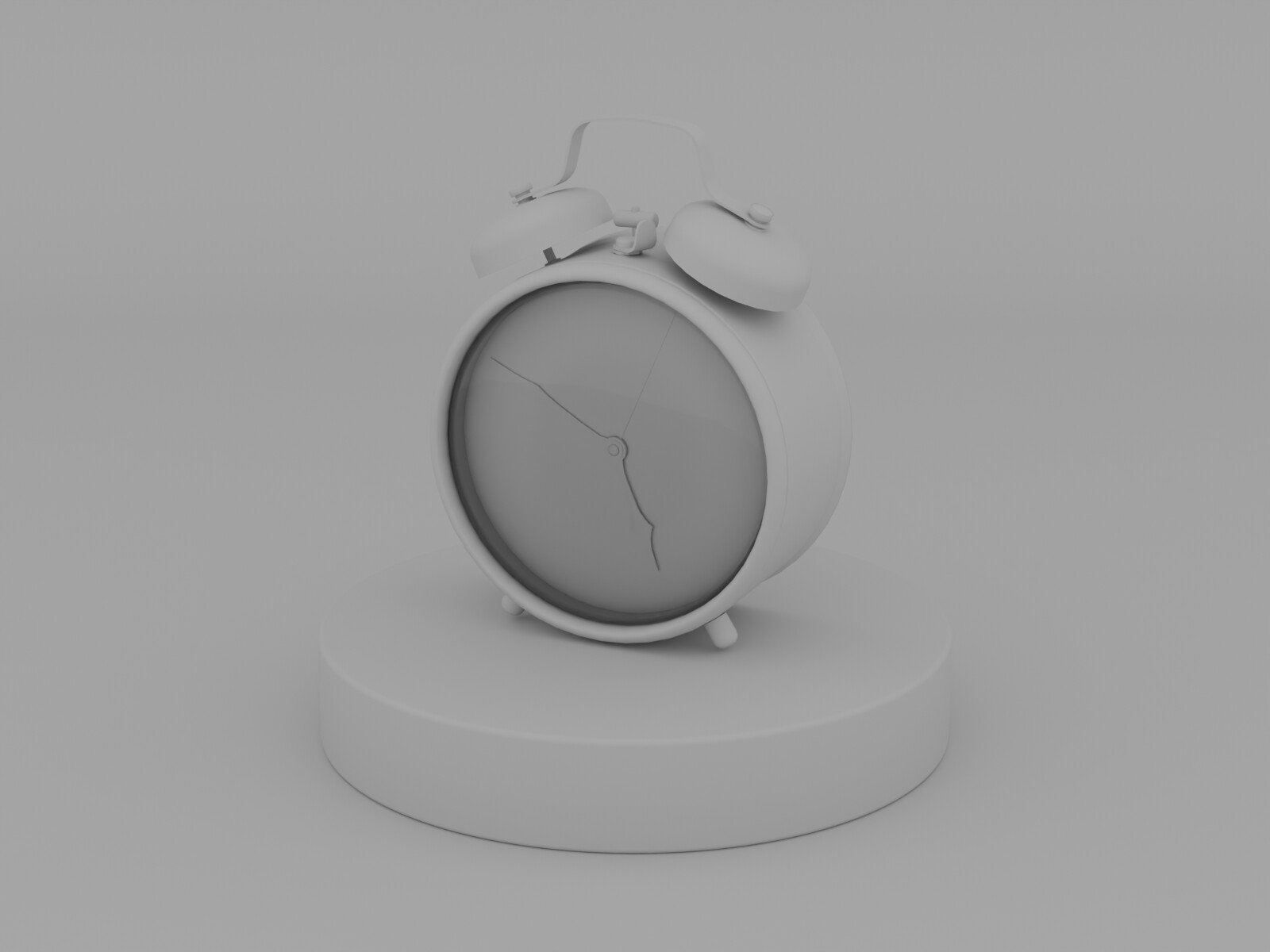
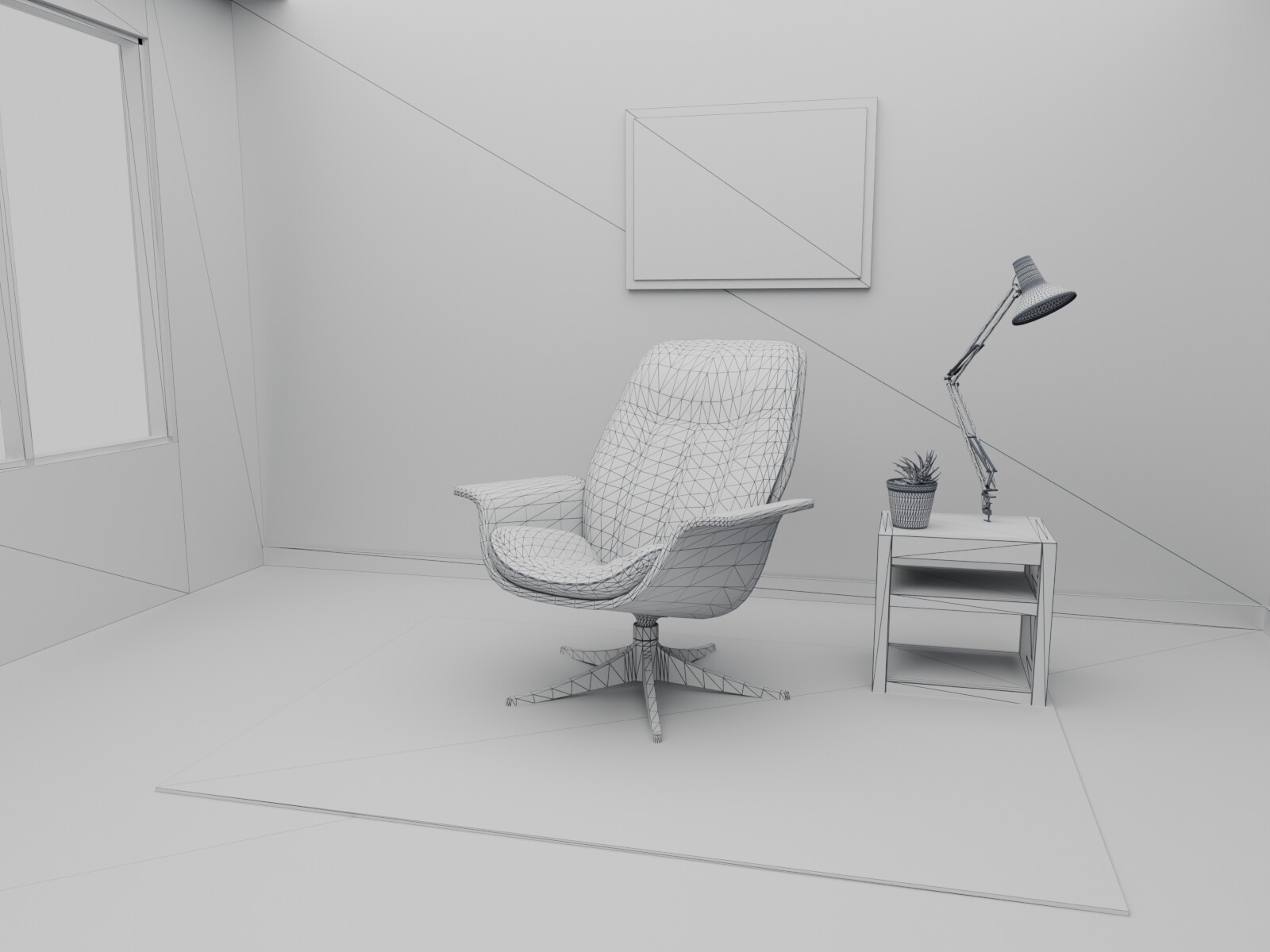
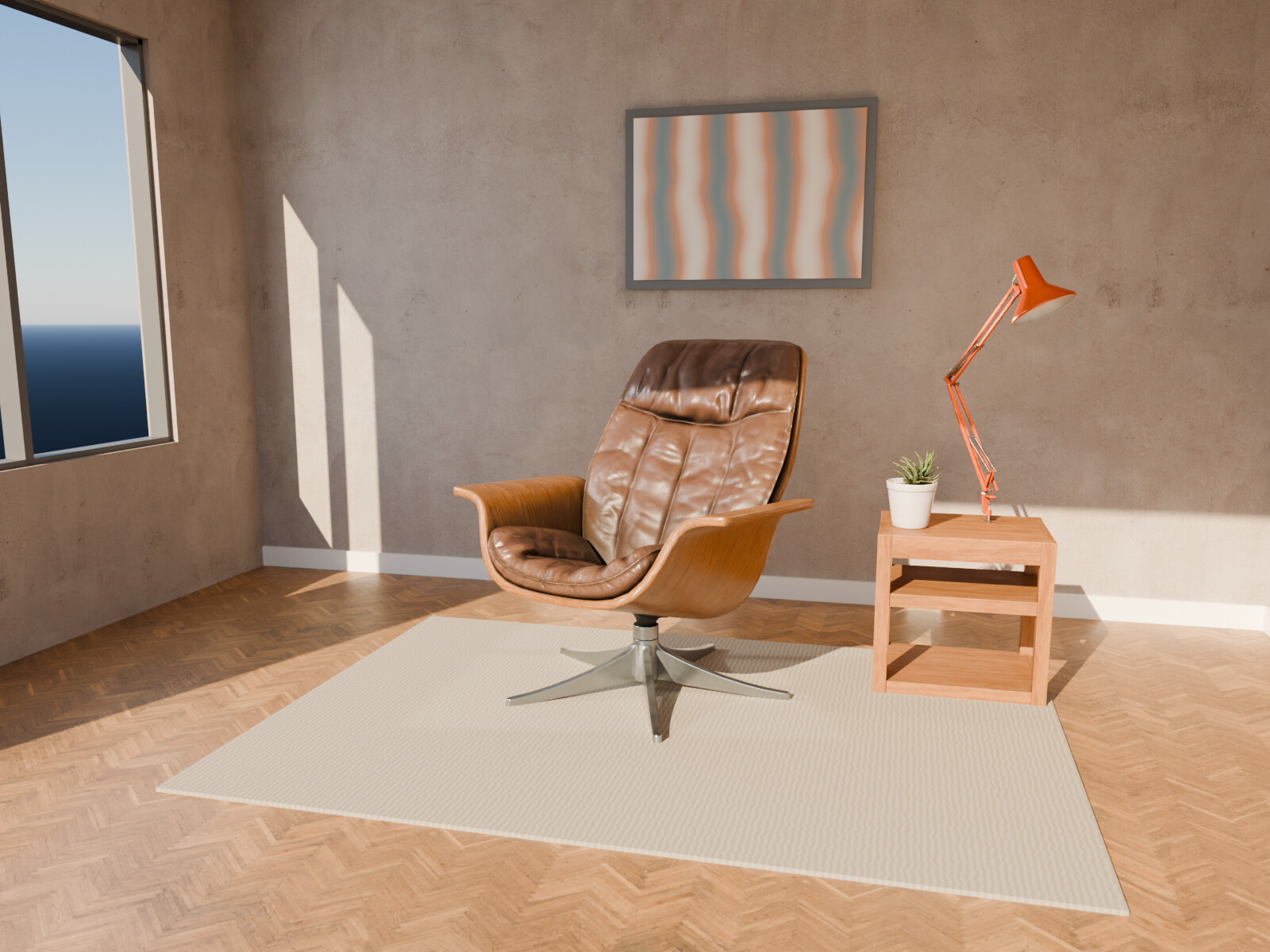
The fastest way to orient yourself is to separate the two things you are paying for. The first is the 3D model: the digital version of the product, built to correct scale with clean topology and materials. The second is the render: the image produced from that model, with lighting, camera, composition and post-production. Some suppliers bundle the two into a single per-image price; others, including us, price them separately so you can see what each costs and reuse the model across many images.
Separating model and render matters for furniture more than for most product categories, because furniture ranges are built on variation. The same sofa frame comes in several widths, many fabrics and a few leg finishes. The same table comes in three woods. Once a model exists, every additional image of it costs render time and post work but not new modeling. That is the economic engine behind rendering replacing photography for many furniture catalogs: a photographed sofa in twelve fabrics needs twelve physical samples and twelve shoots, while a rendered one needs one good model and a material library.
For the broader category, including small products such as lighting and accessories, see our guide to 3D product rendering cost. The rest of this article focuses on what is specific to furniture.
Pricing Models and What Each Includes
Furniture rendering is sold in four common ways. Most suppliers use one or two of them, and understanding which you are being quoted is the first step to comparing quotes fairly.
- Per model From $49 per model with us: clean topology, correct scale, built for where it is going. Turnaround: 3–10 working days
- Per render From $39 per render with us: photoreal stills in a managed color pipeline, delivered with passes. Turnaround: 2–7 working days
- Dedicated artist From $11 per hour with us: a modeler or visualizer embedded in your pipeline. Turnaround: start within 48 hours
- Per image, bundled Common in the market: one price covers model, lighting and a delivered image, usually quoted within the market ranges above
- Project or fixed fee Common for room scenes and configurators: a single price for a defined scope, deliverables and revision rounds
Per model
A per-model price pays for building the digital product. What "built for where it is going" means in practice: a model destined for offline stills can carry detailed geometry such as stitched seams, tufting and fabric folds, while a model for a web configurator needs a strict polygon budget and baked detail. The same sofa built for each purpose is a different job. A per-model quote should say which use the model is built for, what file formats you receive and whether materials are included.
Per render
A per-render price pays for producing an image from an existing model: camera setup, lighting, rendering, and composite. "Delivered with passes" means you receive not only the final image but separate render layers, such as shadows, reflections or object masks, that let a retoucher or your in-house team adjust the image later without re-rendering. A managed color pipeline means the image is produced and delivered in a defined color space so that fabric and wood colors stay consistent across the whole catalog and match on screen and in print.
Dedicated artist
For brands with a steady flow of new products, an hourly dedicated artist works like an extension of the in-house team. You direct priorities day to day, and the artist works inside your naming conventions, material library and approval process. This model suits ongoing catalog work better than one-off projects, because the value comes from the artist learning your products and standards.
Bundled per image and fixed-fee projects
Bundled pricing is simpler to read but harder to compare, because you cannot see how much of the price is modeling and whether the model is yours to reuse. Fixed-fee projects are standard for room scenes and configurators, where the scope is a set of deliverables rather than a count of images. For either, ask what is included; our guide on what is included in a 3D rendering package lists the items that should be written down.
Market Ranges Compared With Our Starting Rates
The table below sets the reviewed US market ranges next to our published starting rates. The two are not directly interchangeable: market ranges are usually quoted per finished image with modeling bundled in, while our rates split modeling and rendering. Read the "how to compare" column before comparing numbers.
| Deliverable | Typical US market range | What the range usually includes | Our published starting rate | How to compare |
|---|---|---|---|---|
| Product still | $150 – $900 per image | One model, one lighting setup, a handful of angles, delivered composited | From $49 per model plus from $39 per render | Add the model cost to the renders you need, then compare with the per-image total |
| Interior or architectural visual | $800 – $4,000 per image | Full scene build, lighting, materials, entourage and post | Quoted per scope; scene building uses modeling and rendering time | Ask for a quote that itemizes the scene build separately from the render |
| Real-time asset or configurator | $2,500 – $30,000+ | Optimized models, material variants, and the web integration to drive them | Quoted per scope; models from $49 per model, or a dedicated artist from $11 per hour | Separate the asset work from the web integration, which is often the larger part |
| Ongoing catalog production | Usually quoted per image or per project | Varies by supplier | Dedicated artist from $11 per hour | Compare the hours needed against the per-image total for the same volume |
Two things stand out for furniture buyers. First, the product-still range already assumes "a handful of angles," so a quote that seems high per image may cover more views than a cheaper one. Second, the configurator range is wide because the web integration, not the modeling, is often where the cost sits. A configurator with five products and two material options is a very different build from one with a full range and dozens of fabrics, and the range reflects that.
What Drives Furniture Rendering Cost
Six factors move the price of furniture rendering more than anything else. Knowing which apply to your project lets you predict where a quote will land and where you can save.
Asset complexity
A cylinder is not a car. Part count, curvature and material variety drive modeling hours directly. In furniture terms, a simple parsons table with four straight legs is quick to model. A tufted chesterfield with button details, rolled arms and nailhead trim is not. Upholstered pieces are consistently harder than case goods because soft forms, seams, piping and natural fabric wrinkles have to look real. Woven items such as rattan and cane, and pieces with carved or turned detail, sit at the demanding end. If your range mixes simple and complex pieces, expect quotes to vary item by item rather than to apply one flat rate.
Where it is going
Real time on the web means aggressive budgets and optimization passes. Offline render means quality is the constraint and time is the cost. A furniture model for a product-page image can be as detailed as the render needs. A model for an augmented-reality view or a browser configurator has to load quickly on a phone, so detail is baked into textures and the geometry is simplified by hand. Doing that well is skilled work, and it is often needed in addition to the high-detail version, not instead of it. Our guide on choosing real-time or offline rendering covers the decision in detail.
Number of variants
Fifteen colorways from one model is cheap. Fifteen genuinely different products is fifteen models. This is the most important cost lever in furniture, because ranges are built on variation. Fabric, leather, wood finish and metal finish changes on the same frame are material swaps and new renders. A different arm style, a different width or a sectional configuration may be a partial rebuild or a new model. When you brief a supplier, be clear about which of your "variants" are really materials and which are really different products. Setting up batch production for colorways is covered in our guide on getting batch rendering variants right.
Animation
A still is one frame. A ten-second animation at 30fps is three hundred, and render time scales with it. A turntable of a lounge chair or a slow camera move through a room scene is valuable for product pages and social media, but it multiplies render time and adds review work: every frame has to be free of flicker, noise and artifacts. Budget for animation as its own line, never as an extra thrown in with stills.
Reference quality
Good CAD data or measured drawings speed everything up. Three blurry photographs and a guess do the opposite. Furniture manufacturers often have excellent reference already: production drawings, CAD files from the factory, fabric swatches with color references, and hardware specifications. Retailers selling other brands' products often have much less. Poor reference costs money twice, once in slower modeling and again in revision rounds when the render does not match the real product.
Render resolution and passes
Billboard resolution with full passes is a different render job from a web hero image. A catalog cover or a large-format print needs far more pixels than a product page, and higher resolution means longer render times and more careful checking. Full passes add value for retouching but add render and delivery time. If you need print output, read our practical guide to rendering for print before you specify resolution.
| Cost driver | Lower-cost end | Higher-cost end |
|---|---|---|
| Asset complexity | Straight-lined case goods, simple tables | Tufted upholstery, woven rattan, carved detail |
| Destination | Offline still for a product page | Optimized real-time model plus an offline version |
| Variants | Material swaps on one frame | Structurally different models |
| Animation | Stills only | Turntables and camera moves: 300 frames for ten seconds at 30fps |
| Reference | CAD files and measured drawings | A few photographs |
| Resolution and passes | Web-size images, final composite only | Print or billboard resolution with full passes |
How a Furniture Rendering Project Runs
The stages of a project matter to cost because each has its own time and its own approval point. Changes are cheap early and expensive late. A typical project moves through five stages:
| Stage | Typical duration | What you approve |
|---|---|---|
| Reference and blockout | 2–4 days | Proportions and dimensions against your reference |
| Modeling and texturing | 1–3 weeks depending on complexity | Detail, construction and material assignment |
| Look development | 2–4 days, including the approval gate | Materials, lighting mood and camera angles on test renders |
| Rendering | Hours to days, estimated before it starts | Nothing new; this stage runs on approved setup |
| Composite and delivery | 2–5 days | Final images, passes and file formats |
Stage durations depend on the size of the job, and the stages overlap on multi-product projects: while one piece is in look development, the next can be in modeling. For a single model or a small batch of renders, the published turnarounds above apply: 3–10 working days per model and 2–7 working days per render. For larger programs, ask for a schedule built for your volume rather than adding stage durations together. Our guide on how long 3D rendering takes explains what speeds a schedule up.
The look development gate is where most budget is protected or lost. Approving materials, lighting and angles on test renders before full rendering means changes cost minutes of setup rather than hours of re-rendering. A supplier who skips this gate is not saving you money.
A Worked Budget Example (Illustrative)
The following example is illustrative. The quantities are invented to show the arithmetic, and the prices used are our published starting rates. Starting rates are the minimum for simple work; a real quote may be higher for complex pieces, and you should treat the total as a floor for planning, not a promised price.
The brief
Imagine a furniture brand launching a new collection of 20 pieces: chairs, side tables, a coffee table, a console and several upholstered items. It wants:
- One model for each of the 20 pieces, built for offline rendering
- Four white-background product angles of each piece: front, three-quarter, side and back
- For 5 of the upholstered pieces, three extra fabric colorways each, shown in the three-quarter view
The arithmetic at starting rates
| Line | Quantity | Starting rate | Starting cost |
|---|---|---|---|
| Models | 20 models | From $49 per model | $980 |
| Product angles | 20 pieces × 4 angles = 80 renders | From $39 per render | $3,120 |
| Colorway renders | 5 pieces × 3 colorways = 15 renders | From $39 per render | $585 |
| Total at starting rates | 20 models, 95 renders | $4,685 |
Checking the figures: 20 times $49 is $980; 80 times $39 is $3,120; 15 times $39 is $585; and $980 plus $3,120 plus $585 is $4,685. The render count is 80 plus 15, which is 95.
What would move this number
If the upholstered pieces are tufted or have complex seams, their models will cost more than the starting rate. If the brand wants the three-quarter views at print resolution for a catalog, those renders become larger jobs. If it later adds a lifestyle room scene for the collection launch, that is a scene build priced per scope, and the market range for interior visuals, $800 – $4,000 per image, is the right reference point. None of these changes touch the 20 models, which remain reusable for every future image.
The dedicated-artist alternative
If the same brand launches collections several times a year, an hourly artist may suit it better. At from $11 per hour, an illustrative block of 160 hours would start at $1,760 (160 times $11). Whether that block delivers more or less than the per-item route depends entirely on the complexity of the pieces and how the work is directed, so the right comparison is a quote for your actual range under each model, not a rule of thumb.
How to Get an Accurate Furniture Rendering Quote
An accurate quote depends on an accurate brief. Most quote variation between suppliers comes from different assumptions about scope, not different prices for the same work. The procedure below closes those gaps.
- List every piece and classify it Give each product a line with its name, dimensions and category. Mark which are genuinely different products and which are material variants of another item.
- Gather the best reference you have CAD files, production drawings, dimensioned sketches, fabric and finish swatches with color references, and clear photographs of the real product from several angles.
- Define the destination for every asset Say whether each model is for offline stills, a web configurator, augmented reality, or all three, so the supplier builds and prices for the right use.
- Specify the images Angles per piece, background (white, color or scene), resolution, file format, color space and whether you need passes.
- State revision and approval points Say who approves models and look development, and how many rounds of changes you expect, so revisions are priced rather than argued over.
- Ask for an itemized quote Request separate lines for models, renders, scene builds, animation and any integration work, plus a schedule built for your volume.
- Test with a small batch Before committing a full collection, commission two or three representative pieces, including your hardest upholstered item, to check quality, communication and accuracy against reference.
When you speak to suppliers, a short set of good questions tells you more than a portfolio. Our list of questions to ask before hiring a 3D rendering studio covers file ownership, color management and revision terms.
Red Flags in Cheap Furniture Rendering Quotes
Low prices are not a red flag on their own. Rendering is a global service and efficient pipelines are real. The problems are quotes that are low because something is missing, and those usually surface as extra costs or unusable files later.
Watch for: signs that a low quote leaves out work you will need.
- A single per-image price with no mention of whether you receive or own the model
- No look-development or test-render stage before final rendering
- No mention of color management, color space or how fabric colors will be matched
- Revisions that are "unlimited" but undefined, or not mentioned at all
- No questions about your reference, dimensions or destination before quoting
- Model files that are "not included" or delivered only as flattened images
- Real-time or configurator work quoted without any mention of polygon budgets or optimization
The most expensive of these for furniture is losing the model. If a supplier keeps the model, every new colorway, angle or room scene has to go back to them, and switching suppliers means paying to model the piece again. The second most expensive is weak color management: a sofa whose rendered fabric does not match the delivered product generates returns and complaints, and fixing color across a catalog after the fact is slow.
Lighting quality is the other area where cheap work shows. Flat, evenly lit renders make furniture look like a game asset rather than a real object. Good furniture lighting models real windows and fixtures, shows the texture of fabric and grain, and grounds the piece with soft contact shadows, and it takes time to set up well.
Stills, Room Scenes or Real Time: Choosing What to Pay For
Not every piece in a range needs every kind of image. Matching deliverables to where the product sells is the most effective way to control total spend.
White-background stills
These are the workhorse of product pages and marketplaces. They need consistency more than drama: the same camera heights, lens, lighting and shadow treatment across the range so products sit together on a category page. For most catalogs, every piece gets these.
Room scenes and lifestyle images
Room scenes sell a look rather than a piece. They are priced like interior visuals because they involve a full scene build, lighting, materials, entourage and post. The efficient approach is to build a small number of scenes and reuse them with different furniture and fabrics, rather than building a new room for every product. Our guide to room scene rendering covers how to plan scenes for reuse.
Real-time assets and configurators
Configurators are worth it when shoppers genuinely customize, as with modular sofas, made-to-order upholstery or tables with multiple sizes and finishes. For a range with few options, well-planned stills of every variant may do the same job at a lower cost. The configurator market range, $2,500 – $30,000+, includes the web integration, so compare it with the cost of rendering every variant as a still before deciding.
| Deliverable | Best for | Main cost driver |
|---|---|---|
| White-background stills | Product pages, marketplaces, spec sheets | Number of pieces and angles |
| Colorway stills | Upholstery and finish options | Number of material variants |
| Room scenes | Launches, catalogs, social media, hero banners | Scene build and resolution |
| Animation | Product videos, social media | Frame count and render time |
| Configurator | Highly customizable products | Optimization and web integration |
Preparing Your Files to Lower the Cost
Reference quality is the one cost driver you control almost completely. An hour spent organizing files before you request quotes can save many hours of modeling and several revision rounds. The preparation below applies whether you are a manufacturer with factory drawings or a retailer working from supplier photographs.
Dimensions and construction
Give overall width, depth and height for every piece, plus the dimensions that define its character: seat height, arm height, leg height and taper, cushion thickness, tabletop thickness and edge profile. If you have CAD files, send them even if they are production files rather than presentation models, because they fix proportions and hardware positions. If you do not, a dimensioned sketch over a front and side photograph is far better than photographs alone. Note construction details that are easy to miss, such as whether cushions are loose or attached, whether seams are welted, and how legs attach to the frame.
Materials and color
Send physical swatches where you can, or high-resolution scans taken under controlled light with a color reference card in frame. Name every material consistently: the same fabric should not appear as "Oat," "Oatmeal" and "Natural linen" across three spreadsheets. For wood, say whether the finish is matte, satin or gloss and whether the grain should be visible through a stain. For metal, specify brushed, polished or powder-coated. These details decide whether a render reads as the real product.
Photographs of the real product
Where a physical sample exists, photograph it from the front, the three-quarter view, the side, the back and from above, plus close-ups of stitching, joints, hardware and any texture. Include a photograph of the piece in daylight next to something of known size. These images are not for reproduction; they are how the modeler checks proportion and how the look-development reviewer checks that the materials match.
Naming and output specifications
Agree on a file naming convention that includes the product code, variant and angle before production starts, and share the image specifications your website, marketplaces and print partners require. Renaming and resizing several hundred delivered files is avoidable work that nobody enjoys paying for.
Suppliers price uncertainty. A brief that leaves the modeler to guess dimensions, materials or destination will attract either a higher quote with a margin for the unknowns or a low quote followed by change requests. A complete brief is the most reliable way to get a quote that holds.
Budgeting for Furniture Rendering Over Time
The first collection is the most expensive one, because every piece needs a model. Budgets for later seasons look different, and planning for that changes what you should prioritize at the start.
Treat models as assets
A well-built model is reusable for years: new fabrics, new angles, new room scenes, seasonal campaigns, and even a later configurator if it was built with that in mind. Budget the first year for modeling, and expect later years to be dominated by render and scene costs. Make sure your contract gives you the model files in formats you can use elsewhere.
Build a material library
Fabrics, woods, metals and leathers, calibrated to your physical swatches, are shared across every product. Investing in an accurate, well-organized material library early makes every later colorway faster and more consistent.
Plan around your product calendar
Furniture brands usually launch on a seasonal rhythm. Commission models as soon as final specifications are locked, and schedule renders for when marketing needs them, allowing for the look-development gate. Leaving everything to the weeks before a launch removes the chance to test and adds rush pressure.
Decide between per-item and hourly each year
Per-model and per-render pricing is easiest to budget for defined launches. A dedicated artist makes more sense once your volume is steady enough to keep one person usefully busy. Revisit the choice annually as your volume changes. For a wider view of how modeling is priced across categories, see how much 3D modeling costs, and for the full range of services, our 3D design and development page.
Verdict For most furniture brands, the lowest total cost comes from paying properly for accurate, reusable models and a calibrated material library once, then producing stills and colorways in volume from them. Reserve room scenes and configurators for the products and moments that justify them, and insist on owning your model files.
Spotted something wrong? Report an error on this page. We correct on the page and say what changed.