How Much Does 3D Modeling Cost?
What 3D modeling costs in the US, how per-model, per-render and hourly pricing compare, what drives the price, and how to get a quote you can rely on.
 MediaScaleUp Editorial Team
In the US market, 3D modeling cost typically runs from $150 – $900 per image for a product still, $800 – $4,000 per image for an interior or architectural visual, and $2,500 – $30,000+ for a real-time asset or configurator. Our own published rates start from $49 per model, from $39 per render and from $11 per hour for a dedicated artist.
Those ranges are wide for a reason. "A 3D model" can mean a simple packaging shape for an e-commerce listing, a fully textured product with a dozen material variants, a furnished room lit for a property brochure or an optimized asset that has to spin smoothly in a browser. Each of those is a different job with a different amount of work behind it, and the price follows the work rather than the label.
This guide is for marketing leads, e-commerce managers, product teams, architects and agency producers who need to budget for 3D work and want to understand what they are paying for. It explains the pricing models you will meet, sets market ranges beside our starting rates, walks through what drives the number up or down, builds an illustrative budget from real published figures and shows how to get a quote you can rely on.
The short answer on 3D modeling cost, and why it varies
The fastest way to make sense of 3D pricing is to separate three things that are often bundled together: the model itself, the images or animation made from it and the integration work needed to use it somewhere, such as a website configurator. A supplier who quotes "per image" is usually bundling the model, lighting, rendering and compositing into one number. A supplier who quotes "per model" is pricing the asset, and renders are a separate line. A supplier who quotes by the hour is selling capacity, and the total depends on how efficiently that capacity is used.
None of these is better in the abstract. What matters is whether the model you are being quoted on matches the thing you need. A brand that needs one hero image for a launch is well served by a per-image price. A brand that needs a hundred products photographed in the same studio setup, and then again in new colorways each season, is better served by owning the models and paying per render. A team with a steady pipeline of changes is often better served by embedded capacity.
It also helps to be clear about what "cost" means for your project. The invoice for the first batch of work is one number. The cost of each image over a year of launches, seasonal colorways and campaign refreshes is another, and it is usually the one that matters more. A cheap first job built on models you cannot reuse can end up more expensive than a slightly larger first job that leaves you with a clean, well-organized library. When you compare suppliers, compare what the second and third rounds of work will cost, not only the first.
The rest of this guide explains how to tell which pricing model you need and how to compare quotes that are built differently.
Pricing models and what each one includes
You will see four common ways of pricing 3D work. Understanding what each includes, and what it leaves out, is the single most useful thing you can do before asking for quotes.
- Per model From $49 per model with us. Clean topology, correct scale, built for where it is going. Turnaround: 3–10 working days.
- Per render From $39 per render with us. Photoreal stills in a managed color pipeline, delivered with passes. Turnaround: 2–7 working days.
- Dedicated artist From $11 per hour with us. A modeler or visualizer embedded in your pipeline. Start within 48 hours.
- Per image (bundled) Common in the US market: model, lighting, rendering and composite priced together, typically $150 – $900 per image for a product still.
- Per project Common for configurators and real-time work, where optimization and web integration are part of the scope; typically $2,500 – $30,000+.
Per model
A per-model price buys you the asset: geometry, UVs, materials and textures, built to the right scale and with topology suited to its destination. The phrase "built for where it is going" matters. A model intended only for offline rendering can carry detail that would be far too heavy for a real-time viewer, while a model intended for the web must be optimized aggressively. When you compare per-model quotes, ask what destination the model is being built for, and whether a second version for another destination is included or extra.
The advantage of paying per model is ownership. Once the model exists, new angles, new lighting setups and new colorways become render jobs rather than modeling jobs. That is what makes a product library efficient over time; our guide to planning a 3D product library goes into how to structure one.
Per render
Per-render pricing covers the image made from an existing model: scene setup, lighting, rendering and delivery. Our renders are delivered with passes, meaning separate layers such as shadows, reflections or object masks that let a retoucher or designer adjust the image without re-rendering. They are produced in a managed color pipeline, so a product red looks the same red across a set of images. Ask any supplier whether passes are included and whether color is managed, because both affect how much work your own team has to do afterward.
Dedicated artist (hourly)
An hourly or dedicated arrangement buys time from a modeler or visualizer who works inside your pipeline, with your file conventions, your review tools and your priorities. It suits teams with a continuous flow of small changes, variants and fixes that would be awkward to quote one by one. The trade-off is that the total is not fixed in advance, so you need a way to track hours against output.
Per image and per project
Bundled per-image pricing is a common way the US market quotes product stills and architectural visuals. It is simple to buy, but it hides the split between modeling and rendering, which makes it harder to predict what a second round of images will cost. Per-project pricing is typical for real-time assets and configurators, where the scope includes optimization, material variants and the web integration that drives them.
Market ranges beside our published starting rates
The table below puts the reviewed US market ranges next to our published starting rates. The two are not always directly comparable, because the market figures are often bundled per image while our rates split the model from the render. Read it as a map of where different kinds of work sit, not as a like-for-like price list.
| Type of work | Typical US market range | What the market price usually includes | Our published starting rate |
|---|---|---|---|
| Product still | $150 – $900 per image | One model, one lighting setup, a handful of angles, delivered composited | From $49 per model plus from $39 per render |
| Interior or architectural visual | $800 – $4,000 per image | Full scene build, lighting, materials, entourage and post | Scoped by quote; built from per-model, per-render or dedicated-artist rates |
| Real-time asset or configurator | $2,500 – $30,000+ | Optimized models, material variants, and the web integration to drive them | Scoped by quote; dedicated artist from $11 per hour |
| Ongoing pipeline work | Varies by arrangement | Embedded capacity for changes, variants and fixes | Dedicated artist from $11 per hour, start within 48 hours |
Two cautions apply. First, our figures are starting prices, not guaranteed totals; the real number for your job depends on the drivers in the next section. Second, the high end of each market range is open-ended in practice. A configurator at the top of its range is a very different piece of software from one at the bottom. For a closer look at the rendering side specifically, see how much 3D product rendering costs.
What drives the cost of a 3D modeling job
Every quote, however it is presented, is an estimate of hours and machine time. Six factors decide most of that estimate. If you understand them, you can predict which way a quote will move before you ask for it, and you can often bring it down by changing your brief rather than by negotiating.
Asset complexity
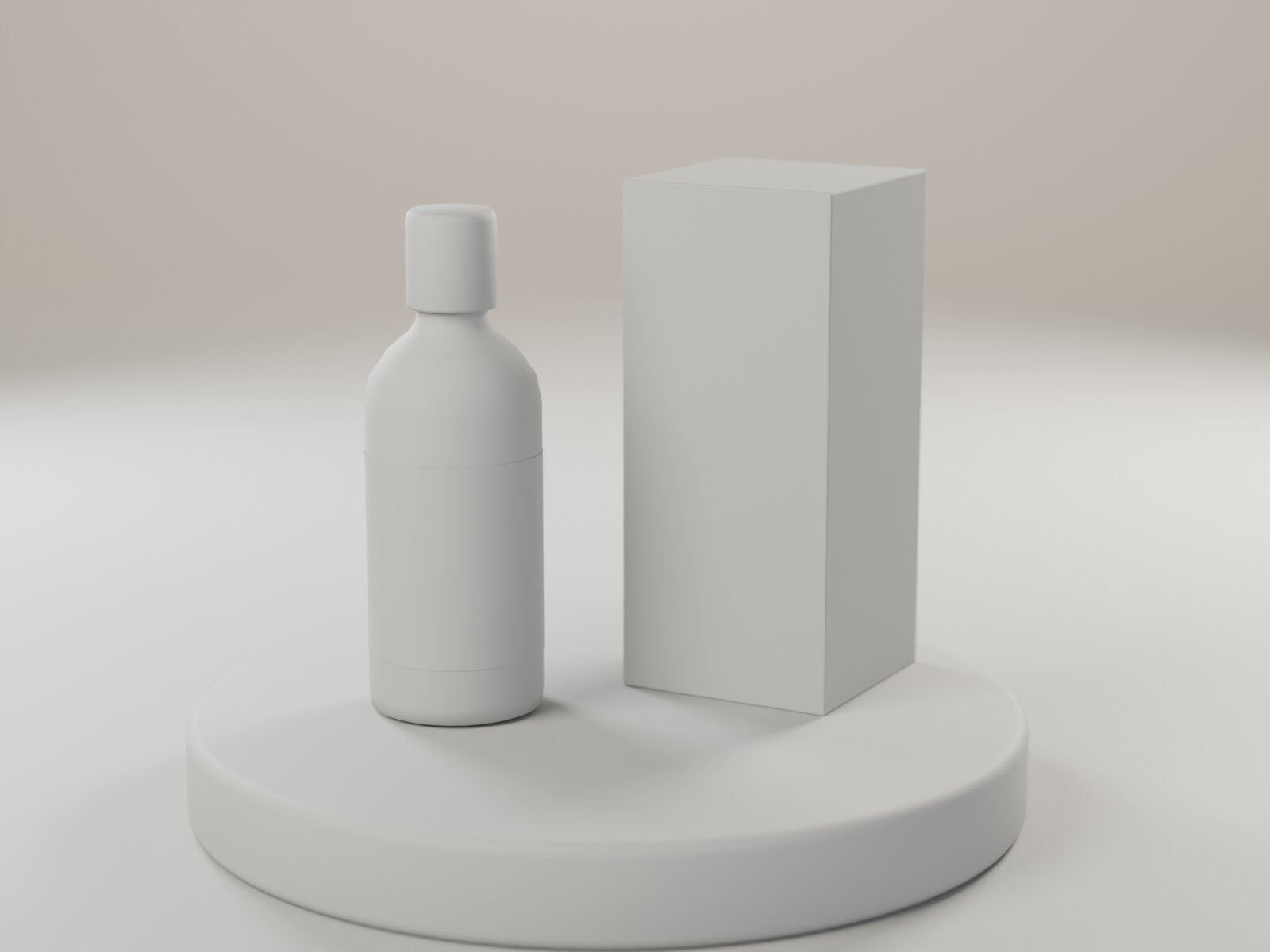
A cylinder is not a car. Part count, curvature and material variety drive modeling hours directly. A bottle with a screw cap and a paper label is a short job. A power tool with a molded grip, exposed screws, a textured housing and a rubber overmold is a long one. Organic, flowing surfaces take longer to model cleanly than flat, boxy ones, and each distinct material needs its own look development. Techniques matter too: a skilled modeler chooses between approaches such as subdivision surface modeling and hard-surface methods depending on the object, and the right choice saves hours.
Where it is going
Real time on the web means aggressive budgets and optimization passes. Offline render means quality is the constraint and time is the cost. A model for a product page viewer has to load quickly and run smoothly on an ordinary phone, so detail is baked into textures and geometry is kept lean. A model for a print campaign can be as detailed as the camera requires, but each frame takes longer to render. If you need both, budget for both versions; one file rarely serves both destinations well.
Number of variants
Fifteen colorways from one model is cheap. Fifteen genuinely different products is fifteen models. This is the driver buyers most often misjudge. A range of mugs in fifteen glazes needs one model and a set of material variants, which can be rendered in a batch. A range of fifteen different mug shapes needs fifteen models before a single render happens. Our guide to batch rendering variants explains how to set variants up so they stay cheap.
Animation
A still is one frame. A ten-second animation at 30fps is three hundred, and render time scales with it. Animation also adds work beyond rendering: camera paths, timing, motion review and, often, more careful modeling, because surfaces are seen from more angles. A simple rotating view is the most economical form of motion, and it is worth knowing how to specify one; see how to get turntable renders right.
Reference quality
Good CAD data or measured drawings speed everything up. Three blurry photographs and a guess do the opposite. When a modeler has accurate dimensions and clear views of every side, the model is built once. When they have to infer the shape, there are more review rounds, more corrections and more risk of the final product not matching. Supplying good reference is the cheapest cost reduction available to you; our guide to reference gathering for modeling lists what to send.
Render resolution and passes
Billboard resolution with full passes is a different render job from a web hero image. Larger images take longer to render and to check, and every additional pass adds output to manage. Specify the largest size you actually need, and the passes your retoucher will actually use, rather than asking for everything by default.
| Cost driver | Pushes cost up when | Keeps cost down when |
|---|---|---|
| Asset complexity | Many parts, complex curvature, many materials | Simple forms, few materials |
| Destination | Real-time web use needing optimization, or very high offline quality | One clearly defined destination |
| Variants | Many genuinely different products | Many colorways of one model |
| Animation | Long sequences, many frames | Stills, or a simple turntable |
| Reference | A few unclear photographs | CAD data or measured drawings |
| Resolution and passes | Billboard size with full passes | Web sizes with only the passes you use |
How a 3D project runs, and where time goes
Understanding the phases of a project helps you read a quote and plan a launch date. Our projects follow the same sequence regardless of size, and each phase has a typical duration.
- Reference and blockout: 2–4 days. Reference is gathered and checked, and a rough blockout confirms proportions and scale before detailed work begins. This is the cheapest point to catch a misunderstanding.
- Modeling and texturing: 1–3 weeks depending on complexity. The detailed model is built and textured. Complexity and reference quality decide where in that range a job lands.
- Look development: 2–4 days, including the approval gate. Materials, lighting and camera are set and approved. Nothing goes to final render until this gate is passed.
- Rendering: hours to days, estimated before it starts. Final frames are rendered. Resolution, passes and animation length drive this phase.
- Composite and delivery: 2–5 days. Passes are combined, images are finished and files are delivered in the agreed formats.
The approval gate in look development is where budgets are protected. Changes to materials or lighting after that gate mean re-rendering, and changes to the model after that gate can mean going back two phases. A clear review process helps; reviewing 3D work sets out how to give feedback that does not cause rework.
The cheapest change is the one made at blockout. The most expensive is the one made after final render.
An illustrative budget built from published rates
The following example is illustrative. It is not a client project, and the quantities are chosen to show how the published starting rates combine. Real quotes depend on complexity, reference and destination, so your figures will differ.
Imagine a direct-to-consumer brand launching a line of twelve kitchen products. It needs each product on a clean background from three angles for its online store, and it has a steady stream of small follow-up requests, such as extra colorways and adjusted crops, that it expects to handle with embedded time over the launch period.
| Line item | Quantity | Starting rate | Starting subtotal |
|---|---|---|---|
| Product models | 12 models | from $49 per model | $588 |
| Product renders (3 angles each) | 36 renders | from $39 per render | $1,404 |
| Dedicated artist time for follow-ups | 20 hours | from $11 per hour | $220 |
| Illustrative starting total | $2,212 |
The arithmetic: 12 × $49 = $588; 36 × $39 = $1,404; 20 × $11 = $220; $588 + $1,404 + $220 = $2,212. That total is a floor built from starting rates, not a quote. If several of the twelve products turn out to be complex, with many parts or materials, the modeling line rises. If the brand wants a billboard-size hero image with full passes, that render is a larger job than a web image.
The example also shows where the savings are. If six of the twelve products are really colorways of the same shape, the brand needs fewer models, and the variants become render work. If the brand supplies CAD files or measured drawings, the modeling phase is more predictable. If it decides later that it wants the same products in a real-time viewer on its site, that is a different destination with optimization and integration work, which sits in the market's real-time range rather than the product-still range.
On timing, the published turnarounds are 3–10 working days per model and 2–7 working days per render, and a dedicated artist can start within 48 hours. A batch like this one should be scheduled with the project phases above in mind, including the look development approval gate, rather than assuming every item is delivered at the fastest end of its range.
How to get an accurate 3D modeling quote
An accurate quote comes from a precise brief. Most quote surprises trace back to something the buyer knew but did not write down: a second destination, a set of variants, an animation that was "just a quick spin," or reference that turned out to be incomplete. The procedure below gets the relevant information to a supplier in one pass.
- List every asset and its destination. Name each product or scene and say where it will be used: web store, print, social, a real-time viewer, or several. Destination decides how the model is built.
- Separate genuinely different items from variants. Group colorways, finishes and sizes under the model they share. This is often the biggest single lever on price.
- Gather the best reference you have. CAD data, measured drawings, physical samples and clear photographs from every side. Say which of these you can supply and when.
- Specify outputs. Number of stills per item, angles, maximum resolution, passes needed, file formats and any animation length and frame rate.
- Share look references. Examples of the lighting, background and mood you want, and any brand color standards the renders must match.
- State review rounds and approvers. Who approves at blockout and at look development, and how many rounds you expect at each gate.
- Give the deadline and any fixed dates. Launch dates, print deadlines or trade shows, so the supplier can say honestly whether the schedule works.
- Ask for the quote broken down by line. Models, renders, animation, optimization and integration listed separately, with the assumptions behind each.
If you are building an ongoing library rather than a one-off set, say so. It changes how the supplier organizes files, names materials and sets up scenes, and it makes later work cheaper. A broader overview of how we run this work is on our 3D design and development services page.
Red flags in cheap 3D quotes
Low prices are not a problem in themselves. Our own rates start low because the work is split cleanly into models, renders and time. The problem is a low price that hides missing scope, which then comes back as change requests, rework or files you cannot reuse.
Red flags: Be cautious when a quote shows any of the following.
- A single price with no split between modeling, rendering and revisions, so you cannot tell what a second round of images will cost.
- No mention of the destination, which usually means the model will be built for one use and will need rebuilding for another.
- No approval gate before final rendering, which pushes changes to the most expensive point in the project.
- Vague file deliverables: no source files, no passes or unclear rights to reuse the model.
- No questions about your reference, which suggests the supplier will guess at dimensions and details.
- Variants priced as if they were free, or genuinely different products priced as if they were variants.
- A turnaround that ignores complexity, promising the same time for a simple package and a complex mechanical product.
The opposite mistake is also worth avoiding. A very high quote is not proof of quality, and a supplier who cannot explain which phase of the work their price is paying for is no easier to hold to account than a cheap one. The test is the same in both directions: a clear breakdown, stated assumptions and a named approval gate before final render.
Topology is a quieter warning sign. A model that looks fine in one render can be badly built underneath, with messy geometry that breaks when it is modified, animated or optimized for the web. Ask how models are built and whether they will be clean enough to reuse. Our guides to hard-surface modeling and to non-destructive workflows explain what clean construction looks like and why it matters for later changes.
What different buyers usually need, and how that maps to price
The same price list reads differently depending on who is buying. Matching your situation to the right pricing model is often worth more than any negotiation.
E-commerce and direct-to-consumer brands
Online stores need consistent, clean product images across a whole catalog, usually several angles per product and frequent additions as the range grows. This is the textbook case for splitting models from renders. The models are the investment; the renders are the recurring cost. Consistency matters as much as quality here, so a shared lighting setup and a managed color pipeline across every product is part of what you are paying for. If some products are variations of one shape, group them before you ask for a quote.
Manufacturers and product teams
Manufacturers often have the best possible reference, in the form of CAD data, which shortens modeling. The challenge is usually the opposite one: engineering files carry far more detail than a marketing image needs and have to be simplified and cleaned before they are useful. Ask suppliers how they handle CAD conversion, and expect the destination to shape how much cleanup is required. Real-time use needs far more reduction than an offline still.
Architects, developers and interior designers
Architectural and interior visuals sit in the $800 – $4,000 per image range in the US market because they involve a full scene: the building or room, the materials, lighting, furniture, people and planting that make a space feel lived in, and post-production. The cost drivers are scene size, how much bespoke furniture must be modeled rather than drawn from a library and how many views share the same scene. Several views from one finished scene are much more economical than several scenes.
Agencies and in-house creative teams
Agencies usually need flexible capacity that fits their own pipeline, with work arriving in bursts around campaigns. Embedded artist time suits this pattern, because it avoids a new quote for every small change and lets the artist learn the agency's conventions once. For campaign hero work at large sizes, a separately scoped job is still sensible.
What you should own at the end of a project
Price is only half of value. The other half is what you can do with the files afterward. Two quotes with the same total can leave you in very different positions if one delivers reusable source files and the other delivers only finished images.
- Source models in a format your future suppliers can open, with sensible naming and organized materials.
- Textures and materials at the resolution used for the renders, so new images match the old ones.
- Render passes where agreed, so retouchers can adjust shadows, reflections or masks without re-rendering.
- Scene and lighting setups for recurring work, so a new product can drop into an approved look.
- Clear usage rights covering where and for how long you can use the models and images.
Settle these points in the quote rather than at delivery. A supplier who is reluctant to hand over source files, or who builds models that only work in their own setup, is effectively pricing future work into your dependency on them.
How to budget for 3D over time
The first project is usually the most expensive per image, because it pays for the models. Every later project that reuses those models is cheaper, because it is mostly render work. Budgeting well means planning for that curve rather than treating each request as a new job.
Treat models as assets
Once a product is modeled well, it can be relit, re-angled and recolored many times. Keep an inventory of what you own, in which formats and for which destinations. When a new request arrives, the first question is whether the model already exists.
Plan variant seasons
If your range changes seasonally with new colorways, plan those as batch render jobs against existing models. Fifteen colorways from one model is cheap, and scheduling them together keeps look development consistent across the set.
Separate one-off hero work from library work
A campaign hero image at billboard resolution with full passes is a different kind of job from routine catalog renders. Budget for it separately so it does not distort your view of what library images cost.
Decide early about real time
If a web viewer or configurator is likely in the next year or two, say so when models are first commissioned. Building with that destination in mind is more efficient than rebuilding later, and real-time work sits in a different price range.
Use embedded capacity for steady flow
When requests arrive every week, a dedicated artist from $11 per hour can be more efficient than quoting each small change. Track hours against output so you can compare the two approaches honestly over a quarter.
Verdict 3D modeling cost is driven by complexity, destination, variants, animation, reference quality and output size, not by a flat rate per object. Split models from renders, supply the best reference you can, lock decisions at the look development gate and reuse models across seasons. Market ranges run from $150 – $900 per image for a product still to $2,500 – $30,000+ for real-time work; our rates start from $49 per model, from $39 per render and from $11 per hour, with the final figure set by a quote.
For more on individual techniques and how they affect cost and quality, browse our 3D design and development articles.
Spotted something wrong? Report an error on this page. We correct on the page and say what changed.