Helpful, People-First Content: The Decisions That Matter
Google's guidance on content created mainly to help people rather than to rank in search, and the questions it suggests creators ask about their own pages.
 MediaScaleUp Editorial Team

Where most projects go wrong
The usual mistakes:
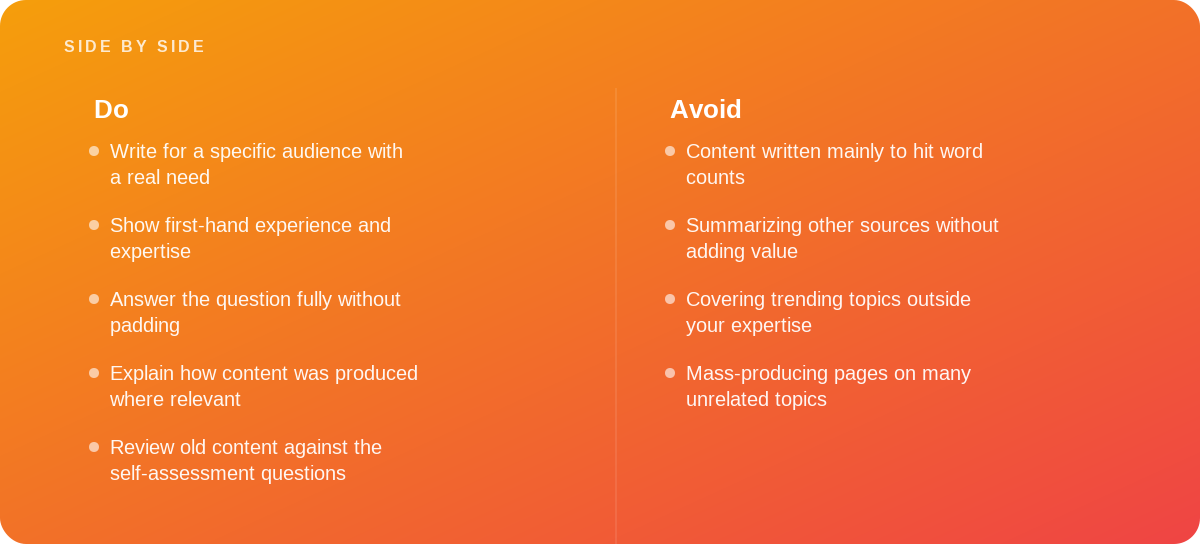
- Content written mainly to hit word counts
- Summarizing other sources without adding value
- Covering trending topics outside your expertise
- Mass-producing pages on many unrelated topics
What good looks like instead
- Write for a specific audience with a real need
- Show first-hand experience and expertise
- Answer the question fully without padding
- Explain how content was produced where relevant
- Review old content against the self-assessment questions
Why it matters
Google's core ranking systems aim to reward helpful content, so the guidance is effectively a description of what Google tries to rank.
The specs that matter
| Measure | Figure |
|---|---|
| Guidance | Creating helpful, reliable, people-first content |
| Self-assessment questions | cover originality, expertise, depth and whether readers leave satisfied |
| Who, How and Why | Google suggests being clear about who made content, how and why |
| Helpful content system | folded into Google's core ranking systems in March 2024 |
Knowing when to hand it over
Tip: Bring in help when traffic falls after core updates, or when auditing a large content library for quality.
Where this comes from
- Google Search Central — Creating helpful, reliable, people-first content
- Google Search Central — Google Search's core updates
The figures and practices above come from the sources listed.
Working on something like this?
We take on SEO Services work for teams who want it done once, properly. Tell us what you are building and we will tell you honestly whether we are the right studio for it. Start a project.
Where to go next
Spotted something wrong? Report an error on this page. We correct on the page and say what changed.