A Practical Guide to Link Spam and Link Schemes
Practices that manipulate links to a site to influence rankings, such as buying links, excessive link exchanges and automated link building.
 MediaScaleUp Editorial Team

At a glance
- Prohibited examples buying or selling links that pass ranking credit, excessive link exchanges and automated link creation
- Qualified links paid links should use rel="sponsored" or nofollow
- SpamBrain Google's AI-based spam prevention system, used to detect link spam
- Manual actions can be issued for unnatural links to or from a site
Why it matters
Why it matters: Google's spam policies prohibit link schemes, and its systems are designed to neutralize manipulative links, so paid link building often wastes money or triggers penalties.
Best practice
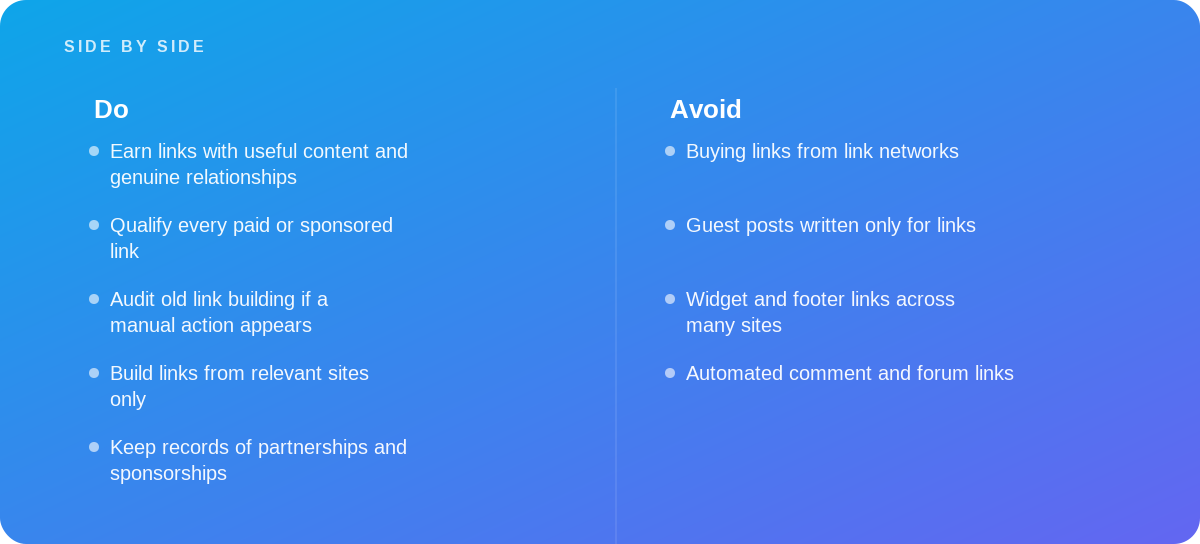
- Earn links with useful content and genuine relationships
- Qualify every paid or sponsored link
- Audit old link building if a manual action appears
- Build links from relevant sites only
- Keep records of partnerships and sponsorships
Common pitfalls
Watch out for:
- Buying links from link networks
- Guest posts written only for links
- Widget and footer links across many sites
- Automated comment and forum links
When to call in a specialist
Bottom line Bring in help when a site has a history of paid links, or when an unnatural links manual action appears.
Where this comes from
- Google Search Central — Spam policies for Google web search
- Google Search Central — Qualify your outbound links to Google
The figures and practices above come from the sources listed.
Working on something like this?
We take on SEO Services work for teams who want it done once, properly. Tell us what you are building and we will tell you honestly whether we are the right studio for it. Start a project.
Where to go next
Spotted something wrong? Report an error on this page. We correct on the page and say what changed.