Editorial Quality Rubrics: The Decisions That Matter
A defined standard for what good content looks like, used to review drafts consistently.
 MediaScaleUp Editorial Team

What is at stake
Without a rubric, feedback is personal preference, and quality varies by who happened to review the piece.
The playbook
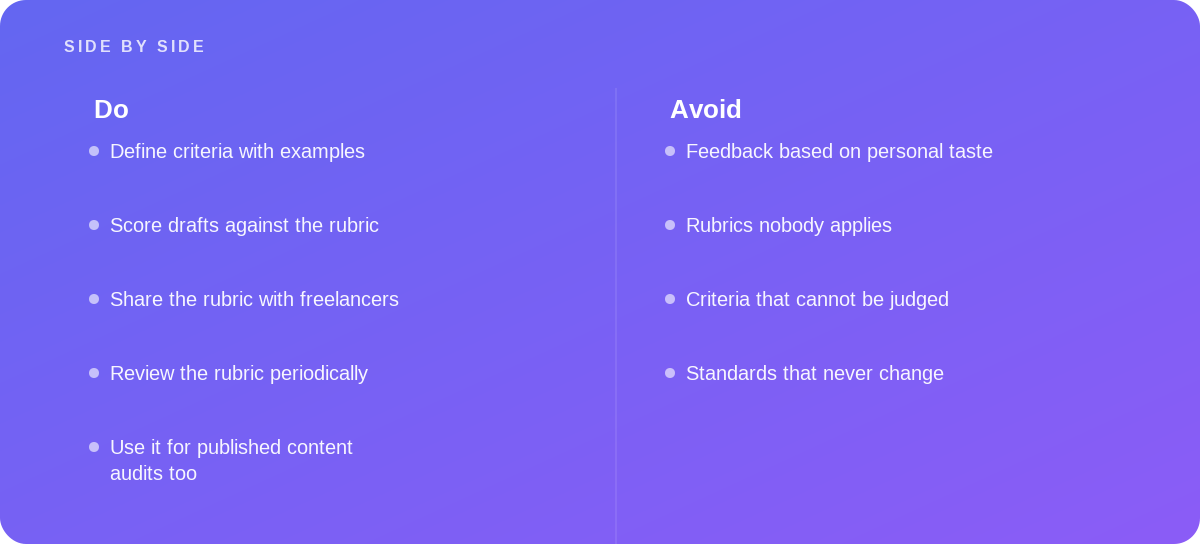
- Define criteria with examples
- Score drafts against the rubric
- Share the rubric with freelancers
- Review the rubric periodically
- Use it for published content audits too
Where it goes wrong
Avoid:
- Feedback based on personal taste
- Rubrics nobody applies
- Criteria that cannot be judged
- Standards that never change
The numbers behind it
| Measure | Figure |
|---|---|
| Criteria | accuracy, usefulness, structure, sourcing and accessibility |
| Consistency | rubrics make reviews comparable |
| Training | new writers learn faster with explicit standards |
| Evolution | rubrics need updating as standards change |
Getting outside help
When to hand it over: Bring in help when content quality varies by author.
Where this comes from
- Google Search Central — Creating helpful, reliable, people-first content
- Microsoft Learn — Microsoft Writing Style Guide
The figures and practices above come from the sources listed.
Working on something like this?
We take on Content Strategy work for teams who want it done once, properly. Tell us what you are building and we will tell you honestly whether we are the right studio for it. Start a project.
Where to go next
Spotted something wrong? Report an error on this page. We correct on the page and say what changed.