Corrections and Editorial Policies: The Decisions That Matter
Published policies explaining how an organization produces, reviews and corrects content, and how readers can report errors.
 MediaScaleUp Editorial Team

Why does it matter?
Transparent policies build trust, and they are expected for publishers seeking visibility in news and other trust-sensitive areas.
What are the numbers?
- Corrections policy explains how errors are corrected and noted
- Editorial policy describes standards, review and independence
- Google News transparency about ownership and editorial processes is expected
- Reporting readers should have a way to report errors
What should I do?
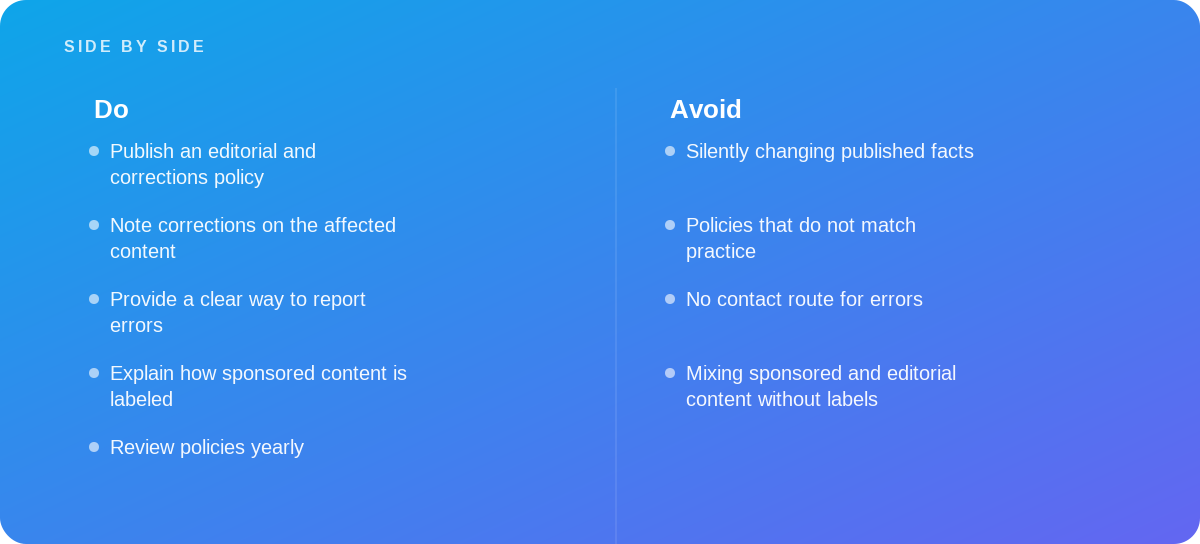
- Publish an editorial and corrections policy
- Note corrections on the affected content
- Provide a clear way to report errors
- Explain how sponsored content is labeled
- Review policies yearly
What should I avoid?
Avoid:
- Silently changing published facts
- Policies that do not match practice
- No contact route for errors
- Mixing sponsored and editorial content without labels
When should I get help?
Short answer Bring in help when launching a publication, or when trust issues arise over published errors.
Where this comes from
- Google Search Central — Google News content policies
- Federal Trade Commission — Native advertising: A guide for businesses
The figures and practices above come from the sources listed.
Working on something like this?
We take on Content Strategy work for teams who want it done once, properly. Tell us what you are building and we will tell you honestly whether we are the right studio for it. Start a project.
Where to go next
Spotted something wrong? Report an error on this page. We correct on the page and say what changed.