Citing Sources in Web Content, Done Properly
Linking to and naming the sources behind claims, data and quotes, so readers can verify them and understand where information comes from.
 MediaScaleUp Editorial Team

Where most projects go wrong
The usual mistakes:
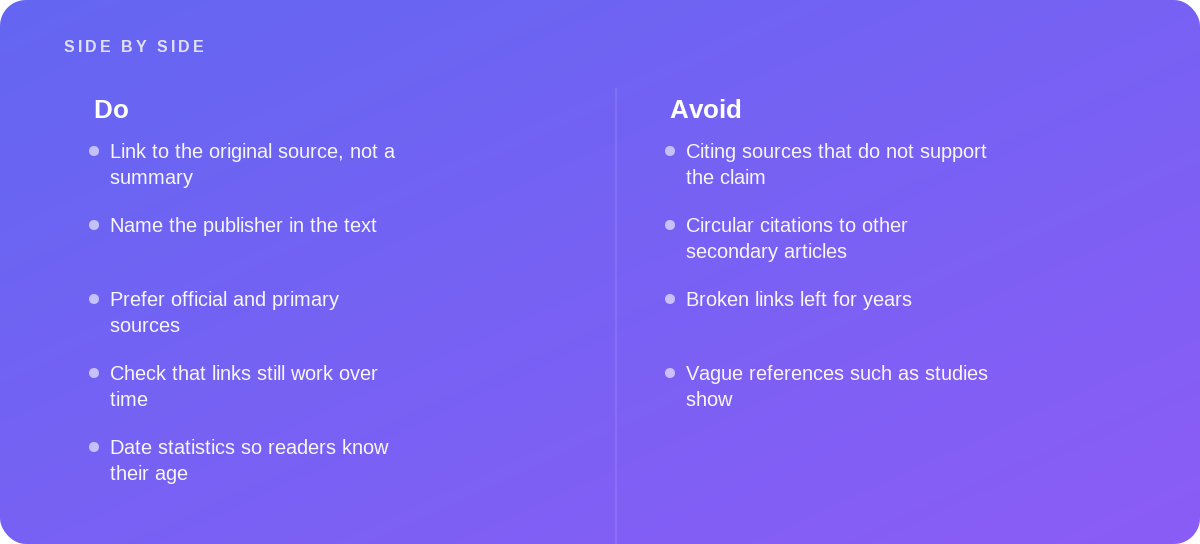
- Citing sources that do not support the claim
- Circular citations to other secondary articles
- Broken links left for years
- Vague references such as studies show
What good looks like instead
- Link to the original source, not a summary
- Name the publisher in the text
- Prefer official and primary sources
- Check that links still work over time
- Date statistics so readers know their age
Why it matters
Citations make content more trustworthy and useful, and they show readers the work behind a claim.
The specs that matter
| Measure | Figure |
|---|---|
| Primary sources | original research, official documents and standards |
| Link text | should describe the source rather than say here |
| Attribution | quotes and data should name their origin |
| Link attributes | sponsored links need qualifying; editorial citations do not |
Knowing when to hand it over
Tip: Bring in help when auditing an archive for accuracy, or when setting sourcing standards for writers.
Where this comes from
- Google Search Central — SEO link best practices
- W3C Web Accessibility Initiative — Understanding SC 2.4.4 Link Purpose (In Context)
The figures and practices above come from the sources listed.
Working on something like this?
We take on Content Strategy work for teams who want it done once, properly. Tell us what you are building and we will tell you honestly whether we are the right studio for it. Start a project.
Where to go next
Spotted something wrong? Report an error on this page. We correct on the page and say what changed.