Dither and Bit Depth Reduction: What Actually Works
Adding a small amount of noise when reducing bit depth, such as from 24-bit to 16-bit, to avoid distortion from truncation.
 Tomas Lindqvist

What is at stake
Reducing bit depth without dither creates harsh quantization distortion in quiet passages, which dither replaces with benign noise.
The playbook
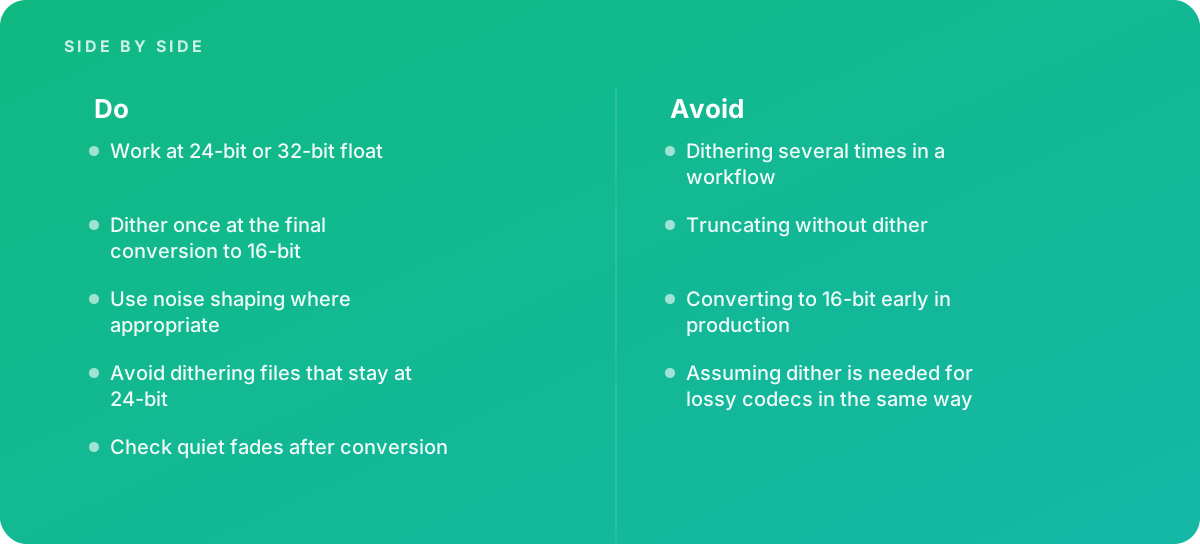
- Work at 24-bit or 32-bit float
- Dither once at the final conversion to 16-bit
- Use noise shaping where appropriate
- Avoid dithering files that stay at 24-bit
- Check quiet fades after conversion
Where it goes wrong
Avoid:
- Dithering several times in a workflow
- Truncating without dither
- Converting to 16-bit early in production
- Assuming dither is needed for lossy codecs in the same way
The numbers behind it
| Measure | Figure |
|---|---|
| When to dither | when reducing bit depth, typically at the final export |
| 16-bit dynamic range | about 96 dB |
| 24-bit dynamic range | about 144 dB theoretically |
| Noise shaping | moves dither noise to less audible frequencies |
Getting outside help
When to hand it over: Bring in help when preparing masters for CD, broadcast or archival delivery.
Where this comes from
- iZotope — Dithering guide
- Audio Engineering Society — Educational resources
The figures and practices above come from the sources listed.
Working on something like this?
We take on Audio Editing & Production work for teams who want it done once, properly. Tell us what you are building and we will tell you honestly whether we are the right studio for it. Start a project.
Where to go next
Spotted something wrong? Report an error on this page. We correct on the page and say what changed.