A Practical Guide to Gain Staging
Setting appropriate levels at each point in the recording and mixing chain, from microphone preamp to plug-ins to master output.
 MediaScaleUp Editorial Team

Why does it matter?
Levels set too low add noise, and levels set too high clip, so good gain staging keeps quality high and processing predictable.
What are the numbers?
- Digital clipping occurs at 0 dBFS
- Headroom space left below 0 dBFS for peaks
- Recording levels moderate levels at 24-bit leave ample headroom
- Plug-ins many analog-modeled plug-ins respond differently at different input levels
What should I do?
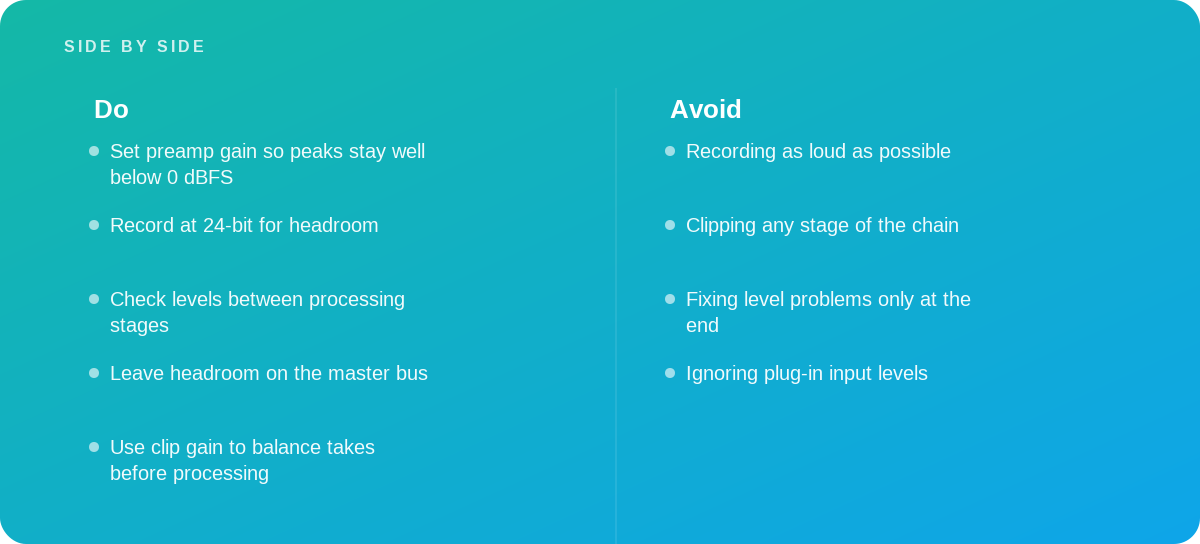
- Set preamp gain so peaks stay well below 0 dBFS
- Record at 24-bit for headroom
- Check levels between processing stages
- Leave headroom on the master bus
- Use clip gain to balance takes before processing
What should I avoid?
Avoid:
- Recording as loud as possible
- Clipping any stage of the chain
- Fixing level problems only at the end
- Ignoring plug-in input levels
When should I get help?
Short answer Bring in help when recordings sound noisy or distorted, or when mixes are hard to control.
Where this comes from
- Audio Engineering Society — Educational resources
- iZotope — Gain staging guide
The figures and practices above come from the sources listed.
Working on something like this?
We take on Audio Editing & Production work for teams who want it done once, properly. Tell us what you are building and we will tell you honestly whether we are the right studio for it. Start a project.
Where to go next
Spotted something wrong? Report an error on this page. We correct on the page and say what changed.