Content Briefs for SEO, Done Properly
The document that tells a writer what a page must cover, who it is for, and what it has to beat.
 MediaScaleUp Editorial Team

Where most projects go wrong
The usual mistakes:
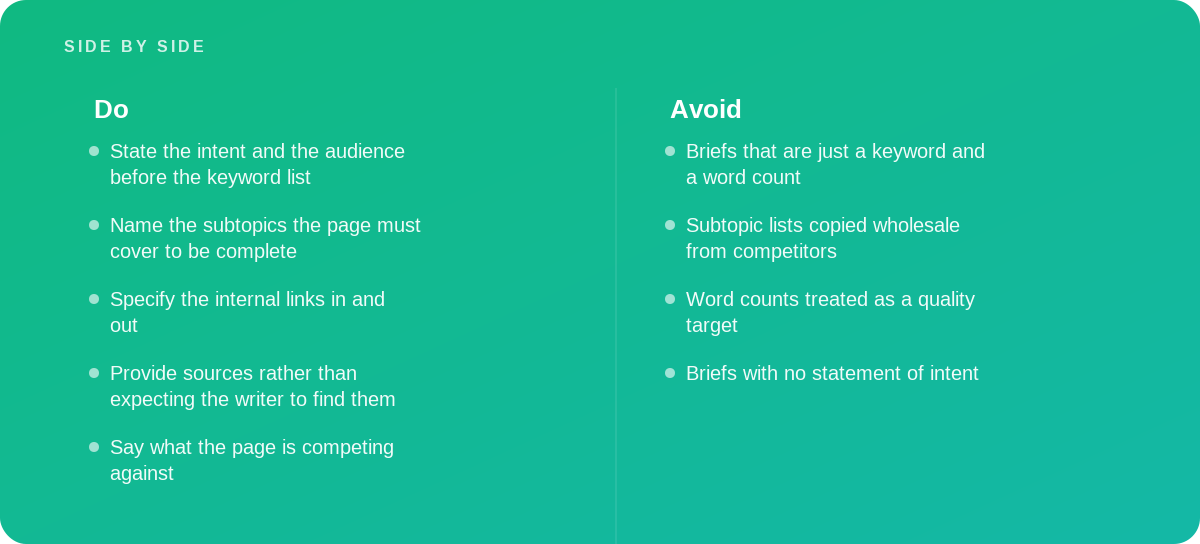
- Briefs that are just a keyword and a word count
- Subtopic lists copied wholesale from competitors
- Word counts treated as a quality target
- Briefs with no statement of intent
What good looks like instead
- State the intent and the audience before the keyword list
- Name the subtopics the page must cover to be complete
- Specify the internal links in and out
- Provide sources rather than expecting the writer to find them
- Say what the page is competing against
Why it matters
A brief is where the SEO work actually lands, and a page written without one usually has to be rewritten rather than edited.
The specs that matter
| Measure | Figure |
|---|---|
| Typical contents | audience, intent, target terms, required subtopics, internal links, sources |
| Intent statement | what the reader is trying to do |
| Competitive reference | what currently ranks and why |
| Internal links | specified in the brief rather than added later |
| Success measure | what the page is expected to achieve |
Knowing when to hand it over
Tip: Bring in help when content is produced at volume without briefs, when writers are unfamiliar with the subject, or when published content consistently needs rewriting.
Where this comes from
- Google Search Central — Creating helpful content
- Google Search Central — SEO starter guide
- Nielsen Norman Group — Writing for the web
The figures and practices above come from the sources listed.
Working on something like this?
We take on SEO Services work for teams who want it done once, properly. Tell us what you are building and we will tell you honestly whether we are the right studio for it. Start a project.
Where to go next
Spotted something wrong? Report an error on this page. We correct on the page and say what changed.