A Practical Guide to SEO for JavaScript Sites
Making content built and rendered by JavaScript reliably discoverable and indexable.
 MediaScaleUp Editorial Team

At a glance
- Rendering Googlebot renders JavaScript, in a second pass
- Delay rendering can lag crawling
- Alternatives server-side rendering, static generation, or dynamic rendering
- Links must be real anchor elements with href attributes
- Blocked resources scripts blocked in robots.txt prevent rendering
- Metadata must be present in the rendered output
Why it matters
Why it matters: Search engines can render JavaScript, but rendering is deferred and resource-limited, so a page that depends on it is indexed later and less reliably.
Best practice
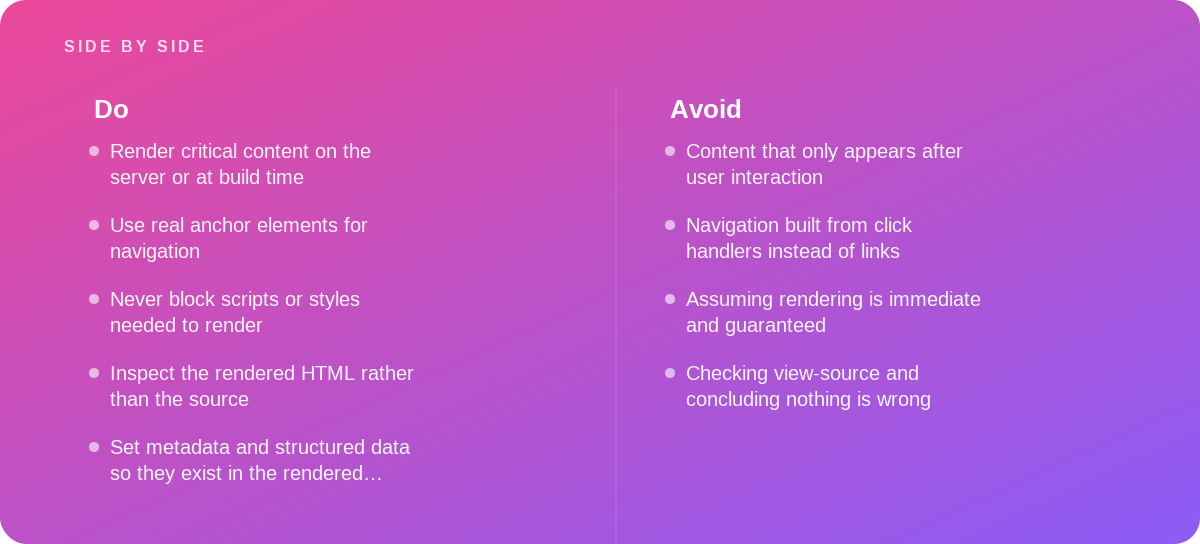
- Render critical content on the server or at build time
- Use real anchor elements for navigation
- Never block scripts or styles needed to render
- Inspect the rendered HTML rather than the source
- Set metadata and structured data so they exist in the rendered output
Common pitfalls
Watch out for:
- Content that only appears after user interaction
- Navigation built from click handlers instead of links
- Assuming rendering is immediate and guaranteed
- Checking view-source and concluding nothing is wrong
When to call in a specialist
Bottom line Bring in help when pages are crawled but not indexed, when a framework migration has affected visibility, or when content is missing from the rendered output.
Where this comes from
- Google Search Central — JavaScript SEO basics
- Google Search Central — Fix search-related JavaScript problems
- web.dev — Rendering on the web
The figures and practices above come from the sources listed.
Working on something like this?
We take on SEO Services work for teams who want it done once, properly. Tell us what you are building and we will tell you honestly whether we are the right studio for it. Start a project.
Where to go next
Spotted something wrong? Report an error on this page. We correct on the page and say what changed.