Mobile SEO: What Actually Works
Ensuring the mobile version of a site — which is the version indexed — is complete, fast and usable.
 Samir Haddad

What is at stake
Under mobile-first indexing the mobile version is what determines rankings, so content missing from mobile is content that effectively does not exist.
The playbook
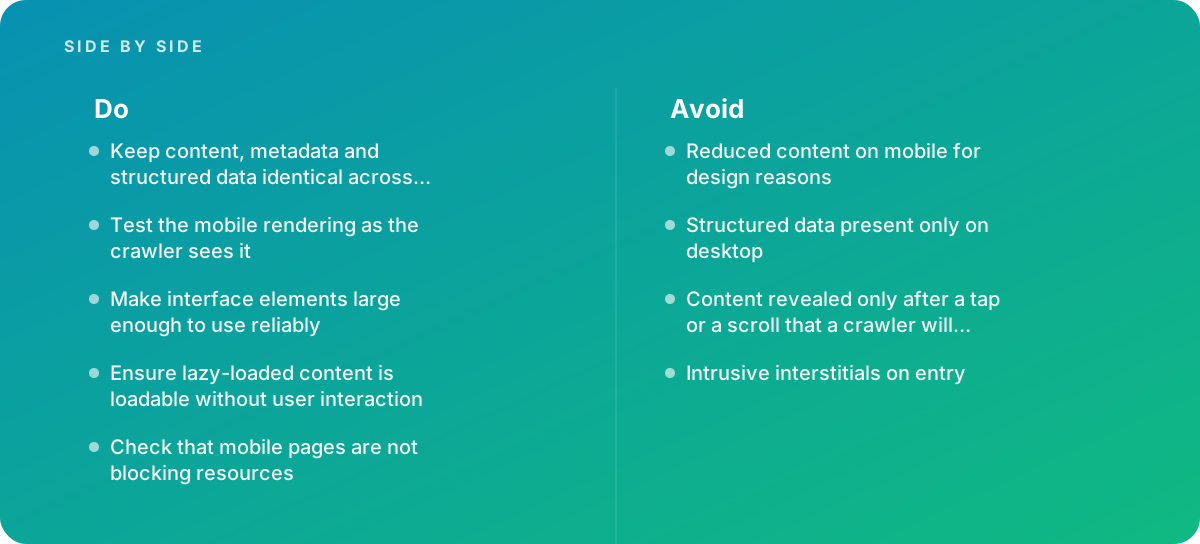
- Keep content, metadata and structured data identical across versions
- Test the mobile rendering as the crawler sees it
- Make interface elements large enough to use reliably
- Ensure lazy-loaded content is loadable without user interaction
- Check that mobile pages are not blocking resources
Where it goes wrong
Avoid:
- Reduced content on mobile for design reasons
- Structured data present only on desktop
- Content revealed only after a tap or a scroll that a crawler will not perform
- Intrusive interstitials on entry
The numbers behind it
| Measure | Figure |
|---|---|
| Indexing | mobile-first, using the mobile version |
| Content parity | content missing on mobile may not be indexed |
| Structured data parity | must be present on the mobile version |
| Metadata parity | titles and descriptions must match |
| Usability | tap targets, readable text and no horizontal scrolling |
Getting outside help
When to hand it over: Bring in help when mobile and desktop have diverged, when rankings fell after a mobile redesign, or when mobile usability errors are reported at scale.
Where this comes from
- Google Search Central — Mobile-first indexing
- Google Search Central — Mobile site guidelines
- web.dev — Mobile performance
The figures and practices above come from the sources listed.
Working on something like this?
We take on SEO Services work for teams who want it done once, properly. Tell us what you are building and we will tell you honestly whether we are the right studio for it. Start a project.
Where to go next
Spotted something wrong? Report an error on this page. We correct on the page and say what changed.