Brand Refresh Versus Rebrand: What Actually Works
The difference between refreshing a brand, which updates its expression while keeping recognition, and rebranding, which changes its name, positioning or identity fundamentally.
 MediaScaleUp Editorial Team
Where most projects go wrong
The usual mistakes:
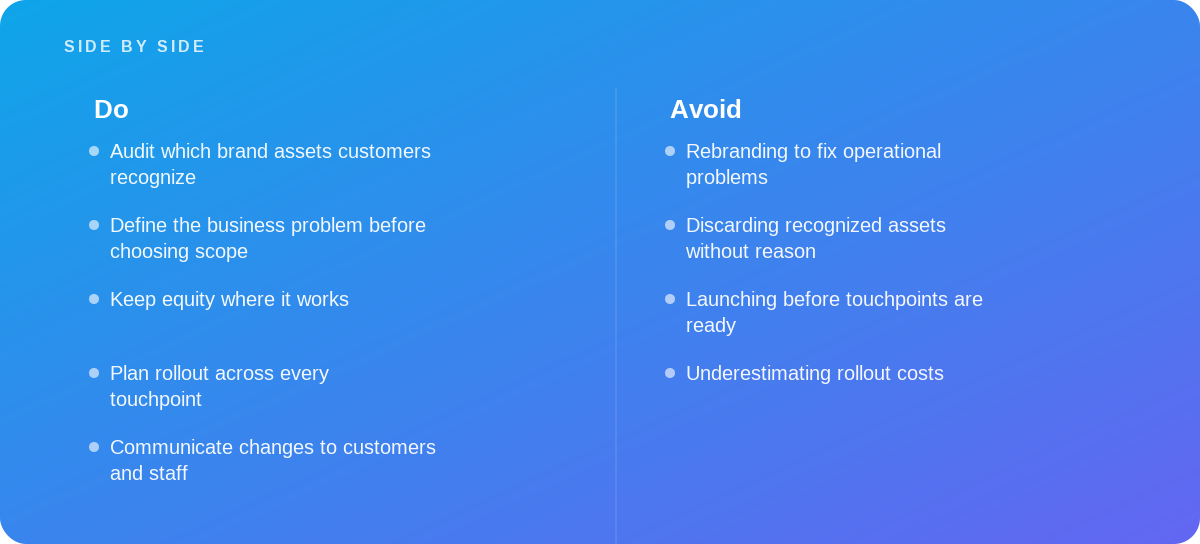
- Rebranding to fix operational problems
- Discarding recognized assets without reason
- Launching before touchpoints are ready
- Underestimating rollout costs
What good looks like instead
- Audit which brand assets customers recognize
- Define the business problem before choosing scope
- Keep equity where it works
- Plan rollout across every touchpoint
- Communicate changes to customers and staff
Why it matters
Choosing the wrong scope wastes money or throws away recognition that took years to build.
The specs that matter
| Measure | Figure |
|---|---|
| Refresh | updates visual elements, voice or assets while keeping core identity |
| Rebrand | changes name, positioning or core identity |
| Triggers | mergers, repositioning, legal conflicts or outdated identity |
| Costs | rebrands affect every touchpoint, from signage to software |
Knowing when to hand it over
Tip: Bring in help when considering any change to a brand name or identity.
Where this comes from
- United States Patent and Trademark Office — Trademark basics
- Google Search Central — Site moves with URL changes
The figures and practices above come from the sources listed.
Working on something like this?
We take on Brand & Identity Design work for teams who want it done once, properly. Tell us what you are building and we will tell you honestly whether we are the right studio for it. Start a project.
Where to go next
Spotted something wrong? Report an error on this page. We correct on the page and say what changed.