A Practical Guide to Co-Branding and Partnerships
Presenting two or more brands together, such as in partnerships, sponsorships and joint products, with rules for how the brands appear.
 MediaScaleUp Editorial Team
At a glance
- Trademark licensing use of another brand's marks should be covered by agreement
- Lockups defined arrangements of both logos with spacing and dividers
- Hierarchy which brand leads depends on the partnership
- Approvals partners usually approve co-branded materials
Why it matters
Why it matters: Co-branding can extend reach and credibility, but unclear rules create inconsistent layouts and legal disputes over trademark use.
Best practice
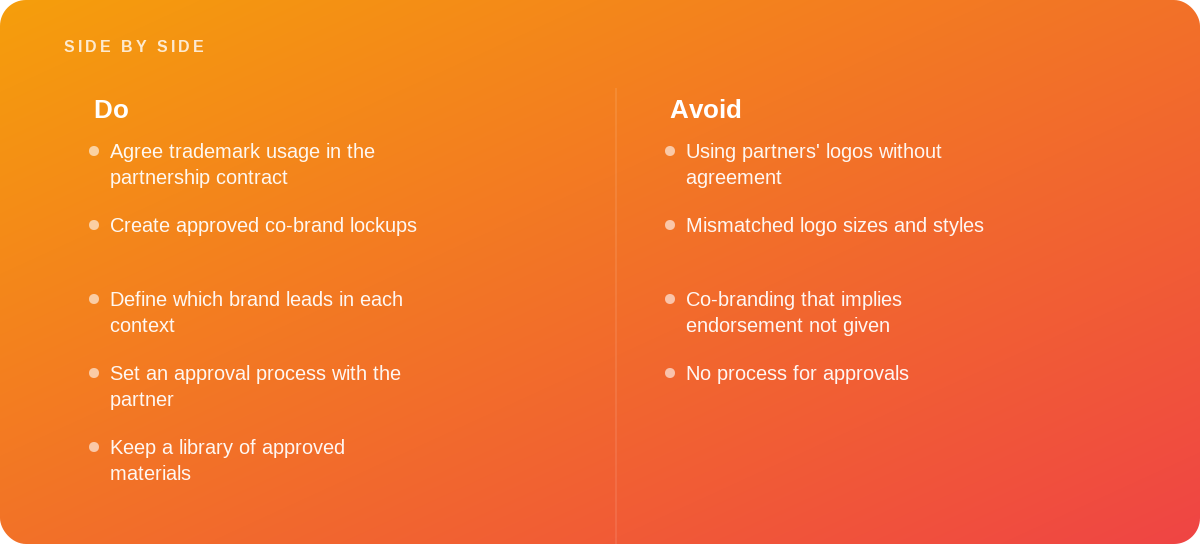
- Agree trademark usage in the partnership contract
- Create approved co-brand lockups
- Define which brand leads in each context
- Set an approval process with the partner
- Keep a library of approved materials
Common pitfalls
Watch out for:
- Using partners' logos without agreement
- Mismatched logo sizes and styles
- Co-branding that implies endorsement not given
- No process for approvals
When to call in a specialist
Bottom line Bring in help when entering sponsorships, joint products or licensing deals.
Where this comes from
- United States Patent and Trademark Office — Trademark basics
- Federal Trade Commission — FTC's Endorsement Guides
The figures and practices above come from the sources listed.
Working on something like this?
We take on Brand & Identity Design work for teams who want it done once, properly. Tell us what you are building and we will tell you honestly whether we are the right studio for it. Start a project.
Where to go next
Spotted something wrong? Report an error on this page. We correct on the page and say what changed.