A Practical Guide to Product Data and Feeds
The structured product information sent to shopping platforms, marketplaces and advertising systems.
 MediaScaleUp Editorial Team

What is at stake
Feed quality determines whether products appear at all in shopping surfaces, and feed errors are usually silent.
The playbook
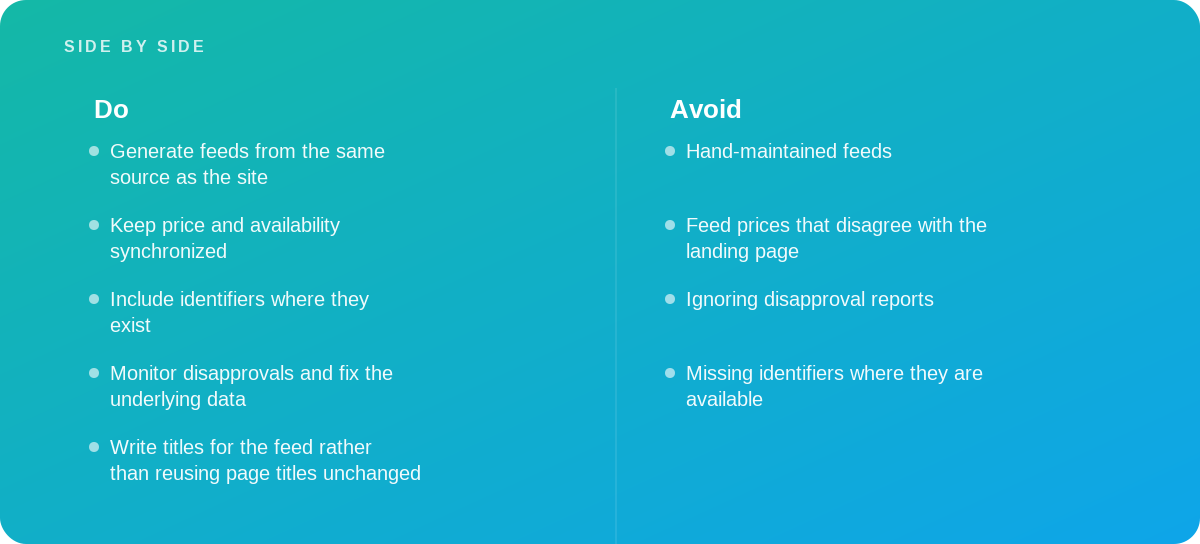
- Generate feeds from the same source as the site
- Keep price and availability synchronized
- Include identifiers where they exist
- Monitor disapprovals and fix the underlying data
- Write titles for the feed rather than reusing page titles unchanged
Where it goes wrong
Avoid:
- Hand-maintained feeds
- Feed prices that disagree with the landing page
- Ignoring disapproval reports
- Missing identifiers where they are available
The numbers behind it
| Measure | Figure |
|---|---|
| Required attributes | identifiers, title, description, price, availability, image and category |
| Product identifiers | GTIN and brand, where they exist |
| Freshness | price and availability must stay current |
| Disapprovals | products are rejected for attribute errors |
| Consistency | feed data must match the landing page |
Getting outside help
When to hand it over: Bring in help when products are being disapproved at scale, when feed and site data disagree, or when a new channel needs a feed built.
Where this comes from
- Google Search Central — Product structured data
- Google Ads Help — Shopping feed specifications
- Schema.org — Product vocabulary
The figures and practices above come from the sources listed.
Working on something like this?
We take on E-commerce Development work for teams who want it done once, properly. Tell us what you are building and we will tell you honestly whether we are the right studio for it. Start a project.
Where to go next
Spotted something wrong? Report an error on this page. We correct on the page and say what changed.