A Practical Guide to Cart Abandonment Recovery
Contacting people who added items and left, with the consent and restraint that requires.
 MediaScaleUp Editorial Team

At a glance
- Consent marketing email requires consent under UK and EU rules
- Timing commonly a short sequence rather than a single message
- Content addressing the reason for abandonment outperforms a reminder
- Frequency excessive follow-up damages the relationship
- Attribution some recovered orders would have completed anyway
Why it matters
Why it matters: It recovers some revenue and is one of the easiest things to do badly, both legally and in terms of how it makes customers feel.
Best practice
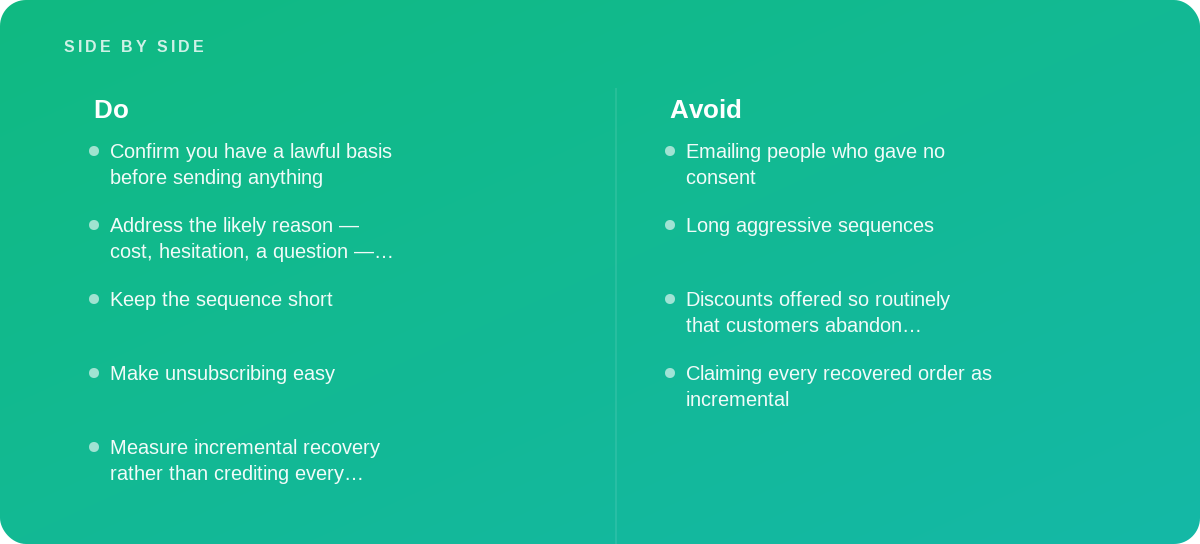
- Confirm you have a lawful basis before sending anything
- Address the likely reason — cost, hesitation, a question — rather than only reminding
- Keep the sequence short
- Make unsubscribing easy
- Measure incremental recovery rather than crediting every completed order
Common pitfalls
Watch out for:
- Emailing people who gave no consent
- Long aggressive sequences
- Discounts offered so routinely that customers abandon deliberately
- Claiming every recovered order as incremental
When to call in a specialist
Bottom line Bring in help when consent basis is unclear, when recovery messaging is generating complaints, or when discounting has started to train abandonment.
Where this comes from
- Information Commissioner's Office — Direct marketing guidance
- Baymard Institute — Cart abandonment research
- Mailchimp — Automation and consent
The figures and practices above come from the sources listed.
Working on something like this?
We take on E-commerce Development work for teams who want it done once, properly. Tell us what you are building and we will tell you honestly whether we are the right studio for it. Start a project.
Where to go next
Spotted something wrong? Report an error on this page. We correct on the page and say what changed.