Room Acoustics for Recording: What Actually Works
How a recording room's reflections, resonances and background noise affect voice and music recordings, and how treatment differs from soundproofing.
 MediaScaleUp Editorial Team
What is at stake
An echoing room is the most common cause of amateur-sounding recordings, and it is much easier to fix before recording than afterward.
The playbook
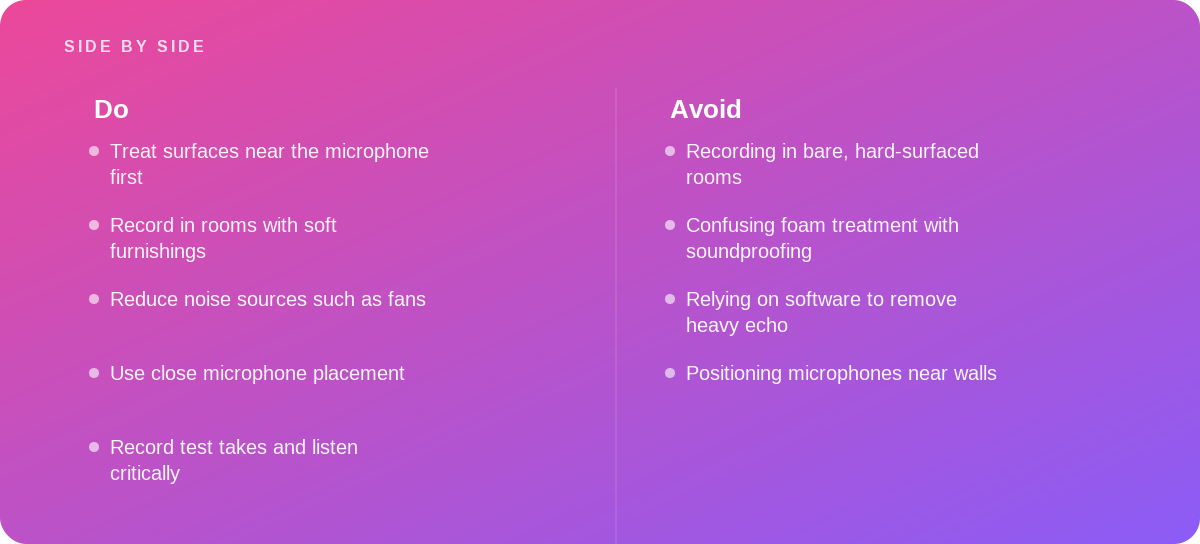
- Treat surfaces near the microphone first
- Record in rooms with soft furnishings
- Reduce noise sources such as fans
- Use close microphone placement
- Record test takes and listen critically
Where it goes wrong
Avoid:
- Recording in bare, hard-surfaced rooms
- Confusing foam treatment with soundproofing
- Relying on software to remove heavy echo
- Positioning microphones near walls
The numbers behind it
| Measure | Figure |
|---|---|
| Acoustic treatment | absorbs and diffuses reflections inside a room |
| Soundproofing | reduces sound passing into or out of a room |
| Early reflections | the first reflections from nearby surfaces most affect clarity |
| Small rooms | often have strong low-frequency resonances |
Getting outside help
When to hand it over: Bring in help when setting up a home or office recording space.
Where this comes from
- Audio Engineering Society — Educational resources
- iZotope — Recording environment guide
The figures and practices above come from the sources listed.
Working on something like this?
We take on Audio Editing & Production work for teams who want it done once, properly. Tell us what you are building and we will tell you honestly whether we are the right studio for it. Start a project.
Where to go next
Spotted something wrong? Report an error on this page. We correct on the page and say what changed.