Sound Recording and Composition Copyrights: What Actually Works
The two separate copyrights in recorded music, one in the song itself and one in the specific recording.
 MediaScaleUp Editorial Team
Where most projects go wrong
The usual mistakes:
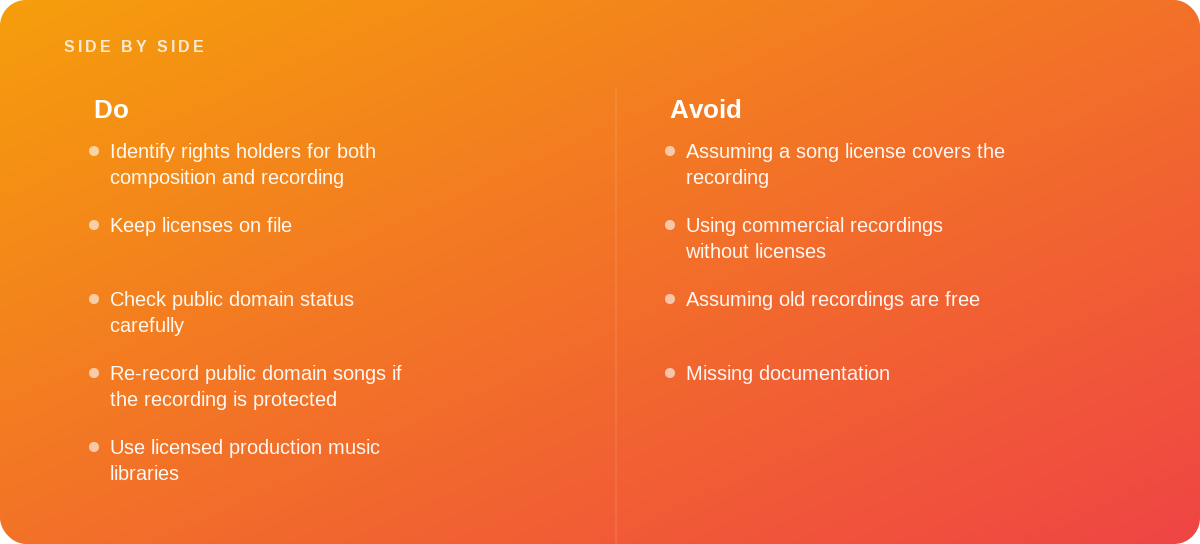
- Assuming a song license covers the recording
- Using commercial recordings without licenses
- Assuming old recordings are free
- Missing documentation
What good looks like instead
- Identify rights holders for both composition and recording
- Keep licenses on file
- Check public domain status carefully
- Re-record public domain songs if the recording is protected
- Use licensed production music libraries
Why it matters
Using music legally often requires rights to both, and confusing them is a common cause of takedowns and claims.
The specs that matter
| Measure | Figure |
|---|---|
| Two works | a musical work and a sound recording are separate copyrights |
| Mechanical licensing | the Music Modernization Act created a blanket license run by the Mechanical Licensing Collective |
| Pre-1972 recordings | gained federal protection under the Classics Protection and Access Act |
| Public domain | recordings published before 1923 entered the public domain in 2022 |
Knowing when to hand it over
Tip: Bring in help when campaigns use well-known music.
Where this comes from
- U.S. Copyright Office — The Music Modernization Act
- U.S. Copyright Office — Circular 56 Copyright Registration for Sound Recordings
The figures and practices above come from the sources listed.
Working on something like this?
We take on Audio Editing & Production work for teams who want it done once, properly. Tell us what you are building and we will tell you honestly whether we are the right studio for it. Start a project.
Where to go next
Spotted something wrong? Report an error on this page. We correct on the page and say what changed.