Building a Sound Effects Library: What Actually Works
Collecting, recording and organizing sound effects for reuse across projects.
 MediaScaleUp Editorial Team
At a glance
- Metadata searchable descriptions make libraries usable
- Licensing each library has its own terms
- Original recordings give distinctive material nobody else has
- Organization naming conventions determine findability
Why it matters
Why it matters: A well-organized library saves hours per project, and licensing records prevent problems later.
Best practice
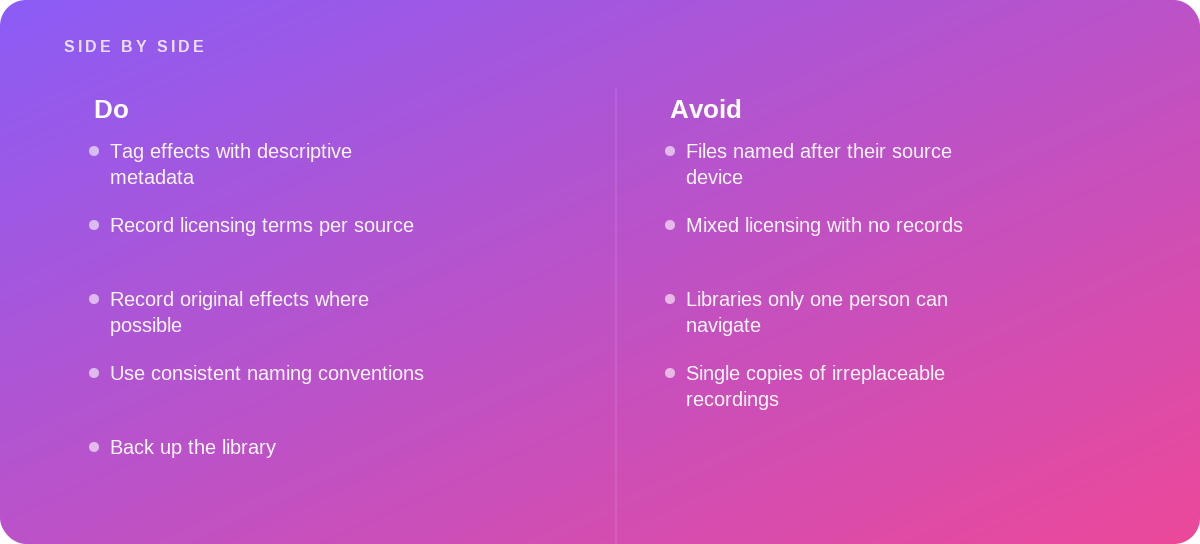
- Tag effects with descriptive metadata
- Record licensing terms per source
- Record original effects where possible
- Use consistent naming conventions
- Back up the library
Common pitfalls
Watch out for:
- Files named after their source device
- Mixed licensing with no records
- Libraries only one person can navigate
- Single copies of irreplaceable recordings
When to call in a specialist
Bottom line Bring in help when sound design volume grows.
Where this comes from
- U.S. Copyright Office — Frequently asked questions
- Audio Engineering Society — Educational resources
The figures and practices above come from the sources listed.
Working on something like this?
We take on Audio Editing & Production work for teams who want it done once, properly. Tell us what you are building and we will tell you honestly whether we are the right studio for it. Start a project.
Where to go next
Spotted something wrong? Report an error on this page. We correct on the page and say what changed.