Punch and Roll Recording: What Actually Works
A recording technique where the narrator hears the last few seconds of the previous take and continues recording seamlessly from the mistake.
 MediaScaleUp Editorial Team
Why does it matter?
It removes most editing from long-form narration, which saves hours on audiobooks and courses.
What are the numbers?
- Workflow playback rolls into record at the error point
- Consistency the performer matches tone and pace from the playback
- Editing reduces the number of edits needed afterward
- Setup requires low-latency monitoring
What should I do?
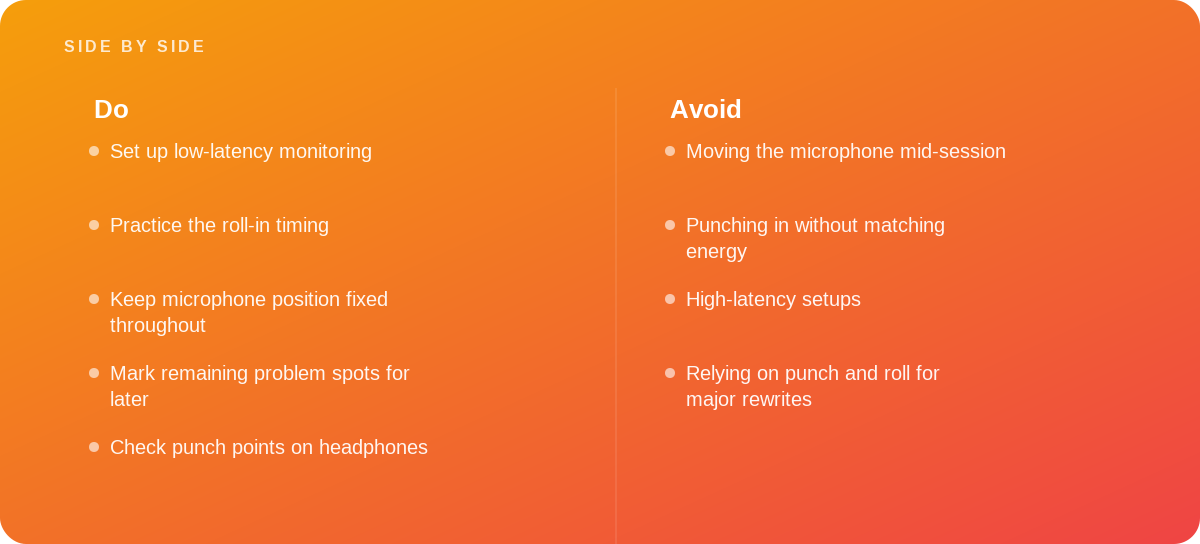
- Set up low-latency monitoring
- Practice the roll-in timing
- Keep microphone position fixed throughout
- Mark remaining problem spots for later
- Check punch points on headphones
What should I avoid?
Avoid:
- Moving the microphone mid-session
- Punching in without matching energy
- High-latency setups
- Relying on punch and roll for major rewrites
When should I get help?
Short answer Bring in help when recording long-form narration efficiently.
Where this comes from
- ACX — Audio submission requirements
- Adobe Help Center — Audition User Guide
The figures and practices above come from the sources listed.
Working on something like this?
We take on Audio Editing & Production work for teams who want it done once, properly. Tell us what you are building and we will tell you honestly whether we are the right studio for it. Start a project.
Where to go next
Spotted something wrong? Report an error on this page. We correct on the page and say what changed.