How to Get Phase and Polarity Right
The timing and waveform alignment between microphones or tracks recording the same source, which affects fullness and clarity when they are combined.
 MediaScaleUp Editorial Team

At a glance
- Polarity inversion flips the waveform upside down
- Phase shift timing differences between signals
- Comb filtering cancellation at some frequencies when similar signals are combined
- 3:1 guideline a common microphone placement convention to reduce phase issues
Why it matters
Why it matters: Misaligned microphones cause thin, hollow sound through comb filtering, which is common in multi-microphone recordings.
Best practice
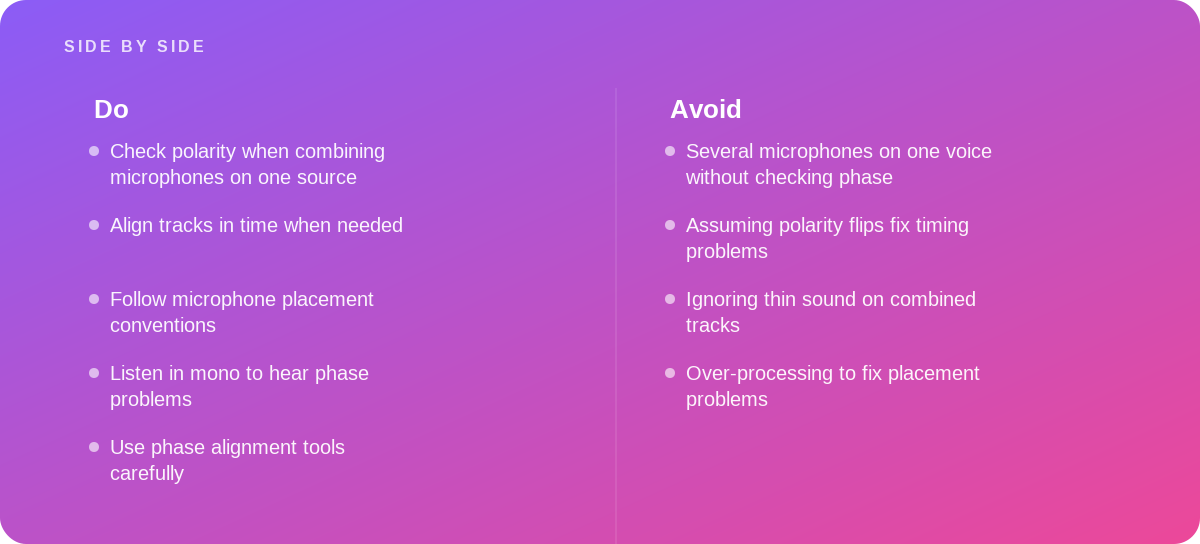
- Check polarity when combining microphones on one source
- Align tracks in time when needed
- Follow microphone placement conventions
- Listen in mono to hear phase problems
- Use phase alignment tools carefully
Common pitfalls
Watch out for:
- Several microphones on one voice without checking phase
- Assuming polarity flips fix timing problems
- Ignoring thin sound on combined tracks
- Over-processing to fix placement problems
When to call in a specialist
Bottom line Bring in help when multi-microphone recordings sound thin or hollow.
Where this comes from
- Audio Engineering Society — Educational resources
- iZotope — Phase guide
The figures and practices above come from the sources listed.
Working on something like this?
We take on Audio Editing & Production work for teams who want it done once, properly. Tell us what you are building and we will tell you honestly whether we are the right studio for it. Start a project.
Where to go next
Spotted something wrong? Report an error on this page. We correct on the page and say what changed.