Dubbing and Localized Voice Tracks, Done Properly
Replacing narration or dialogue with recordings in other languages while keeping timing and mix intact.
 MediaScaleUp Editorial Team

Why does it matter?
Localized audio expands reach, but it needs stems, timing flexibility and native review to sound natural.
What are the numbers?
- Stems separate music and effects stems make dubbing possible
- Timing translated speech often runs longer than the original
- M&E tracks music and effects tracks are standard deliverables for localization
- Casting voice casting shapes how a brand sounds in each market
What should I do?
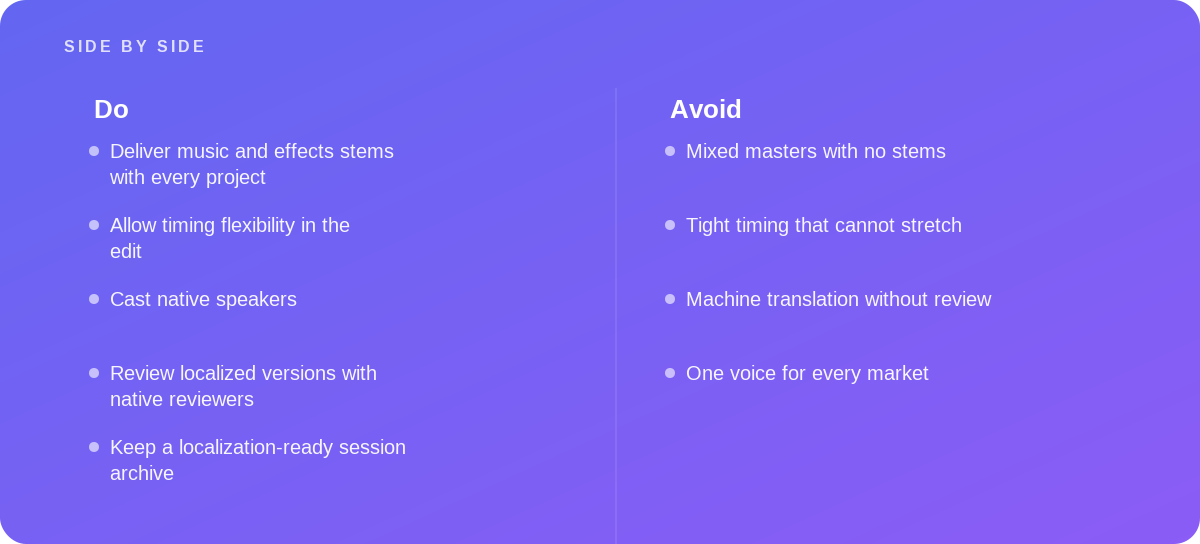
- Deliver music and effects stems with every project
- Allow timing flexibility in the edit
- Cast native speakers
- Review localized versions with native reviewers
- Keep a localization-ready session archive
What should I avoid?
Avoid:
- Mixed masters with no stems
- Tight timing that cannot stretch
- Machine translation without review
- One voice for every market
When should I get help?
Short answer Bring in help when content will run in several languages.
Where this comes from
- European Broadcasting Union — Audio delivery specifications
- Netflix Partner Help Center — Netflix Sound Mix Specifications & Best Practices
The figures and practices above come from the sources listed.
Working on something like this?
We take on Audio Editing & Production work for teams who want it done once, properly. Tell us what you are building and we will tell you honestly whether we are the right studio for it. Start a project.
Where to go next
Spotted something wrong? Report an error on this page. We correct on the page and say what changed.