Voice Processing Chains, Done Properly
The ordered set of processors applied to a recorded voice, such as filtering, de-essing, compression and limiting.
 Tomas Lindqvist

At a glance
- Order processing order changes the outcome
- High-pass filtering removes rumble before dynamics processing
- De-essing usually sits before heavy compression
- Presets chains can be saved and reused
Why it matters
Why it matters: A consistent chain makes voices sit the same way across episodes and projects, and order changes the result.
Best practice
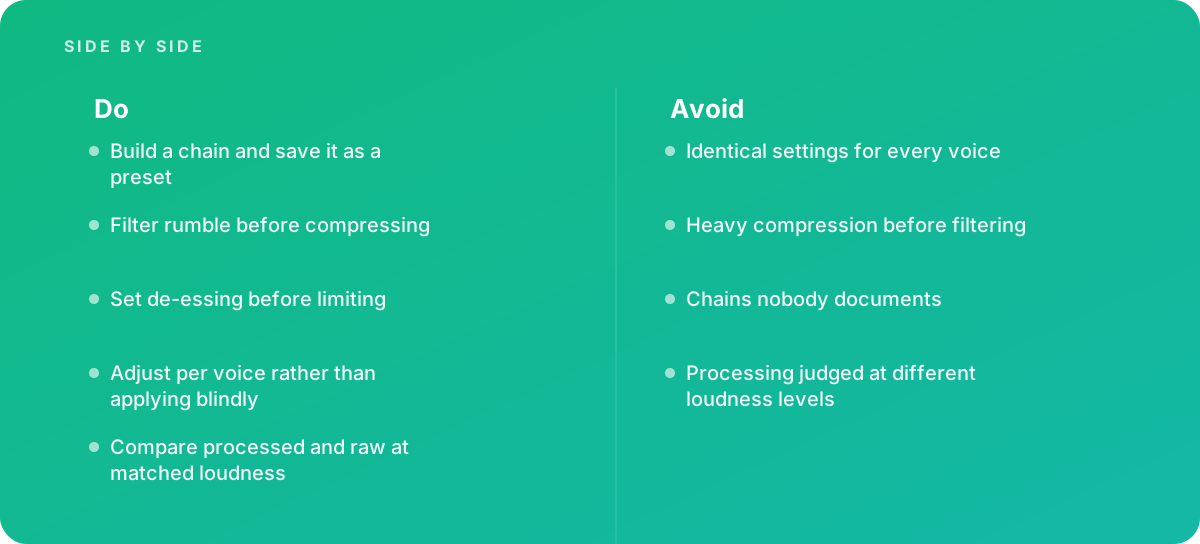
- Build a chain and save it as a preset
- Filter rumble before compressing
- Set de-essing before limiting
- Adjust per voice rather than applying blindly
- Compare processed and raw at matched loudness
Common pitfalls
Watch out for:
- Identical settings for every voice
- Heavy compression before filtering
- Chains nobody documents
- Processing judged at different loudness levels
When to call in a specialist
Bottom line Bring in help when voices sound inconsistent across a series.
Where this comes from
- Adobe Help Center — Audition User Guide
- iZotope — RX Help Documentation
The figures and practices above come from the sources listed.
Working on something like this?
We take on Audio Editing & Production work for teams who want it done once, properly. Tell us what you are building and we will tell you honestly whether we are the right studio for it. Start a project.
Where to go next
Spotted something wrong? Report an error on this page. We correct on the page and say what changed.