Responsive Search Ads: What Actually Works
Google Ads search ads built from multiple headlines and descriptions that Google combines automatically to match each search.
 MediaScaleUp Editorial Team

Where most projects go wrong
The usual mistakes:
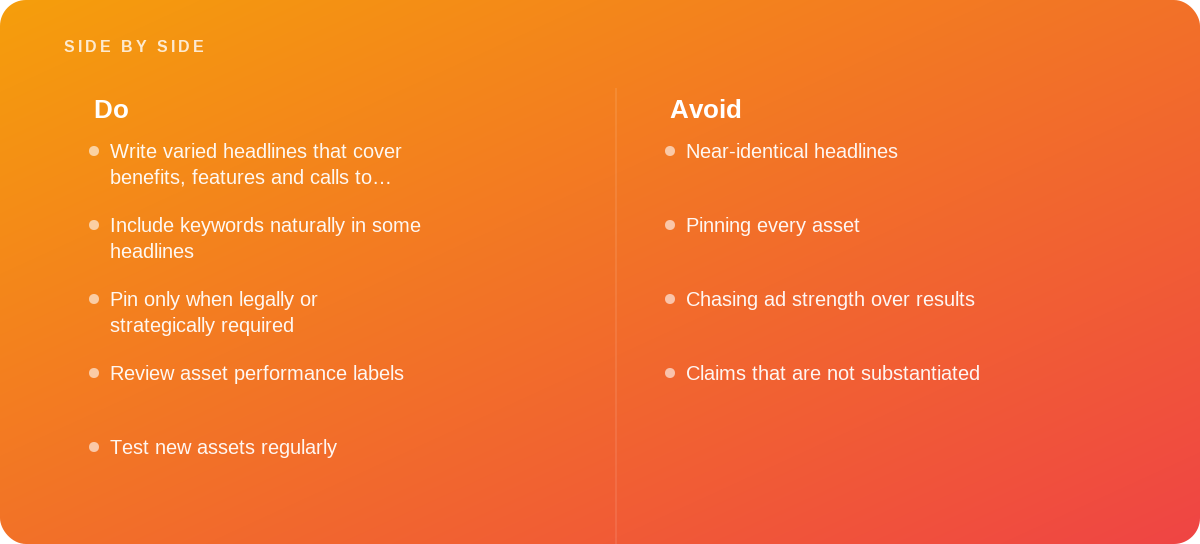
- Near-identical headlines
- Pinning every asset
- Chasing ad strength over results
- Claims that are not substantiated
What good looks like instead
- Write varied headlines that cover benefits, features and calls to action
- Include keywords naturally in some headlines
- Pin only when legally or strategically required
- Review asset performance labels
- Test new assets regularly
Why it matters
They are the standard search ad format, and the quality and variety of the assets supplied determine how well they perform.
The specs that matter
| Measure | Figure |
|---|---|
| Headlines | up to 15, each up to 30 characters |
| Descriptions | up to 4, each up to 90 characters |
| Pinning | fixes assets to positions but reduces combinations |
| Ad strength | a rating of asset quality and variety |
Knowing when to hand it over
Tip: Bring in help when search ads have low click-through rates, or when writing ads for regulated industries.
Where this comes from
- Google Ads Help — About responsive search ads
- Google Ads Help — About Ad Strength
The figures and practices above come from the sources listed.
Working on something like this?
We take on Digital Marketing & CRO work for teams who want it done once, properly. Tell us what you are building and we will tell you honestly whether we are the right studio for it. Start a project.
Where to go next
Spotted something wrong? Report an error on this page. We correct on the page and say what changed.