Removing Hum and Buzz: The Decisions That Matter
Eliminating electrical hum and buzz from recordings, usually caused by power interference or ground problems.
 Tomas Lindqvist

At a glance
- Mains frequency electrical hum is at 60 Hz in North America and 50 Hz in many other regions
- Harmonics hum includes multiples of the base frequency
- Ground loops common cause of buzz in connected equipment
- Notch filters remove narrow frequency bands
Why it matters
Why it matters: Hum is distracting and worsens after compression and loudness processing, but it is often fixable at the source.
Best practice
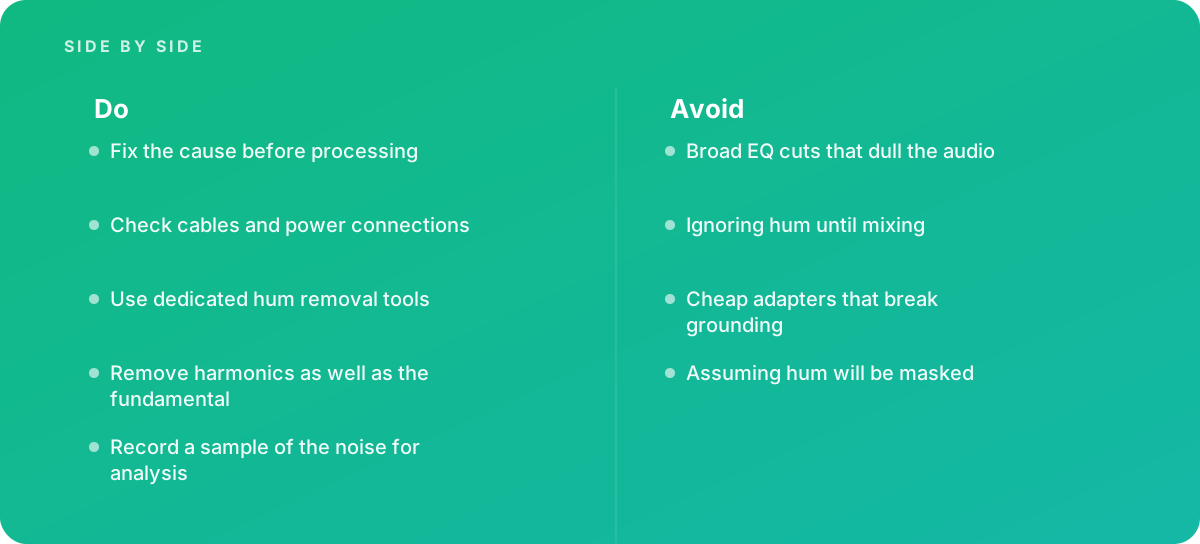
- Fix the cause before processing
- Check cables and power connections
- Use dedicated hum removal tools
- Remove harmonics as well as the fundamental
- Record a sample of the noise for analysis
Common pitfalls
Watch out for:
- Broad EQ cuts that dull the audio
- Ignoring hum until mixing
- Cheap adapters that break grounding
- Assuming hum will be masked
When to call in a specialist
Bottom line Bring in help when recordings from a location all carry hum.
Where this comes from
- iZotope — RX Help Documentation
- Audio Engineering Society — Educational resources
The figures and practices above come from the sources listed.
Working on something like this?
We take on Audio Editing & Production work for teams who want it done once, properly. Tell us what you are building and we will tell you honestly whether we are the right studio for it. Start a project.
Where to go next
Spotted something wrong? Report an error on this page. We correct on the page and say what changed.