A Practical Guide to Assistive Listening Systems
Systems such as hearing loops and infrared or radio transmitters that send audio directly to hearing devices in public spaces.
 MediaScaleUp Editorial Team
Where most projects go wrong
The usual mistakes:
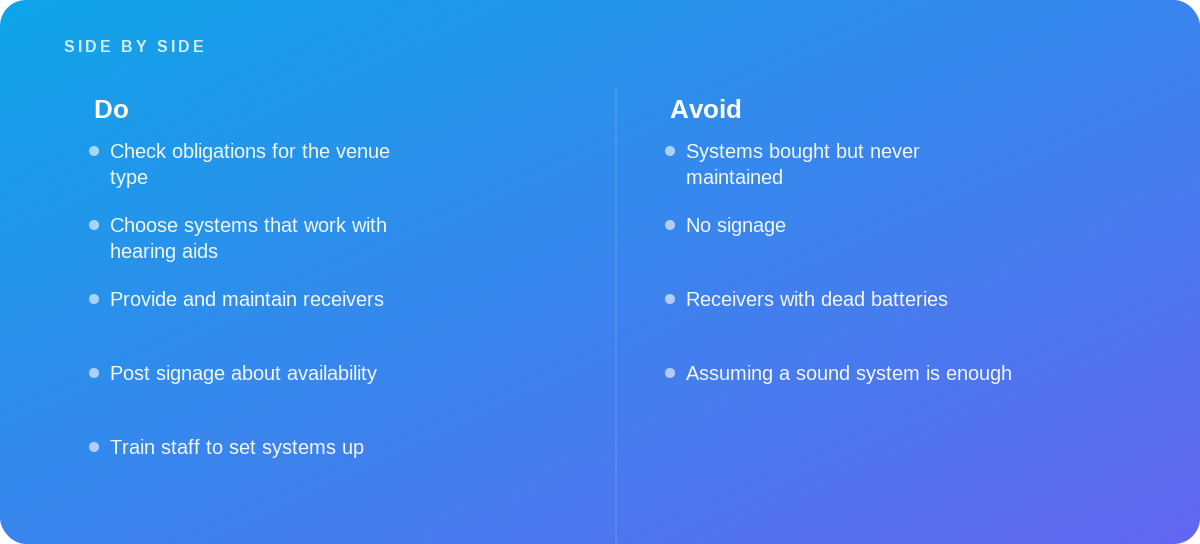
- Systems bought but never maintained
- No signage
- Receivers with dead batteries
- Assuming a sound system is enough
What good looks like instead
- Check obligations for the venue type
- Choose systems that work with hearing aids
- Provide and maintain receivers
- Post signage about availability
- Train staff to set systems up
Why it matters
The ADA requires assistive listening in many assembly areas, and these systems serve people that amplification alone does not.
The specs that matter
| Measure | Figure |
|---|---|
| ADA standards | assembly areas with audible communication generally require assistive listening systems |
| Receiver counts | the standards set how many receivers are required by seating capacity |
| Hearing loops | transmit to hearing aids with telecoil receivers |
| Signage | the international symbol of access for hearing loss identifies availability |
Knowing when to hand it over
Tip: Bring in help when venues must meet accessibility requirements.
Where this comes from
- ADA.gov — 2010 ADA Standards for Accessible Design
- U.S. Access Board — Communication elements and features
The figures and practices above come from the sources listed.
Working on something like this?
We take on Audio Editing & Production work for teams who want it done once, properly. Tell us what you are building and we will tell you honestly whether we are the right studio for it. Start a project.
Where to go next
Spotted something wrong? Report an error on this page. We correct on the page and say what changed.