Mid/Side Processing: The Decisions That Matter
Processing the center and sides of a stereo signal separately, used in recording, mixing and mastering.
 MediaScaleUp Editorial Team

At a glance
- Mid the sum of left and right channels
- Side the difference between left and right
- Mono playback side information cancels when played in mono
- Recording technique mid/side microphone setups pair a forward-facing mic with a figure-eight mic
Why it matters
Why it matters: Mid/side control can widen or focus a mix and fix problems in one part of the stereo image, but it can also harm mono compatibility.
Best practice
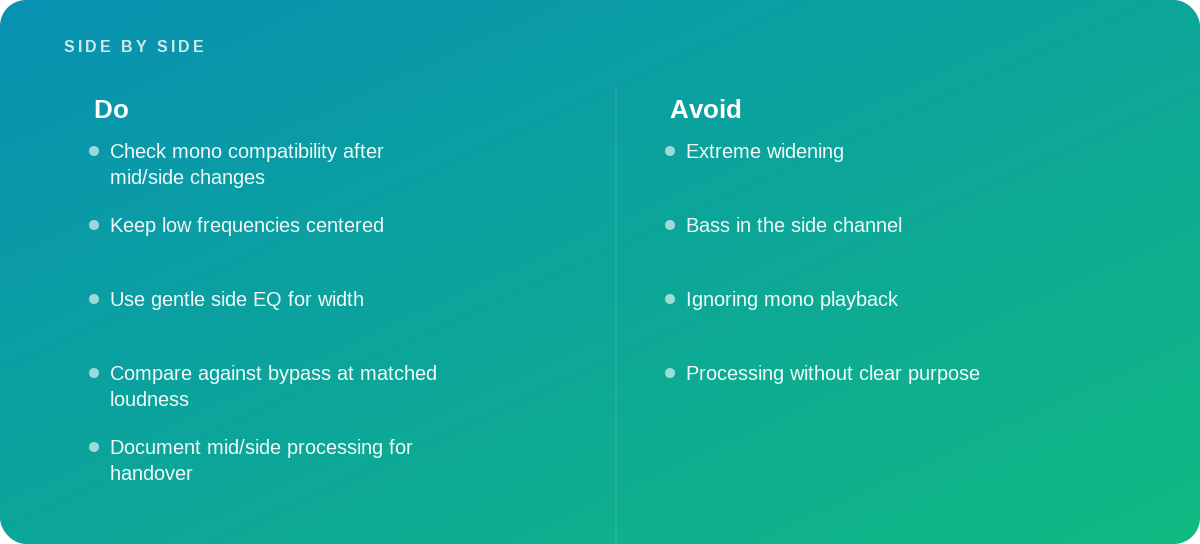
- Check mono compatibility after mid/side changes
- Keep low frequencies centered
- Use gentle side EQ for width
- Compare against bypass at matched loudness
- Document mid/side processing for handover
Common pitfalls
Watch out for:
- Extreme widening
- Bass in the side channel
- Ignoring mono playback
- Processing without clear purpose
When to call in a specialist
Bottom line Bring in help when stereo mixes collapse or sound too narrow.
Where this comes from
The figures and practices above come from the sources listed.
Working on something like this?
We take on Audio Editing & Production work for teams who want it done once, properly. Tell us what you are building and we will tell you honestly whether we are the right studio for it. Start a project.
Where to go next
Spotted something wrong? Report an error on this page. We correct on the page and say what changed.