Load Testing: The Decisions That Matter
Simulating traffic against a site to find where it slows down or breaks before real users do.
 MediaScaleUp Editorial Team

Where most projects go wrong
The usual mistakes:
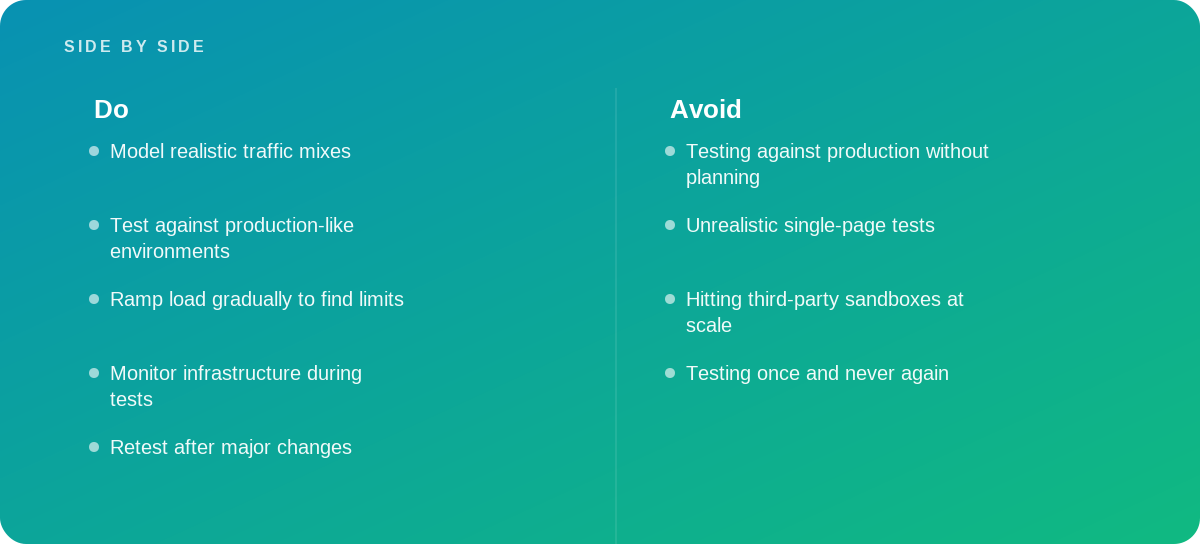
- Testing against production without planning
- Unrealistic single-page tests
- Hitting third-party sandboxes at scale
- Testing once and never again
What good looks like instead
- Model realistic traffic mixes
- Test against production-like environments
- Ramp load gradually to find limits
- Monitor infrastructure during tests
- Retest after major changes
Why it matters
Capacity problems surface at the worst moment, and load testing turns them into planned work.
The specs that matter
| Measure | Figure |
|---|---|
| Scenarios | tests should follow realistic user journeys |
| Environment | tests need production-like infrastructure |
| Bottlenecks | databases and third parties often fail first |
| Third parties | testing against live external services can cause problems |
Knowing when to hand it over
Tip: Bring in help before campaigns or launches with expected spikes.
Where this comes from
- Microsoft Learn — Performance testing
- web.dev — Performance
The figures and practices above come from the sources listed.
Working on something like this?
We take on Web Design & Development work for teams who want it done once, properly. Tell us what you are building and we will tell you honestly whether we are the right studio for it. Start a project.
Where to go next
Spotted something wrong? Report an error on this page. We correct on the page and say what changed.






