Jobs to Be Done: What Actually Works
A framework that describes what people are trying to accomplish in a given situation, the job, rather than who they are or what features they want.
 MediaScaleUp Editorial Team

Where most projects go wrong
The usual mistakes:
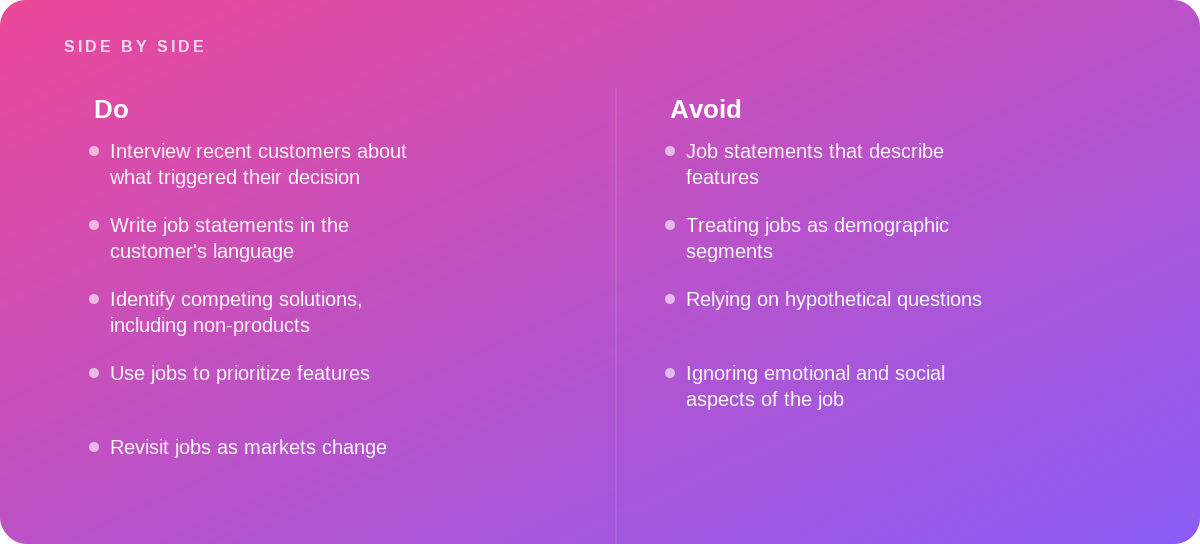
- Job statements that describe features
- Treating jobs as demographic segments
- Relying on hypothetical questions
- Ignoring emotional and social aspects of the job
What good looks like instead
- Interview recent customers about what triggered their decision
- Write job statements in the customer's language
- Identify competing solutions, including non-products
- Use jobs to prioritize features
- Revisit jobs as markets change
Why it matters
Framing research and design around jobs helps teams understand why people switch products and what progress they want to make.
The specs that matter
| Measure | Figure |
|---|---|
| Core idea | people hire products to make progress in a particular situation |
| Job statements | describe the situation, motivation and expected outcome |
| Research method | interviews about recent purchase or switching decisions |
| Relationship to personas | jobs describe needs; personas describe people |
Knowing when to hand it over
Tip: Bring in help when product strategy is unclear, or when customers leave for unexpected alternatives.
Where this comes from
- Interaction Design Foundation — Jobs to be done
- Nielsen Norman Group — Personas versus jobs-to-be-done
The figures and practices above come from the sources listed.
Working on something like this?
We take on UI & UX Design work for teams who want it done once, properly. Tell us what you are building and we will tell you honestly whether we are the right studio for it. Start a project.
Where to go next
Spotted something wrong? Report an error on this page. We correct on the page and say what changed.