How to Get Subtitle Localization Right
Translating subtitles into other languages, including timing, reading speed and cultural adaptation.
 Tomas Lindqvist

Where most projects go wrong
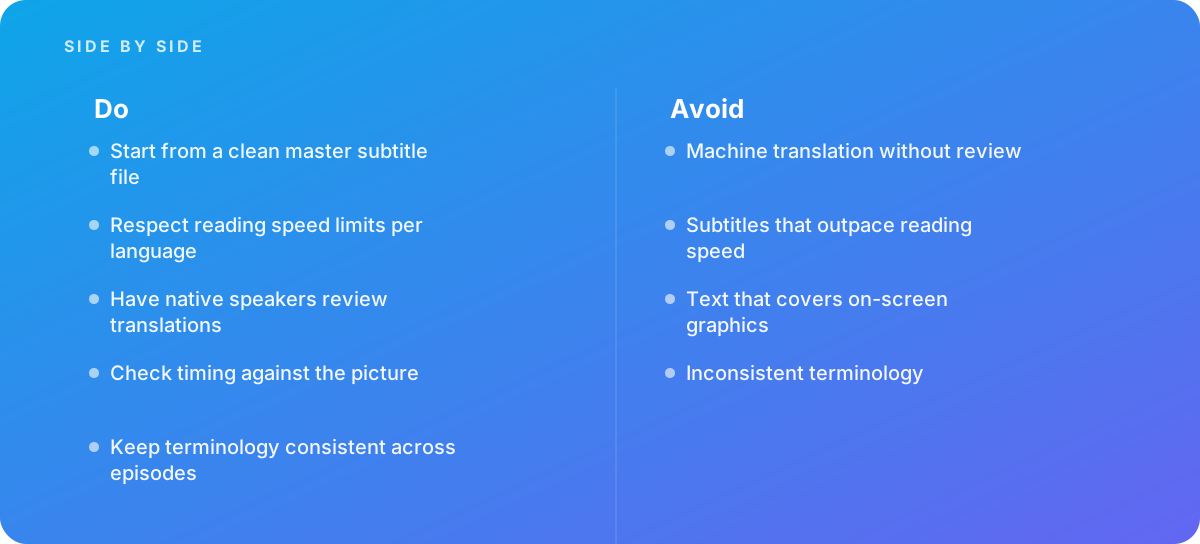
The usual mistakes:
- Machine translation without review
- Subtitles that outpace reading speed
- Text that covers on-screen graphics
- Inconsistent terminology
What good looks like instead
- Start from a clean master subtitle file
- Respect reading speed limits per language
- Have native speakers review translations
- Check timing against the picture
- Keep terminology consistent across episodes
Why it matters
Subtitle translation is not a straight text swap, because reading speed and line length constrain what can be said.
The specs that matter
| Measure | Figure |
|---|---|
| Reading speed | subtitle standards limit characters per second |
| Line length | subtitles are limited to short lines |
| Timing | translated text may need different timing |
| Formats | subtitle files carry timing and sometimes positioning |
Knowing when to hand it over
Tip: Bring in help when content ships in several languages.
Where this comes from
- European Broadcasting Union — Subtitling guidelines
- Netflix Partner Help Center — Timed text style guide
The figures and practices above come from the sources listed.
Working on something like this?
We take on Video Editing & Production work for teams who want it done once, properly. Tell us what you are building and we will tell you honestly whether we are the right studio for it. Start a project.
Where to go next
Spotted something wrong? Report an error on this page. We correct on the page and say what changed.