How to Get Controlling AI Crawlers Right
Deciding whether AI companies' crawlers may collect a site's content for model training or AI products, using robots.txt rules and published user agent tokens.
 MediaScaleUp Editorial Team

Why does it matter?
Many AI crawlers honor robots.txt, and some tokens control AI uses separately from search, so site owners can make deliberate choices.
What are the numbers?
- Mechanism robots.txt rules for each crawler's user agent
- Google-Extended a token controlling use of content for Google's Gemini models, separate from Search
- Search impact blocking Google-Extended does not affect Google Search ranking
- Compliance robots.txt is voluntary, and not every crawler follows it
What should I do?
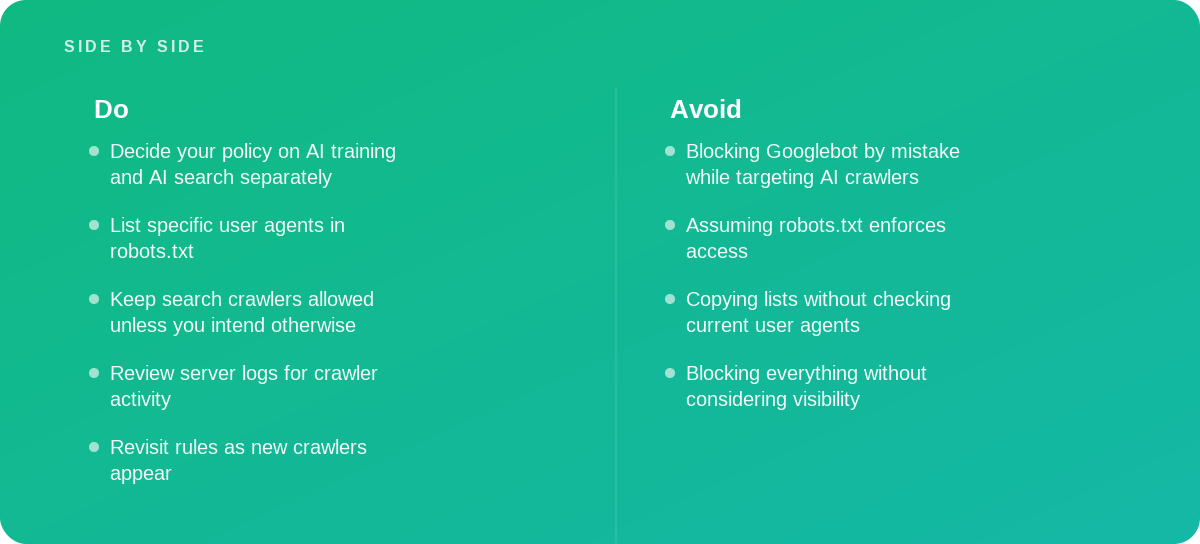
- Decide your policy on AI training and AI search separately
- List specific user agents in robots.txt
- Keep search crawlers allowed unless you intend otherwise
- Review server logs for crawler activity
- Revisit rules as new crawlers appear
What should I avoid?
Avoid:
- Blocking Googlebot by mistake while targeting AI crawlers
- Assuming robots.txt enforces access
- Copying lists without checking current user agents
- Blocking everything without considering visibility
When should I get help?
Short answer Bring in help when setting a content licensing or AI policy, or when crawler traffic affects server costs.
Where this comes from
- Google Search Central — Overview of Google crawlers and fetchers
- RFC Editor — RFC 9309 Robots Exclusion Protocol
The figures and practices above come from the sources listed.
Working on something like this?
We take on Web Design & Development work for teams who want it done once, properly. Tell us what you are building and we will tell you honestly whether we are the right studio for it. Start a project.
Where to go next
Spotted something wrong? Report an error on this page. We correct on the page and say what changed.






