Fair Use and Quoting Sources: The Decisions That Matter
When content can quote, excerpt or reference copyrighted material without permission under US fair use, and when it cannot.
 MediaScaleUp Editorial Team

At a glance
- Four factors courts weigh purpose, nature of the work, amount used and market effect
- Law fair use is set out in 17 U.S.C. 107
- Attribution crediting a source does not by itself make a use fair
- Fair Use Index the Copyright Office tracks court decisions on fair use
Why it matters
Why it matters: Quoting is essential to commentary and research, but fair use is a case-by-case judgment, and attribution alone does not make copying legal.
Best practice
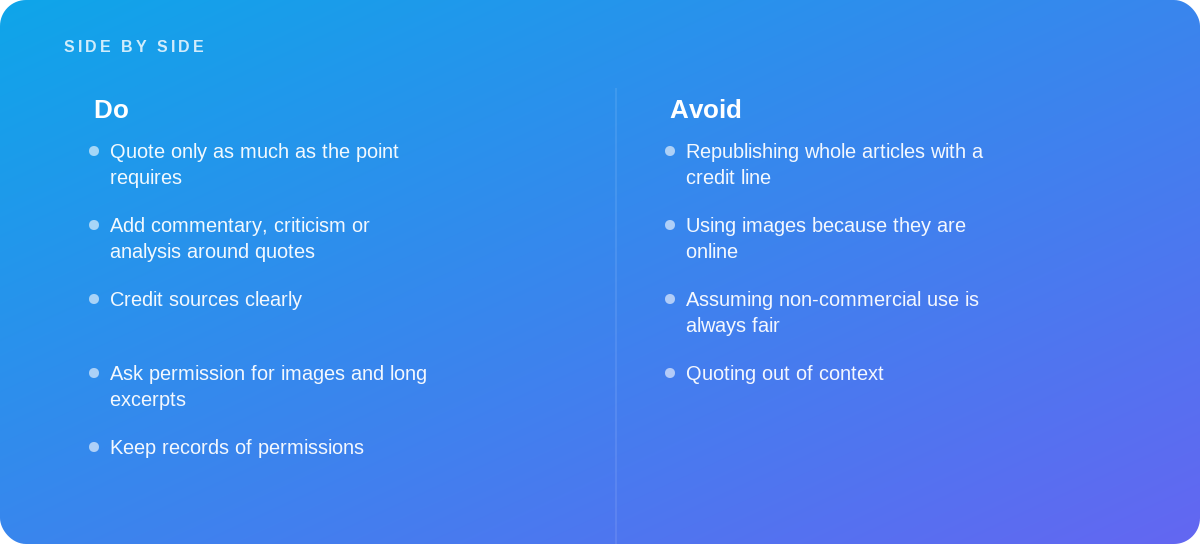
- Quote only as much as the point requires
- Add commentary, criticism or analysis around quotes
- Credit sources clearly
- Ask permission for images and long excerpts
- Keep records of permissions
Common pitfalls
Watch out for:
- Republishing whole articles with a credit line
- Using images because they are online
- Assuming non-commercial use is always fair
- Quoting out of context
When to call in a specialist
Bottom line Bring in help when content relies heavily on third-party material.
Where this comes from
- U.S. Copyright Office — U.S. Copyright Office Fair Use Index
- U.S. Copyright Office — Frequently asked questions
The figures and practices above come from the sources listed.
Working on something like this?
We take on Content Strategy work for teams who want it done once, properly. Tell us what you are building and we will tell you honestly whether we are the right studio for it. Start a project.
Where to go next
Spotted something wrong? Report an error on this page. We correct on the page and say what changed.