Depending on Third-Party APIs: What Actually Works
Building features that rely on external services for payments, mapping, messaging or data.
 MediaScaleUp Editorial Team

What is at stake
External services fail, change and deprecate, and your application has to keep working when they do.
The playbook
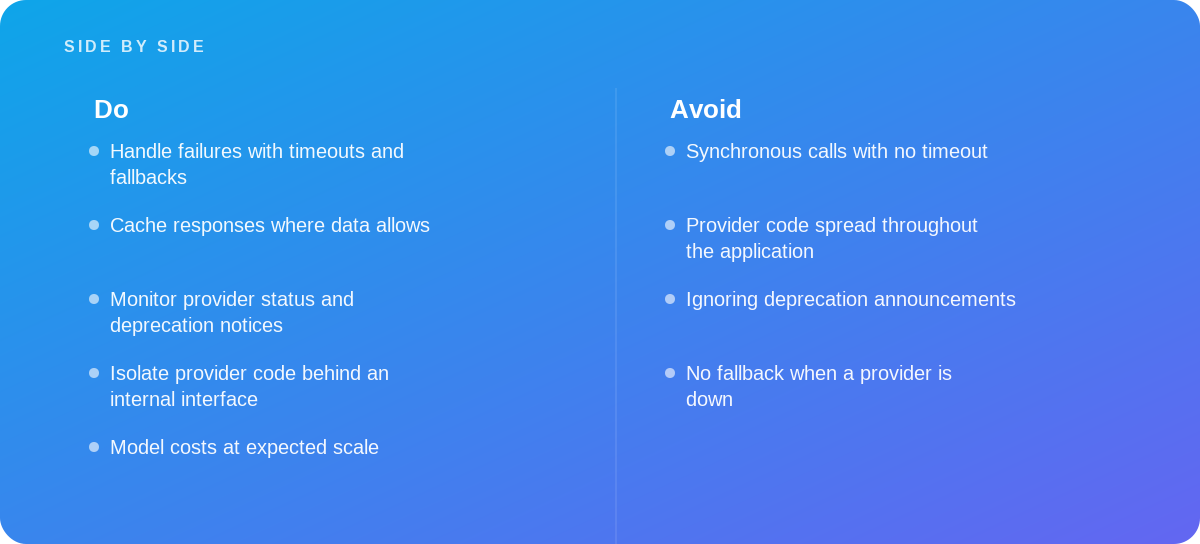
- Handle failures with timeouts and fallbacks
- Cache responses where data allows
- Monitor provider status and deprecation notices
- Isolate provider code behind an internal interface
- Model costs at expected scale
Where it goes wrong
Avoid:
- Synchronous calls with no timeout
- Provider code spread throughout the application
- Ignoring deprecation announcements
- No fallback when a provider is down
The numbers behind it
| Measure | Figure |
|---|---|
| Rate limits | third parties restrict request volumes |
| Deprecation | APIs change with notice periods |
| Outages | external failures become your failures |
| Costs | usage-based pricing scales with your growth |
Getting outside help
When to hand it over: Bring in help when core features depend on external services.
Where this comes from
- Microsoft Learn — Retry pattern
- Stripe Documentation — Rate limits
The figures and practices above come from the sources listed.
Working on something like this?
We take on Web Design & Development work for teams who want it done once, properly. Tell us what you are building and we will tell you honestly whether we are the right studio for it. Start a project.
Where to go next
Spotted something wrong? Report an error on this page. We correct on the page and say what changed.





