GraphQL APIs: What Actually Works
A query language for APIs that lets clients request exactly the data they need in a single request, defined by a typed schema.
 MediaScaleUp Editorial Team

At a glance
- Schema types and fields define what can be queried
- Single endpoint queries are usually sent to one URL
- Over-fetching clients request only the fields they need
- Security query depth and complexity limits prevent abuse
Why it matters
Why it matters: GraphQL can simplify front-end data fetching, but it introduces its own performance, caching and security considerations.
Best practice
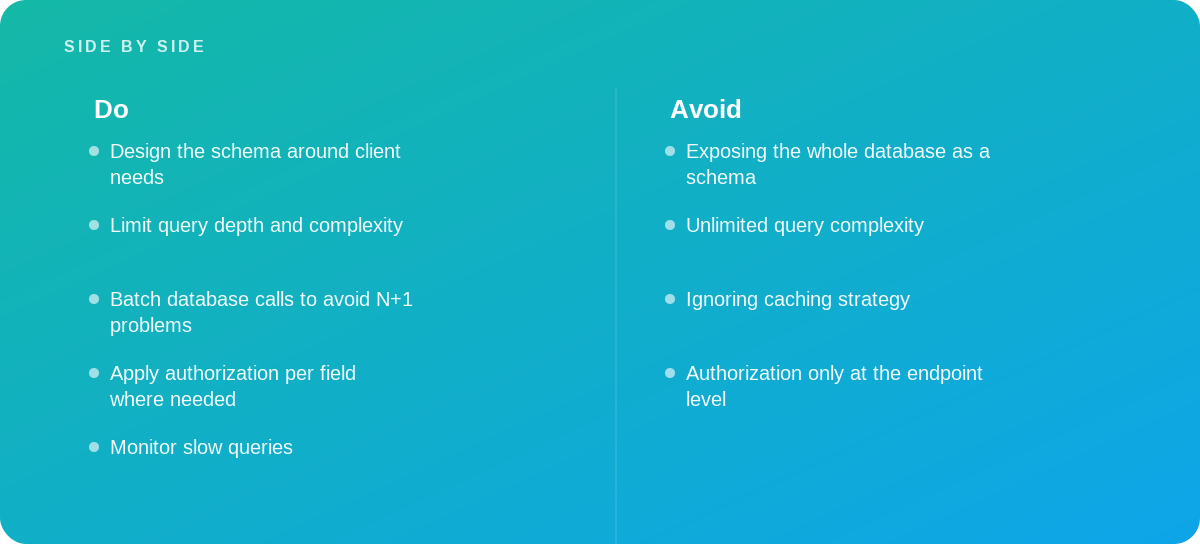
- Design the schema around client needs
- Limit query depth and complexity
- Batch database calls to avoid N+1 problems
- Apply authorization per field where needed
- Monitor slow queries
Common pitfalls
Watch out for:
- Exposing the whole database as a schema
- Unlimited query complexity
- Ignoring caching strategy
- Authorization only at the endpoint level
When to call in a specialist
Bottom line Bring in help when choosing between REST and GraphQL or when GraphQL APIs slow down.
Where this comes from
The figures and practices above come from the sources listed.
Working on something like this?
We take on Web Design & Development work for teams who want it done once, properly. Tell us what you are building and we will tell you honestly whether we are the right studio for it. Start a project.
Where to go next
Spotted something wrong? Report an error on this page. We correct on the page and say what changed.







