Content Style Guides, Done Properly
A shared reference for how an organization writes: voice, grammar and punctuation choices, formatting, terminology and accessibility rules, with examples.
 MediaScaleUp Editorial Team

Where most projects go wrong
The usual mistakes:
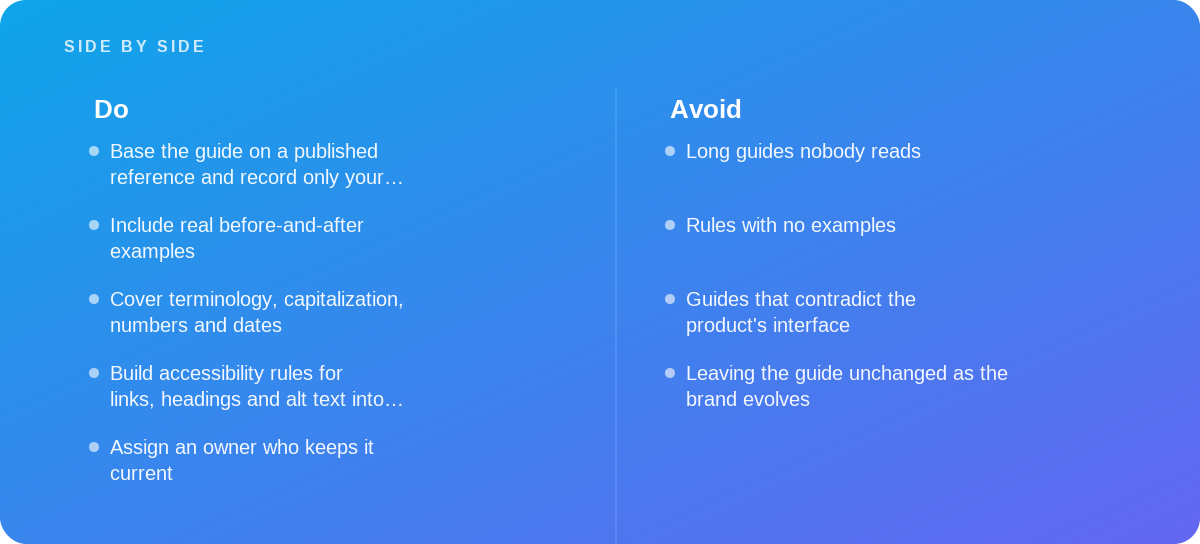
- Long guides nobody reads
- Rules with no examples
- Guides that contradict the product's interface
- Leaving the guide unchanged as the brand evolves
What good looks like instead
- Base the guide on a published reference and record only your exceptions
- Include real before-and-after examples
- Cover terminology, capitalization, numbers and dates
- Build accessibility rules for links, headings and alt text into the guide
- Assign an owner who keeps it current
Why it matters
Without one, every writer and reviewer makes different choices, and readers notice the inconsistency even when they cannot name it.
The specs that matter
| Measure | Figure |
|---|---|
| Federal model | the Federal Plain Language Guidelines |
| Design system writing guidance | Apple and Material Design both publish interface writing guidance |
| WCAG 2.4.4 Link Purpose, A | link text should make its purpose clear in context |
| WCAG 2.4.6 Headings and Labels, AA | headings and labels should describe topic or purpose |
Knowing when to hand it over
Tip: Bring in help when several teams or agencies write for the same brand, or when an audit shows inconsistent terms across the site.
Where this comes from
- PlainLanguage.gov — Federal Plain Language Guidelines
- Apple Human Interface Guidelines — Writing
- W3C Web Accessibility Initiative — Understanding SC 2.4.4 Link Purpose (In Context)
The figures and practices above come from the sources listed.
Working on something like this?
We take on Content Strategy work for teams who want it done once, properly. Tell us what you are building and we will tell you honestly whether we are the right studio for it. Start a project.
Where to go next
Spotted something wrong? Report an error on this page. We correct on the page and say what changed.