Content Design for Services, Done Properly
Writing the words inside a service — forms, guidance, confirmations, letters — so that people can complete what they came to do.
 MediaScaleUp Editorial Team

What is at stake
In a transactional service, content is the interface, and unclear wording produces failed transactions and support calls rather than mild confusion.
The playbook
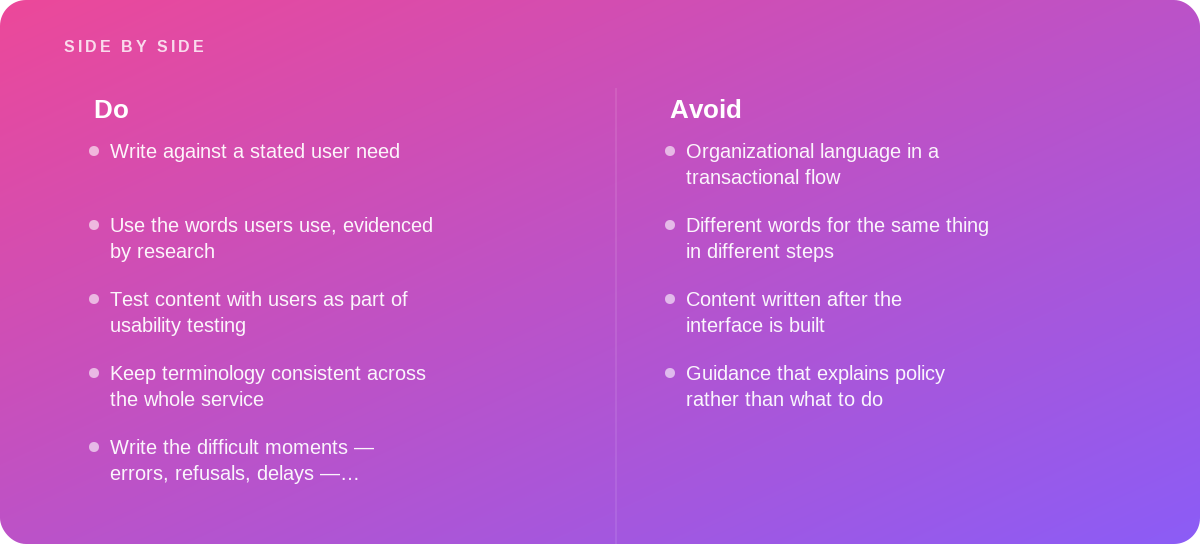
- Write against a stated user need
- Use the words users use, evidenced by research
- Test content with users as part of usability testing
- Keep terminology consistent across the whole service
- Write the difficult moments — errors, refusals, delays — deliberately
Where it goes wrong
Avoid:
- Organizational language in a transactional flow
- Different words for the same thing in different steps
- Content written after the interface is built
- Guidance that explains policy rather than what to do
The numbers behind it
| Measure | Figure |
|---|---|
| Discipline | content design, as practiced in government digital services |
| Plain language | the standard requirement |
| User need | content written against a stated need rather than an organizational message |
| Testing | content is tested with users like any other design element |
| Consistency | one term per concept throughout the service |
Getting outside help
When to hand it over: Bring in help when a service has high failure or support rates, when terminology is inconsistent, or when a regulated service must be written in plain language.
Where this comes from
- GOV.UK Service Manual — Content design
- Nielsen Norman Group — Content and usability
- Material Design — Writing guidelines
The figures and practices above come from the sources listed.
Working on something like this?
We take on Content Strategy work for teams who want it done once, properly. Tell us what you are building and we will tell you honestly whether we are the right studio for it. Start a project.
Where to go next
Spotted something wrong? Report an error on this page. We correct on the page and say what changed.